






Definition & Meaning
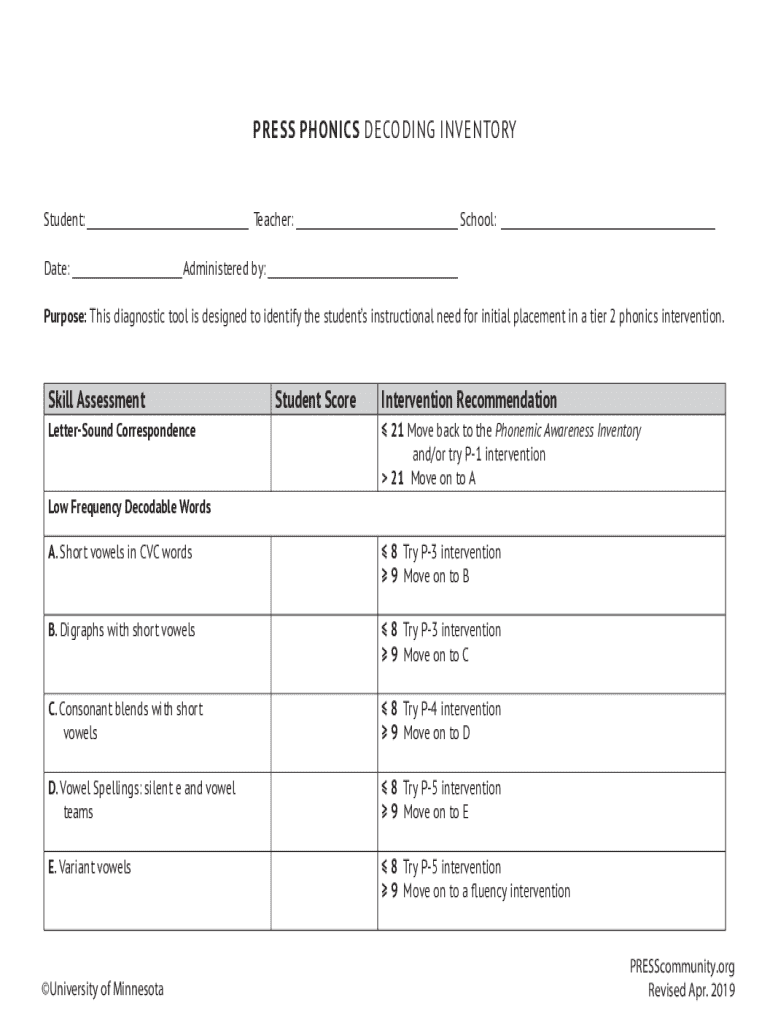
The Press Phonics Decoding Inventory is a diagnostic tool designed to assess and identify the phonics decoding abilities of students. It provides educators with valuable insights into a student's instructional needs, facilitating appropriate placement within literacy programs. By evaluating a student's ability to decode phonetic components, this inventory plays a crucial role in tailoring educational approaches to enhance reading proficiency.
Key Objectives
- Assess phonics decoding skills to guide instruction.
- Assist in identifying students for specific reading interventions.
- Support tailored learning strategies by highlighting precise instructional needs.
How to Use the Press Phonics Decoding Inventory
Utilizing the Press Phonics Decoding Inventory involves several structured steps to ensure accurate assessment and analysis. Proper use demands consistency and understanding of each section within the inventory.
Step-by-Step Instructions
-
Pre-Assessment Preparation:
- Gather all necessary materials, including the inventory form, writing utensils, and a quiet space.
- Brief the student on the purpose of the assessment to ease any anxiety.
-
Administering the Assessment:
- Clearly present each phonics item to the student, ensuring comprehension.
- Record the student's responses accurately without interference.
-
Assessment Completion:
- Review responses for consistency and note any patterns or difficulties.
- Use the results to determine the appropriate educational strategies or interventions.
Key Elements of the Press Phonics Decoding Inventory
Several vital components comprise the Press Phonics Decoding Inventory, which contributes to its effectiveness in assessing phonics skills.
Major Components
- Phonetic Sections: Divided into segments that cover various sounds and blends.
- Scoring Guide: Provides a clear rubric for evaluating student responses.
- Instructional Recommendations: Suggests potential interventions based on scoring.
Why You Should Use the Press Phonics Decoding Inventory
The inventory's structured approach offers numerous benefits, making it a valuable tool in educational settings.
Benefits
- Enhances Tailored Instruction: Identifies specific areas of need, allowing for personalized teaching strategies.
- Facilitates Early Intervention: Early detection of decoding challenges can lead to timely support.
- Supports Educational Planning: Integrates seamlessly into broader educational frameworks to improve student outcomes.
Who Typically Uses the Press Phonics Decoding Inventory
The inventory is predominantly used by educators and educational professionals focused on literacy development.


Primary Users
- Teachers: Primary and secondary educators who support reading and phonics education.
- Literacy Specialists: Professionals who design and implement reading programs.
- School Psychologists: Use the inventory as part of wider assessments to diagnose learning needs.
Legal Use of the Press Phonics Decoding Inventory
Understanding the legal context in which the inventory can be used is essential for compliance and ethical practice.
Legal Considerations
- Privacy Policies: Ensure compliance with regulations regarding student data and privacy.
- Authorized Use: Limit use to licensed educational professionals to maintain assessment integrity.
- Data Protection: Securely store assessment results to safeguard against unauthorized access.
Steps to Complete the Press Phonics Decoding Inventory
Completing the inventory requires diligence and care to achieve accurate and useful results.
Completion Process
-
Introduction to the Student:
- Explain the purpose and structure of the inventory without causing stress.
-
Conducting the Assessment:
- Proceed through each section methodically, noting the student's ability to decode presented items.
-
Post-Assessment Activities:
- Discuss results with relevant stakeholders, including teachers and parents, to devise action plans.
Important Terms Related to Press Phonics Decoding Inventory
Grasping the terms associated with the inventory enhances understanding and effective use.
Key Terms
- Decoding: The ability to interpret written language by translating letter patterns into spoken words.
- Phonics: The study of sound patterns and their use in teaching reading.
- Blending: The process of smoothly combining phonemes to form words.
Examples of Using the Press Phonics Decoding Inventory
Practical application case studies highlight the inventory's utility in real-world scenarios.
Real-World Application
- Case Study: At a midwestern elementary school, the inventory assisted in developing a remedial program that increased reading skills by two grade levels within a semester.
- Scenario Example: A literacy specialist used the inventory to identify a group of students requiring additional support, leading to targeted intervention sessions that improved overall class reading proficiency.
By thoroughly understanding these components and their practical applications, educators can effectively leverage the Press Phonics Decoding Inventory to enhance student literacy outcomes.