






Comprehensive Understanding of Reflective Functioning
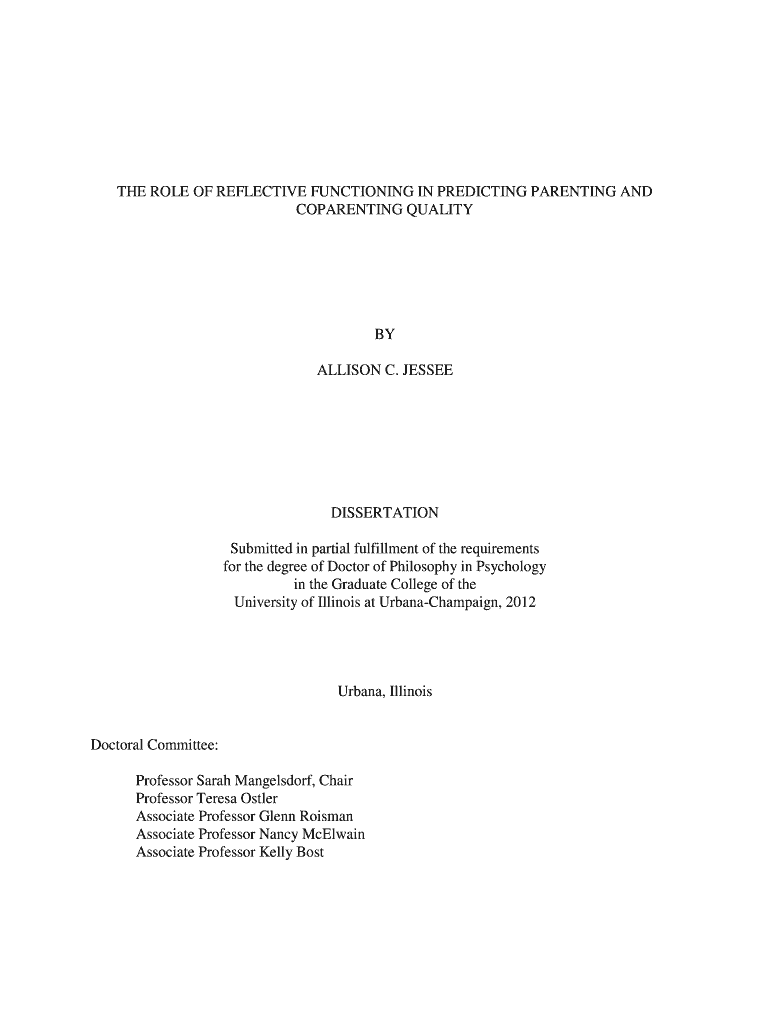
Reflective functioning, or mentalization, is a crucial psychological concept that reflects the capacity to understand emotions and mental states of oneself and others. This ability plays a significant role in parenting and coparenting as it influences how parents perceive and respond to their children's needs. Research, such as Allison C. Jessee's dissertation, highlights the importance of maternal reflective functioning in predicting coparenting quality and paternal dyadic sensitivity. Understanding reflective functioning can guide parents and professionals in fostering better family dynamics.
Steps to Utilize the Dissertation on Reflective Functioning
-
Access the Document: Obtain the dissertation through academic databases or university libraries. If it is available digitally, ensure compatibility with your document viewing or editing software, such as DocHub.
-
Review the Content: Thoroughly read the sections that detail reflective functioning, parenting, and coparenting dynamics. Pay special attention to the methodology and findings.
-
Apply Insights: Reflect on how the concepts apply to real-life parenting scenarios or professional settings involving family counseling.
Obtaining "THE ROLE OF REFLECTIVE FUNCTIONING IN PREDICTING PARENTING AND COPARENTING QUALITY"
-
University Repositories: Check if the document is available in online repositories like the IDEALS digital library of the University of Illinois.
-
Library Access: Contact university libraries that may hold the dissertation in physical or digital format.
-
Interlibrary Loan: If not directly accessible, request through interlibrary loan services.
Completing the Understanding of Reflective Functioning in Parenting
Understanding reflective functioning involves multiple steps:
-
Identify Key Concepts: Focus on understanding the components of reflective functioning, such as emotional understanding and mental state recognition.
-
Evaluate Case Studies: Analyze examples provided in the dissertation to see how reflective functioning affects family interactions.
-
Discuss Implications: Consider the implications of these findings in your own or professional parent-child dynamics.
Importance of Reflective Functioning in Parenting
Reflective functioning impacts parenting and coparenting by affecting emotional communication and understanding. High reflective functioning leads to better empathy and relationship building with children. The dissertation emphasizes this by showing how mothers' reflective abilities can improve overall family interaction quality, advocating for interventions enhancing these skills.
Common Users of Reflective Functioning Research
-
Academics: Researchers studying parenting dynamics and psychological development.
-
Family Therapists: Professionals looking to integrate mentalization strategies in therapy.
-
Parents/Educators: Those seeking to enhance their parenting techniques with evidence-based practices.


Key Elements of Reflective Functioning in the Dissertation
-
Maternal vs. Paternal RF: Differentiates between impacts of maternal and paternal reflective functioning.
-
Correlation with Coparenting Quality: Analyzes how reflective functioning predicts interpersonal dynamics in parenting.
-
Measurement Methods: Describes tools and methods used for assessing reflective functioning.
Legal Context for Utilizing Reflective Functioning Documents
Using academic research adheres to copyright laws, especially when reproducing or distributing the document. Always attribute the original author and source, and use only for educational or research purposes unless otherwise permitted.
Examples of Reflective Functioning Application
-
Parent-Child Interaction: Improved emotional dialogue between parent and child due to higher parental reflective functioning.
-
Therapeutic Interventions: Use of reflective functioning principles in developing parenting workshops or counseling sessions to enhance family relationships.
Software and Compatibility Considerations
Integration with Document Tools
When accessing or editing the dissertation or research articles, compatibility with software such as DocHub is crucial:
-
Document Import: Import files from Google Drive for analysis and annotation.
-
Editing and Collaboration: Utilize DocHub to annotate and discuss findings with colleagues or co-researchers.
By leveraging understanding and procedural knowledge of reflective functioning, users can effectively incorporate these insights into educational, professional, and familial contexts, enhancing overall relational quality.