







Definition and Meaning
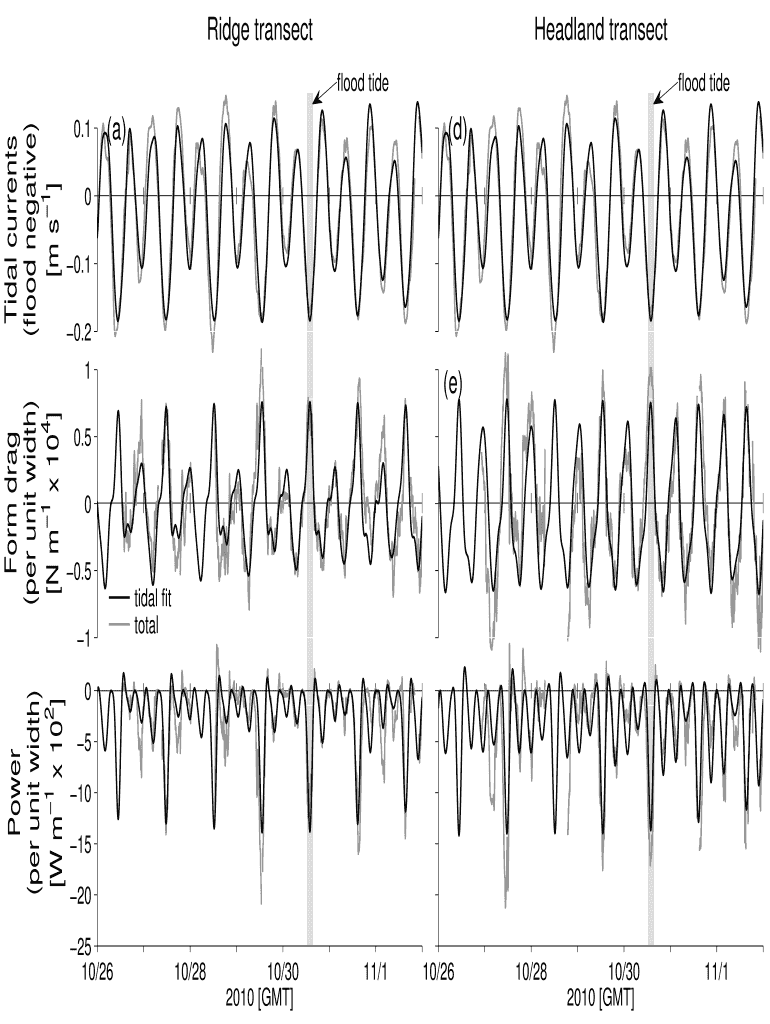
Understanding what "Tidal currents (flood negative) m s Ridge transect (a) Form drag - mixing coast Oregonstate" involves is crucial for accurate analysis and application. This term relates to the study of tidal currents and their behavior over a specified region, specifically focusing on the effects of form drag and mixing over geographical features like ridges in the Oregon coastal region. Form drag refers to the resistance exerted by these structures, affecting water movement and energy distribution during tidal changes.
How to Use the Tidal Currents Study
Using this study effectively requires a clear comprehension of its objectives and application scope. This involves tracking and evaluating tidal currents as they interact with terrain features. It can be applied in marine biology for habitat research, in navigation for designing safer routes, and in environmental management for understanding sediment transport. Employing specialized software that can simulate these conditions is often necessary to analyze the full scope of the data.
Steps to Complete the Tidal Currents Analysis
- Data Collection: Gather historical and real-time data concerning water movement and terrain features.
- Software Setup: Install and configure tools that can interpret geological and fluid dynamics data.
- Model Creation: Build digital models representing the coastal features and expected tidal flow.
- Simulation: Run simulations to observe the interactions between tidal forces and coastal geography.
- Analysis: Examine the results for patterns, anomalies, and significant tidal interactions.
- Report Findings: Document the results with visuals and detailed descriptions.
Key Elements of the Tidal Currents Study
Breaking down the study into its core elements reveals how different factors interact to influence tidal behavior:
- Coastal Geography: The specific characteristics of Oregon's coast, including ridges and other formations.
- Tidal Patterns: Regular cycles and their variations, notably flood negative conditions.
- Hydrodynamics: The specific flow behavior of currents affected by natural resistance.
- Form Drag Impact: How structures like ridges alter flow speed and direction, impacting energy dissipation and mixing.
Who Typically Uses This Study
Research teams focused on marine sciences, governmental agencies involved in coastal management, and environmental consultants are the primary users of this data. It aids in decision-making processes affecting maritime navigation, habitat conservation efforts, and infrastructure projects.
Important Terms Related to the Study
- Flood Tide: The incoming or rising tide, crucial for understanding flood negative scenarios.
- Form Drag: Resistance caused by geometrical features impeding fluid flow.
- Hydrodynamics: The study of fluids in motion, essential for analyzing current patterns.
- Ridge Transect: A cross-sectional plane through a ridge used to study its impact on currents.
State-Specific Rules for Conducting the Study
In Oregon, specific environmental regulations may govern data collection and study implementation:
- Environmental Protection Laws: Determine what methods can be used for research without causing harm to marine and coastal ecosystems.
- State Permits: Required for extensive field studies involving invasive methods or significant environmental interactions.
- Data Sharing Protocols: Guidelines for collaborating with state agencies regarding findings and observations.
Examples of Using the Tidal Currents Study
In practical terms, this study can aid beachfront engineers designing erosion control structures, or marine biologists studying nutrient distribution and its effect on local ecosystems. It can also assist governmental agencies in crafting policies for sustainable coastal development and conservation efforts.
Digital Versus Paper Versions of Reporting
For presenting findings, digital formats offer dynamic visualization advantages, such as animations of tidal flow changes and interactive maps. These features are more challenging to replicate in printed reports, which may rely on static images and textual explanations.




