






Definition & Meaning
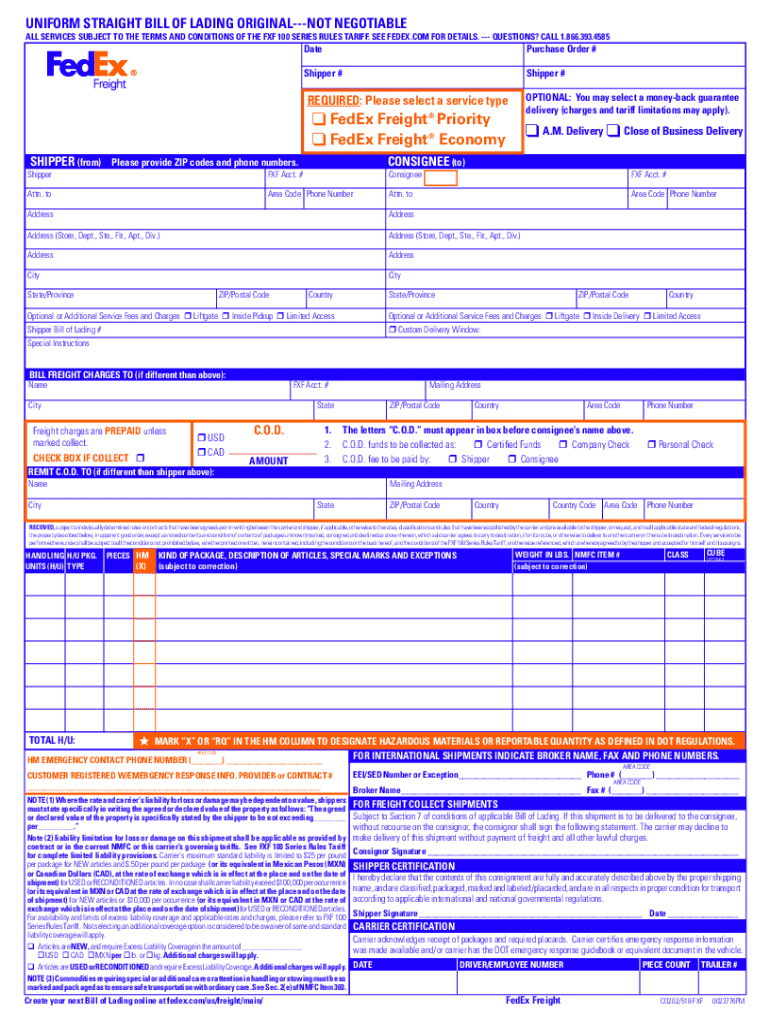
The FedEx Freight Bill of Lading (BOL) is a legal document between the shipper of goods and the carrier, detailing the type, quantity, and destination of the goods being transported. This form serves as a receipt of shipment when the goods are delivered at the predetermined destination and acts as a contract between the shipper and the carrier. The document contains essential shipment details, terms, and conditions, ensuring both parties are clear on responsibilities and expectations.
Practical Examples
- Scenario One: A commercial shipper sends a pallet of electronics from New York to California. The BOL details the number of items, their precise weight, and destination address.
- Scenario Two: A clothing retailer receives a BOL from a manufacturer in Texas indicating the shipment of seasonal apparel, their quantities, and shipping timelines.
How to Use the FedEx Freight Bill of Lading
The FedEx Freight BOL is designed to streamline the shipping process. It helps shippers clearly outline the logistics of a shipment and provides carriers with essential details for transportation.
Key Steps
- Filling Out the Form: Include sender and receiver details, shipping date, and method of transport.
- Describing Goods: Specify type and quantity of freight, value, and state if any items require special handling.
- Agreement of Terms: Both parties should review terms such as liability, payment agreements, and additional requirements.
- Signature Section: The shipper must sign to confirm all information is accurate, authorizing the shipment.
Example Usage
A company shipping fragile items might note specific handling instructions on the BOL to ensure goods are not damaged during transit.
How to Obtain the FedEx Freight Bill of Lading
Obtaining a FedEx Freight BOL can be done through manual or digital methods, offering flexibility for users.
Methods
- Online Download: Access the FedEx website to download the BOL form, which can be filled out electronically and printed.
- Direct Request: Contact FedEx customer service to obtain a printed version, particularly for those who prefer traditional submission methods.
Examples
- An Online Business: Prefers downloading the BOL to streamline operations and maintain digital records.
- Small Retail Store: Requests printed BOL forms to manually fill out and maintain compliance with physical documentation standards.
Steps to Complete the FedEx Freight Bill of Lading
Completing the FedEx Freight BOL involves several detailed steps to ensure accuracy and compliance with shipping standards.
Detailed Procedures
- Sender/Receiver Information: Clearly input both parties’ names, addresses, and contact details.
- Freight Details: List each item’s description, weight, dimensions, and any special handling instructions.
- Shipping Instructions: Include delivery terms, such as expedited delivery or scheduled delivery windows.
- Payment Terms: Specify who will be responsible for shipping costs, stating whether it will be prepaid or collect on delivery.
- Sign and Review: Ensure all information is correct before signing and submitting the form.
Important Considerations
- Always verify that details such as addresses and contact numbers are up-to-date to prevent shipping errors.
- Special instructions should be highlighted to avoid any miscommunication.
Key Elements of the FedEx Freight Bill of Lading
A comprehensive understanding of the BOL’s core elements is crucial for shipping efficiency and compliance.
Core Components
- Shipper and Recipient Information: Critical for tracking and delivery.
- Freight Description: Essential for identifying contents and ensuring appropriate shipping methods.
- Liability Terms: Clear terms mitigate disputes related to goods in transit.
- Carrier Information: Provides accountability and transparency throughout the shipping process.
Use Case
An electronics supplier accurately describes goods and includes hazard warnings, facilitating smooth transportation and ensuring carrier preparedness.
Legal Use of the FedEx Freight Bill of Lading
The BOL serves numerous legal purposes, from contract documentation to dispute resolution, accommodating legal and regulatory shipping requirements.
Legal Relevance
- Contractual Agreement: Ensures both parties are bound by written transaction terms.
- Proof of Shipment: Acts as evidence in case of discrepancies or legal disputes regarding shipped goods.
- Compliance Assurance: Aligns with transportation laws and regulations, securing lawful transportation practices.
Real-World Application
In a dispute over damaged goods, the BOL serves as evidence to resolve claims, detailing handling instructions and conditions agreed upon prior to shipment.
Important Terms Related to FedEx Freight Bill of Lading
Familiarity with key terminology enhances clarity and understanding for all parties involved in the shipping process.
Essential Terms
- Consignor/Consignee: The shipper and recipient, respectively, detailing who sends and receives goods.
- Commercial Invoice: Provides a detailed account of the shipment’s value, vital for customs and taxation inquiries.
- Bill To: Specifies the party responsible for payment, crucial for maintaining accurate financial accounts.
Contextual Use
- A logistics coordinator ensures all terms are communicated clearly in shipping procedures, minimizing misunderstandings and processing delays.
Examples of Using the FedEx Freight Bill of Lading
Utilizing the FedEx BOL in various scenarios highlights its functionality and importance across different industries.
Industry Examples
- E-commerce Business: Regularly uses the BOL to define shipment terms, ensuring efficient inventory management and customer satisfaction.
- Manufacturing Company: Includes detailed BOL instructions to synchronize shipping with production schedules, avoiding bottlenecks and ensuring timely deliveries.
Lessons Learned
Through correct BOL usage, businesses can avoid common pitfalls, such as delays due to inaccurately listed goods, thus safeguarding shipment integrity and reputation.