
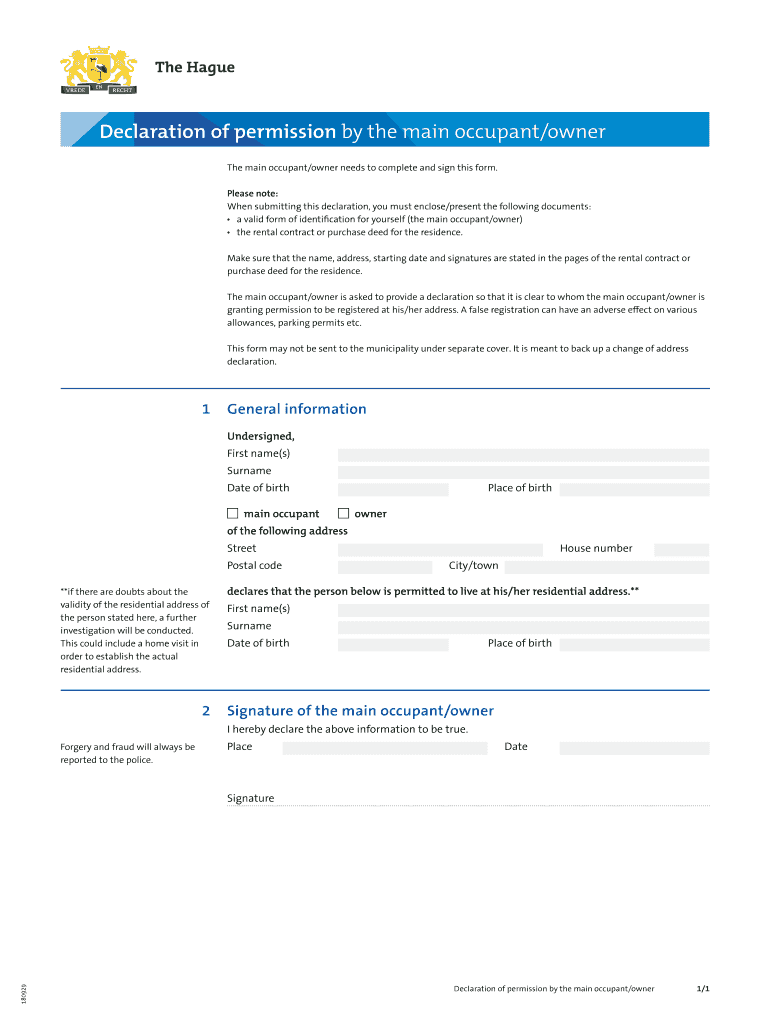







Definition & Meaning
The "Declaration of Permission by Main Occupant Owner" is a formal document that grants consent from a primary occupant or property owner to another party for specific uses or activities within a property. Typically, this document is employed in situations where the property owner or main occupant needs to authorize another party, such as a subtenant or temporary user, to access or utilize the property under agreed terms and conditions. It ensures that the permission is documented legally and can serve as proof of consent in case of disputes or misunderstandings. The declaration often includes details about the scope of permission, duration, limitations, and responsibilities of the involved parties.
How to use the Declaration of Permission by Main Occupant Owner
Using the Declaration of Permission by Main Occupant Owner involves several key steps to ensure it is executed appropriately:
-
Identify the Parties Involved: Clearly specify the main occupant or owner granting permission and the recipient who will be allowed certain rights on the property.
-
Detail the Scope of Permission: Outline what the permission entails, including the specific areas of the property that can be accessed or used and for what purpose.
-
Define the Duration: State the time frame during which the permission is valid, whether it's a fixed period or an ongoing agreement subject to future revocation.
-
Specify Responsibilities: Include any maintenance, repair, or other responsibilities that fall to the permitted party, ensuring clear obligations are set.
-
Obtain Necessary Signatures: The document must be signed by both parties to indicate agreement and acceptance of the terms laid out.
How to obtain the Declaration of Permission by Main Occupant Owner
To obtain the Declaration of Permission by Main Occupant Owner, follow these steps:
-
Consult Legal Resources: Check online or with a legal professional for templates or guidelines specific to your state or locality.
-
Contact Relevant Authorities: Depending on the nature of the permission, you may need to involve local housing authorities or property management for additional requirements.
-
Draft Customized Agreement: Using available resources, draft a declaration tailored to your specific situation. Ensure all required elements and legal stipulations are included.
-
Professional Review: Consider having the document reviewed by a legal expert to ensure compliance with local laws and regulations.
-
Finalize and Store Securely: Once completed and signed, store the document securely for future reference.
Steps to complete the Declaration of Permission by Main Occupant Owner
Completing the Declaration of Permission by Main Occupant Owner involves the following steps:
-
Gather Required Information: Collect all necessary details about the property, owner, and recipient. This includes personal information, property identifiers, and permission specifics.
-
Fill Out the Document: Use a clear, legible format to enter information accurately, ensuring all sections are completed.
-
Review Terms and Conditions: Double-check terms to ensure both parties fully understand their rights and responsibilities.
-
Sign the Document: Both parties should sign the document, with a witness or notary if required by local laws.
-
Distribute Copies: Provide copies to both parties and any third parties involved, such as property managers or legal representatives.
Important terms related to Declaration of Permission by Main Occupant Owner
Understanding key terms associated with the Declaration of Permission by Main Occupant Owner is crucial. These terms often include:
-
Grantor: The main occupant or property owner who provides permission.
-
Grantee: The individual or party receiving permission to use the property.
-
Usage Rights: The specific rights granted, outlining what the grantee can and cannot do.
-
Revocation Clause: A section that details how and when the permission can be withdrawn.
-
Indemnity Clause: A provision specifying who is liable for any damages or issues arising during the period of granted permission.
Legal use of the Declaration of Permission by Main Occupant Owner
The Declaration serves several legal uses and ensures compliance with state laws by:
-
Providing Documentation: Acts as a legal record of consent, protecting both parties in legal disputes.
-
Clarifying Rights: Clearly defines the scope of use to prevent unauthorized activities on the property.
-
Establishing Accountability: Sets legal obligations for maintenance, indemnity, and usage, aligning with local tenant laws.
Key elements of the Declaration of Permission by Main Occupant Owner
Key elements of this Declaration include:
-
Parties Involved: Explicit identification of the grantor and grantee.
-
Property Description: Detailed information about the property in question.
-
Nature of Permission: Comprehensive description of the permitted activities or residence.
-
Terms of Agreement: Including, but not limited to, duration, revocation, and responsibilities.
-
Signatures and Dates: Authorized consent from involved parties with the date of signing.
State-specific rules for the Declaration of Permission by Main Occupant Owner
State-specific regulations may influence the declaration's structure and enforceability. Consider:
-
State Property Laws: Ensure compliance with state-specific real estate and tenant laws that may affect the declaration.
-
Local Municipality Requirements: Verify if local ordinances require additional documentation or approvals.
-
State-specific Clauses: Include any clauses mandatory under your state's jurisdiction, which may address unique tenancy or property rules.
Examples of using the Declaration of Permission by Main Occupant Owner
Practical examples include:
-
Subleasing Scenarios: When a tenant wishes to sublet part of a property, they would use this declaration to outline terms and consent clearly.
-
Short-term Rentals: Owners providing permission for short-term rentals or Airbnb arrangements need a document to specify terms like rental duration and guest limits.
-
Temporary Access for Repairs: Granting permission to contractors or third parties to access property areas for maintenance or repairs requires clear documentation of allowed activities and times.




