




01. Edit your form online
Type text, add images, blackout confidential details, add comments, highlights and more.

Type text, add images, blackout confidential details, add comments, highlights and more.

Draw your signature, type it, upload its image, or use your mobile device as a signature pad.

Send it via email, link, or fax. You can also download it, export it or print it out.
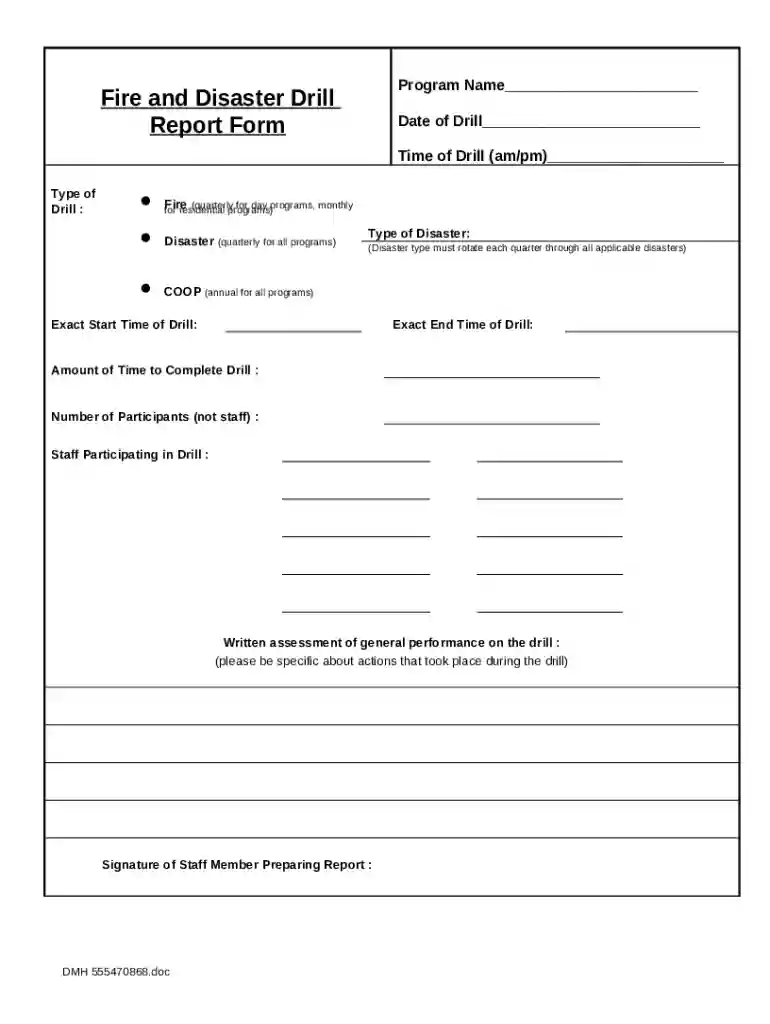
The Fire and Disaster Drill Form is a structured report used during fire and disaster preparedness exercises. It documents crucial details related to the drills, including the exact date, time, and type of drill conducted. Additionally, it captures the duration of the exercise, the number of participants involved, and an evaluation of performance. The primary purpose of this form is to ensure systematic recording and assessment of drill activities, which helps organizations maintain compliance and improve their emergency response strategies. By recording these details, organizations can identify areas for improvement and make informed decisions to enhance safety protocols.
Utilizing the Fire and Disaster Drill Form involves a systematic approach to capture essential data during the drill. Users should begin by filling out basic information such as the drill date and time, ensuring accuracy in documenting when the drill took place. The next step is to specify the type of drill, whether it is for a fire, earthquake, or other disaster. Following this, stakeholders must record the drill's duration to assess efficiency. The number of participants is also documented to understand engagement levels and simulate realistic emergency conditions. Finally, a performance assessment should be conducted, taking notes on strengths and weaknesses observed during the exercise.
The form includes several critical components necessary for comprehensive reporting:
Using this form is vital for organizations aiming to enhance their emergency preparedness. It provides a structured method for evaluating the effectiveness of drills, ensuring that safety procedures are followed and understood by all participants. The insights gained from performance assessments can lead to improved training programs and updated emergency plans, ultimately contributing to a safer environment for employees and visitors. Consistently using the form can help organizations track progress over time and meet regulatory compliance requirements.
The Fire and Disaster Drill Form is commonly used by a broad range of organizations, including:


Legally, the use of the Fire and Disaster Drill Form aligns with occupational safety regulations. It helps organizations demonstrate compliance with laws dictating workplace safety and emergency response readiness. The documentation provided by this form can serve as evidence during audits or inspections, showcasing an organization's commitment to maintaining a safe work environment. Regular drills and documentation are integral parts of emergency preparedness plans required by agencies like OSHA.
While the basics of recording drills are generally consistent, state-specific rules may dictate variations. For instance:
Understanding these nuances ensures compliance with local regulations. It is essential for organizations to consult state guidelines to align their emergency procedures and documentation with regional safety standards.
At DocHub, your data security is our priority. We follow HIPAA, SOC2, GDPR, and other standards, so you can work on your documents with confidence.




Fire Drill Response Form. Section 1: General Information. Section 2: Alarm Information. Did all alarm devices on your floor activate? Section 3: EvacuationRead more
Please Write Clearly. Licensed Family providers must hold fire drills quarterly (once every three months), and a disaster drill once a year.Read more
We provide National leadership to foster a solid foundation for our fire and emergency services stakeholders in prevention, preparedness, and response.Read more


