






Definition and Meaning
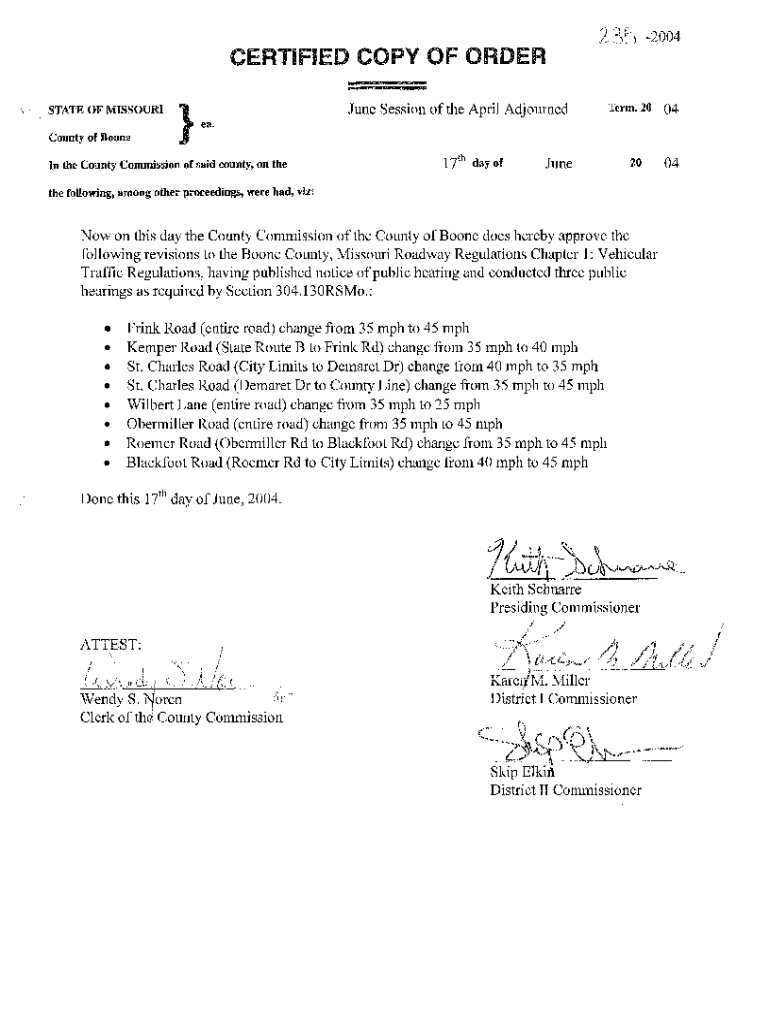
A Certified Copy of Order refers to an official reproduction of a legal order that has been verified as true and exact by the issuing authority. This document is commonly utilized in legal proceedings to ensure that all parties have access to an authentic version of the original order. Certified copies uphold their validity in court and other formal settings, serving as critical pieces of evidence or reference material. For instance, in Boone County, Missouri, such orders might involve decisions on municipal changes, like speed limit adjustments or appointments to local committees.
How to Use the Certified Copy of Order
Certified copies of orders are used in a variety of legal contexts. They serve to confirm and enforce the terms of an order issued by a court or other authoritative body. In practice, these copies are crucial when you need to provide evidence of a court’s decision in subsequent legal proceedings. For example, in real estate transactions or custody cases, a certified order ensures that all parties adhere to the stipulated conditions. Furthermore, they can be requested by professionals handling estate settlements or when challenging a decision in a higher court.
How to Obtain the Certified Copy of Order
To acquire a certified copy of an order, you generally need to contact the court or authority that issued the original document. The specific process may vary based on the jurisdiction, but typically involves an application or request form, identification documentation, and a fee. In some cases, like Boone County, this might mean contacting the county clerk's office or utilizing an online system if the area provides digital access to court documents. Applicants should verify which documents and fees are necessary for their particular jurisdiction to ensure a smooth acquisition process.
Steps to Complete the Certified Copy of Order Request
- Identify the Issuing Authority: Determine which court or legal body issued the original order.
- Gather Required Information: Collect necessary details such as case numbers, dates, and parties involved.
- Prepare Necessary Documents: Have identification and any required forms ready.
- Submit Application: File your request through the designated method—online, mail, or in person.
- Pay Any Associated Fees: Ensure all processing fees are covered to avoid delays.
- Await Processing: Processing times can vary, so check the status if necessary.
These steps ensure you have the certified copy ready for use within legal, property, or personal matters.
Important Terms Related to Certified Copy of Order
Understanding certain legal terms related to certified copies can demystify the process:
- Authentication: Verification of a document as an accurate representation of the original.
- Notarization: Often confused with certification; notarization is a separate process assuring the signer's identity and willingness, while certification confirms document authenticity.
- Docket Number: A unique identifier for legal cases. Necessary when requesting document copies.
- Jurisdiction: Refers to the legal authority that issued the order, whose rules determine request procedures.
Legal Use of the Certified Copy of Order
Certified copies play a pivotal role in legal situations where verifying the authenticity of an official order is crucial. They are used in:
- Court Appeals: Providing evidence to appellate courts.
- Legal Compliance: Ensuring adherence to judicial decisions in corporate restructuring or mergers.
- Document Evidence: Substantiation of claims in civil or family court disputes.
Understanding these uses reassures users of the document's importance in maintaining legal integrity and clarity.
Key Elements of the Certified Copy of Order
A Certified Copy of Order typically includes:
- Issuing Authority's Stamp: Official seal or signature to authenticate the document.
- Case Details: Identifiers like case or order numbers, date of issuance, and involved parties' names.
- Exact Replication: The content must precisely mirror the original order, ensuring no alterations.
These components guarantee the certified copy’s authenticity and enforceability in legal settings.
State-Specific Rules for the Certified Copy of Order
Each state may have its own procedures for obtaining a certified copy of an order, reflecting local legal practices and requirements. For instance, while some jurisdictions allow online requests, others might require in-person applications. Additionally, fee structures and processing times can differ widely. Missouri, for example, might have unique protocols compared to California or New York. It’s essential for individuals to familiarize themselves with the specific requirements of their state to avoid unnecessary delays and ensure compliance with local legal standards.