






Definition & Meaning
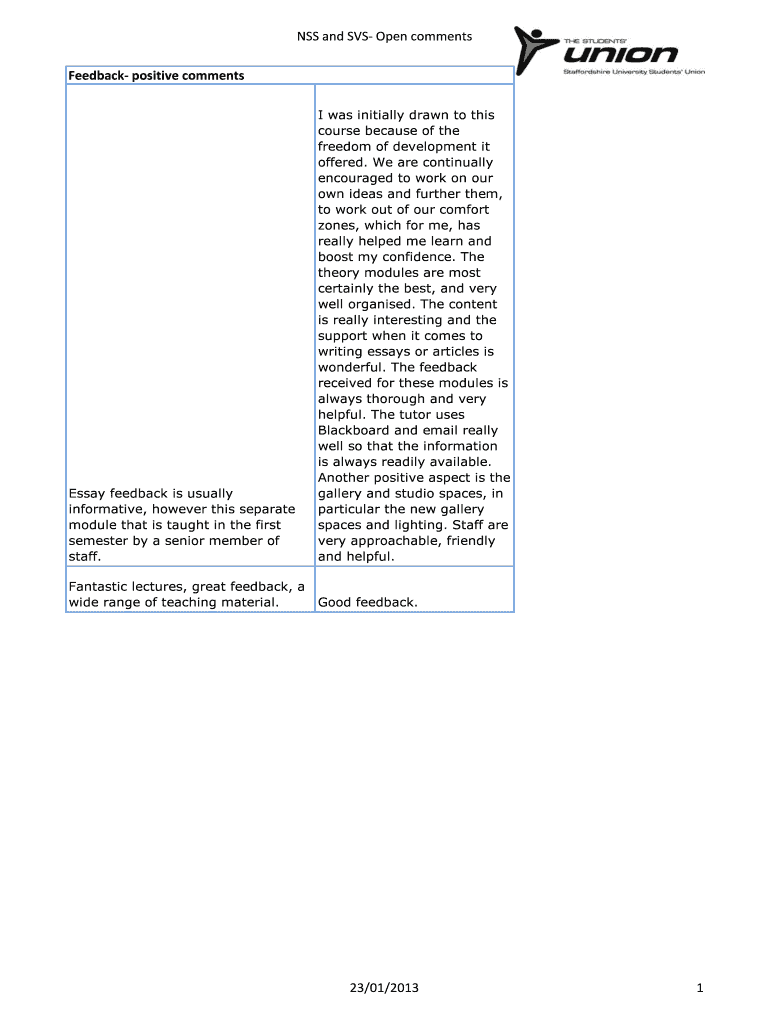
The "NSS and SVS- Open comments Feedback- positive comments 23 01" form is a document specifically designed to gather feedback from students regarding their experiences with National Student Survey (NSS) and Student View Survey (SVS) courses. This feedback is crucial as it provides insights into the quality of teaching, the effectiveness of staff support, and the engagement level of course content. Positive comments often highlight beneficial aspects such as the high standard of teaching and supportive nature of the educational staff. This information is instrumental in shaping and improving future course offerings.
How to Use the NSS and SVS Form
To effectively utilize this feedback form, start by distributing it to students enrolled in the NSS and SVS courses. Ensure that students understand the importance of providing honest and constructive comments. The form should ideally be completed online to facilitate prompt submission and digital aggregation of responses. Students should be encouraged to reflect on specific aspects of their course experience, such as teaching quality, course content, and the support they received from faculty. Their feedback will then be analyzed to identify areas of success and opportunities for improvement.
Steps to Complete the NSS and SVS Form
- Access the Form: Students receive a digital link to the feedback form via email or an online learning platform.
- Understanding the Sections: Prior to starting, students should thoroughly read all sections of the form to understand what type of feedback is being requested.
- Reflect on Course Experience: Respondents need to consider their entire academic experience, focusing on moments that stood out positively.
- Provide Detailed Comments: Students should write comprehensive and specific feedback in each section, mentioning particular instructors or course elements when relevant.
- Submit the Form: After completing all sections, students should review their responses for clarity and accuracy before submitting the form.
Who Typically Uses the NSS and SVS Form
The primary users of the NSS and SVS feedback form are students enrolled in courses that fall under these surveys. Secondary users include educational administrators, faculty members, and academic improvement committees who analyze the feedback to enhance the quality of educational offerings. The form is also valuable for academic researchers studying educational methods and student engagement levels to foster an environment conducive to learning and personal growth.


Key Elements of the NSS and SVS Form
- Teaching Quality: Students assess the effectiveness and clarity of instructors and their methods.
- Staff Support: Feedback on how supportive and approachable the educational staff is throughout the course.
- Course Content: Evaluation of the relevance, engagement, and ability of the material to enhance learning.
- Infrastructure: Comments on resources availability, such as libraries and technical support.
- Development Opportunities: Assessment of how the course helps in personal and professional growth.
Examples of Using the NSS and SVS Form
A student named Jenna, taking a computer science course, might use the form to commend her instructor for providing detailed lecture notes and timely feedback on assignments. Similarly, David, an arts student, could highlight the engaging nature of his practical sessions and the support he received when preparing for exhibitions. These examples underline the form's role in bridging communication between students and faculty to refine academic standards continually.
Important Terms Related to the NSS and SVS Form
- NSS (National Student Survey): An annual survey capturing the opinions of final-year undergraduates across the nation on their university experience.
- SVS (Student View Survey): A survey targeting a broader set of students focusing on their educational journey across different stages.
- Feedback Analysis: The process of collecting, reviewing, and interpreting feedback to enact positive changes.
Digital vs. Paper Version
The NSS and SVS feedback forms are predominantly digital, aligning with contemporary preferences for online submissions to facilitate ease of access, encourage higher response rates, and streamline data analysis. Digital forms offer the advantage of real-time feedback collection, efficient data management, and environmentally friendly operations. However, paper versions might still be used in specific situations where digital access is limited, ensuring inclusivity for all students.