




01. Edit your form online
Type text, add images, blackout confidential details, add comments, highlights and more.

Type text, add images, blackout confidential details, add comments, highlights and more.

Draw your signature, type it, upload its image, or use your mobile device as a signature pad.

Send it via email, link, or fax. You can also download it, export it or print it out.
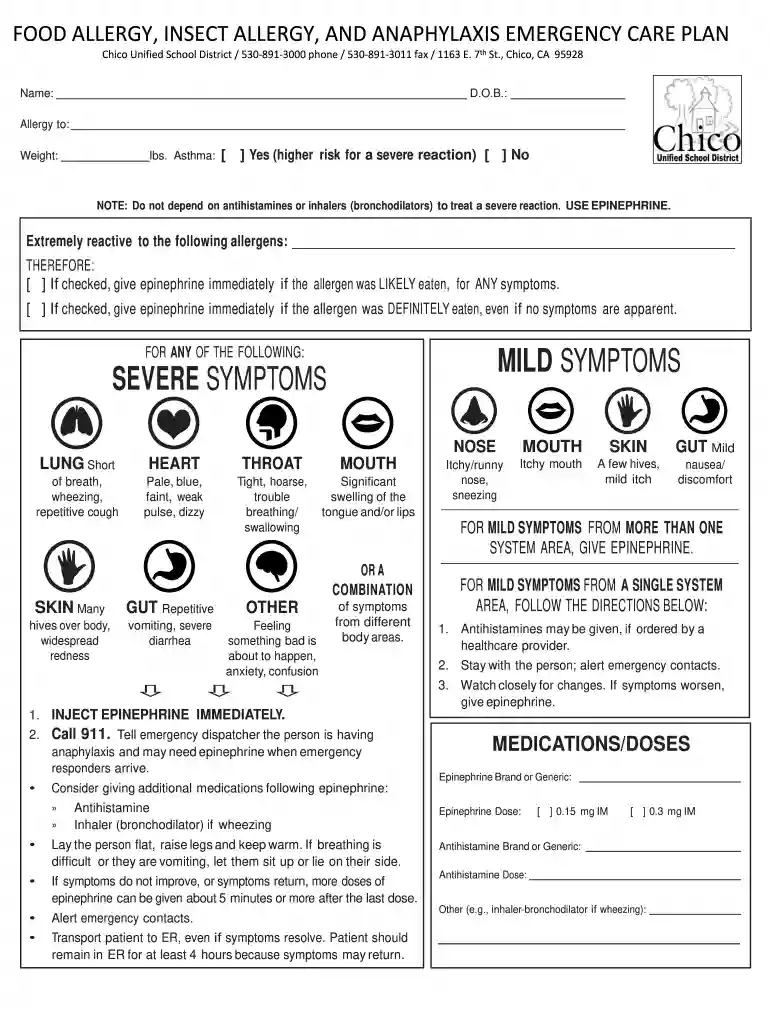
The "Food Allergy, Insect Allergy, and Anaphylaxis Emergency Care Plan" is a structured document aimed at providing clear instructions for managing severe allergic reactions. It outlines the steps to be followed in the event of anaphylaxis, ensuring rapid and effective emergency care. The document is designed to guide individuals and caregivers in identifying symptoms, administering life-saving medication, and understanding the importance of immediate medical intervention.
To use the emergency care plan effectively, familiarize yourself with its layout and instructions before an allergic reaction occurs. Keep the plan accessible in locations such as home, school, and workplace.
The care plan consists of several critical elements, which must be understood and followed to ensure effective emergency response.
Completing the emergency care plan requires careful attention to each section to ensure comprehensive coverage of potential scenarios.
Real-world scenarios demonstrate how the care plan is put into practice. These cases highlight the importance of having a structured approach to emergency care.
Understanding who should use the care plan is crucial for ensuring that it benefits those who need it the most.


This plan is essential not only for individuals directly affected but also for those responsible for their care.

Certain U.S. states may have variations in requirements for the care plan. Ensure compliance with local regulations to avoid legal issues.
To obtain the plan, access reliable sources that offer customizable templates aligned with the required legal and medical standards.
At DocHub, your data security is our priority. We follow HIPAA, SOC2, GDPR, and other standards, so you can work on your documents with confidence.
If child has ANY of these severe symptoms after eating the food or having a sting, give epinephrine. Shortness of breath, wheezing, or coughing.
Jul 6, 2011 product for use in the emergency treatment of extreme acute allergic reactions, or anaphylactic shock. insect sting anaphylaxis, up to 6% are


