
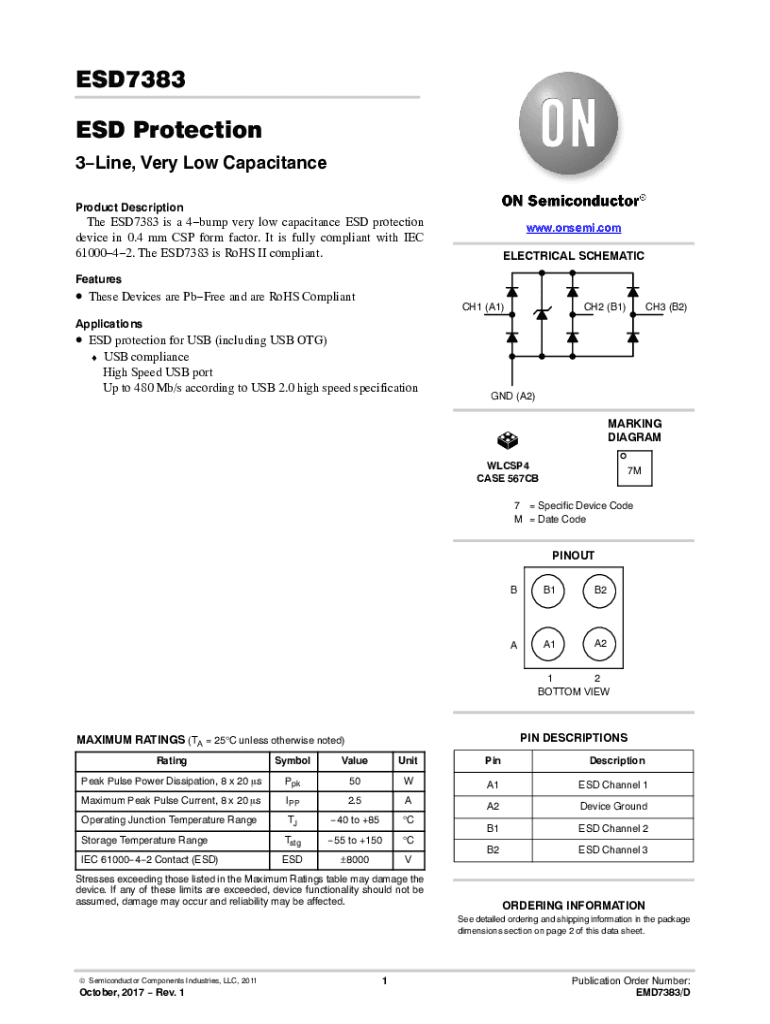







Definition and Meaning
The ESD7383 is a specialized device designed to protect electronic circuits from electrostatic discharge (ESD) damage. It features a very low capacitance, making it ideal for high-speed data applications. This particular ESD protection device is configured with a 3-line setup and comes in a 4-bump form factor, which means it is compact and can be easily integrated into dense circuitry. The ESD7383 is compliant with IEC 61000−4−2, ensuring it meets international standards for top-level ESD protection. It is also RoHS II compliant, which means it adheres to environmental and health safety standards by restricting hazardous substances.
How to Use the ESD7383
Using the ESD7383 involves connecting it to the appropriate lines in electronic circuitry to guard against ESD events. It is crucial to properly integrate this device within your design to ensure maximum protection. Here’s a step-by-step process to implement the ESD7383 into your systems:
- Identify the Critical Lines: Determine which lines in your circuit are most vulnerable to ESD and require protection.
- Placement and Orientation: Ensure the ESD7383 is placed correctly in line with the vulnerable points, taking note of the correct orientation with respect to your circuit layout.
- Soldering: Secure the component onto the PCB, ensuring all connections are robust to avoid poor contact which might reduce its effectiveness.
- Testing: After installation, test the circuitry to ensure that the device is effectively protecting against ESD without impairing the function of other components.
Important Terms Related to ESD7383
Understanding some of the technical terms is beneficial for utilizing the ESD7383.
- Capacitance: A measure of a component's ability to store an electrical charge. Lower capacitance in ESD protection devices ensures minimal interference with high-speed data signals.
- IEC 61000-4-2 Compliance: Indicates that the device meets specific international standards for immunity to ESD, vital for ensuring its reliability in harsh conditions.
- RoHS II Compliance: Restriction of Hazardous Substances, which ensures that the device is free from specific toxic metals and materials, reflecting its environmental safety credentials.
Legal Use of the ESD7383
The ESD7383 complies with legal standards that are critical for ensuring the device can be used globally without restriction. Its alignment with IEC standards and RoHS compliance means it is legally approved for use in both industrial and consumer applications. Ensuring legal compliance is essential when integrating components for commercial distribution.
Key Elements of the ESD7383
The ESD7383 contains several key elements that enhance its functionality:
- 4-Bump Form Factor: Provides a compact design, facilitating easy integration into tight circuit configurations.
- Three-Line Protection: Offers ESD protection across three lines, ideal for applications where multiple data lines are bundled.
- High-Speed Data Capability: Capacitance low enough to manage high-speed data transfer, such as that required for USB 2.0 standards.
Examples of Using the ESD7383
There are numerous practical applications for the ESD7383 across different industries:
- USB Peripheral Protection: Ensures integrity of data and hardware for USB-connected devices, especially in environments prone to ESD.
- Telecommunications: Used in devices that require protection for data lines carrying high-frequency signals.
- Consumer Electronics: Integrated into tablets, smartphones, and gaming consoles needing robust, low-capacitance protection.
Business Types That Benefit Most
Certain business sectors can benefit immensely from the utilization of the ESD7383:
- Consumer Electronics Manufacturers: To enhance product durability and meet regulatory standards.
- Telecommunications Equipment Providers: For ensuring device reliability under varying conditions.
- Computer and Network Equipment Designers: To protect high-speed data lines without affecting performance.
Versions or Alternatives to the ESD7383
While the ESD7383 is a highly effective ESD protection device, designers and engineers may consider alternative models based on specific needs:
- ESD7361: Offers another blend of capacitance and line protection with a different form factor to suit varied circuit designs.
- Custom ASIC Designs: For specialized applications where traditional devices might not provide the needed specifications.
Understanding these variants allows businesses and developers to make informed decisions based on specific protection requirements, keeping in mind the nuances of capacitance and the form factor needed for their particular application.




