







Definition & Meaning
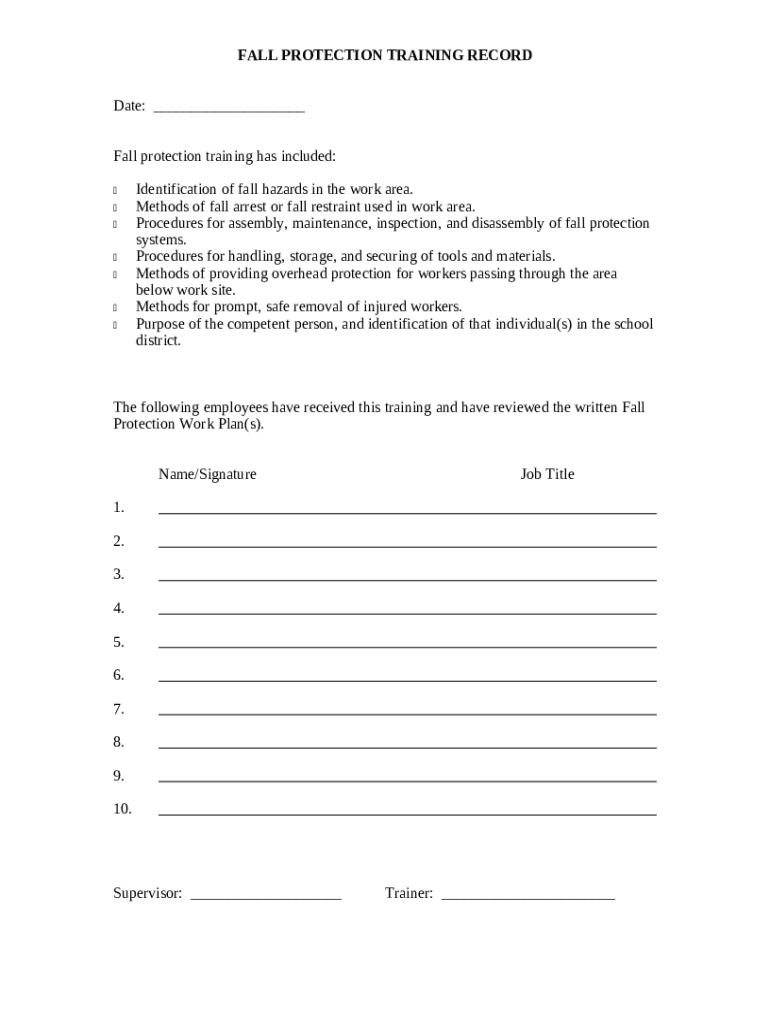
A District Fall Protection Work Plan is a critical document tailored to outline strategies and measures for preventing workplace fall incidents. It serves as a blueprint for identifying potential fall hazards within a district and prescribing appropriate safety measures to mitigate those risks. Organizations often use this plan as a standardized framework to ensure uniform safety procedures and compliance across various districts. The plan's comprehensive nature guarantees that every possible scenario involving fall risks is addressed, thus safeguarding employees from potential injuries.
Purpose of the Document
- Risk Identification: Recognizes specific areas and tasks that are prone to fall hazards.
- Safety Measures: Details safety equipment and practices to prevent fall incidents.
- Training Requirements: Specifies necessary training for employees to understand and manage fall risks effectively.
The document is not just a procedural formality but a valuable tool for reinforcing a culture of safety within an organization.
How to Use the District Fall Protection Work Plan
Using the plan effectively involves understanding its content and integrating it into daily operations. Here’s a breakdown of how it can be utilized:
Step-by-Step Integration
- Risk Assessments: Conduct routine assessments using the guidelines in the plan to identify any new or persistent fall hazards within your district.
- Training Sessions: Schedule and provide training based on the plan’s recommendations. Ensure all staff understand their roles in maintaining fall protection.
- Equipment Checks: Perform regular checks of all fall protection equipment as specified in the plan to ensure functionality and compliance.
- Monitoring and Updates: Continuously monitor the effectiveness of implemented strategies and update the plan as necessary to address emerging risks or changes in legislation.
Steps to Complete the District Fall Protection Work Plan
Completing the work plan involves several key steps to ensure it addresses all relevant safety concerns.
Detailed Instructions
- Identify Hazards: Systematically outline all potential fall hazards identified during workplace inspections.
- Outline Procedures: Document the procedures and safety measures that have been implemented to mitigate these risks.
- Assign Responsibilities: Clearly designate roles and responsibilities for those involved in maintaining and monitoring fall protection practices.
- Review and Approval: Ensure the plan is reviewed by supervisors or safety officers and approved by the relevant authority before implementation.
Key Elements of the District Fall Protection Work Plan
A comprehensive fall protection work plan should incorporate distinct elements that collectively enhance workplace safety.
Critical Components
- Hazard Assessment: Detailed descriptions of identified hazards and the methodology used for identification.
- Preventive Strategies: Specific measures and equipment recommendations for fall prevention.
- Training Programs: Outline of training regimes tailored to different job roles within the organization.
- Incident Response: Protocols for addressing and reporting fall incidents promptly and effectively.
Each of these components plays an indispensable role in the overall effectiveness of the fall protection plan and requires meticulous attention.
Who Typically Uses the District Fall Protection Work Plan
Various stakeholders within an organization are involved in utilizing and implementing the District Fall Protection Work Plan.


Primary Users
- Safety Officers: Responsible for drafting and updating the plan to reflect current safety standards and legislative requirements.
- Supervisors and Managers: Oversee the implementation of the plan and ensure compliance at all operational levels.
- Employees: Engage with plan contents through training and daily operational adherence to set procedures.
These users ensure the plan is not just a document but an active component of workplace safety strategy.
Legal Use of the District Fall Protection Work Plan
Understanding the legal implications of the fall protection work plan is crucial for compliance and protection from liabilities.
Compliance Guidelines
- Regulatory Adherence: The plan must align with Occupational Safety and Health Administration (OSHA) standards and local state regulations.
- Documentation: Maintain thorough records of training sessions, incidents, and plan updates as part of legal compliance and audits.
- Liability Protection: A well-implemented plan helps shield the organization from potential lawsuits or penalties associated with workplace fall incidents.
Legal compliance through the fall protection work plan not only enhances safety but also fortifies the organization’s legal standing.
State-Specific Rules for the District Fall Protection Work Plan
Different states may have varying regulations and requirements for fall protection.
Regional Variations
- California: Stronger emphasis on training requirements and documentation due to the state's stringent health and safety laws.
- Texas: Focus on practical implementation and regular equipment checks as mandated by local regulatory bodies.
- New York: Additional provisions for urban settings, addressing specific risks associated with high-rise buildings and structures.
Understanding and integrating these state-specific rules ensures the plan’s compliance in diverse jurisdictions.
Examples of Using the District Fall Protection Work Plan
Illustrative examples can offer practical insights into the application of the fall protection plan in real-world scenarios.
Case Scenarios
- Construction Sites: Implementation of detailed fall protection measures during the building of high-rise complexes.
- Maintenance Operations: Use of specific harnesses and guardrails tailored for maintenance workers operating at heights.
- Warehouse Settings: Designated training sessions and safety checks for employees working on elevated platforms.
These examples demonstrate the plan’s flexibility and applicability across different work environments, contributing to its effectiveness as a safety tool.




