




01. Edit your form online
Type text, add images, blackout confidential details, add comments, highlights and more.

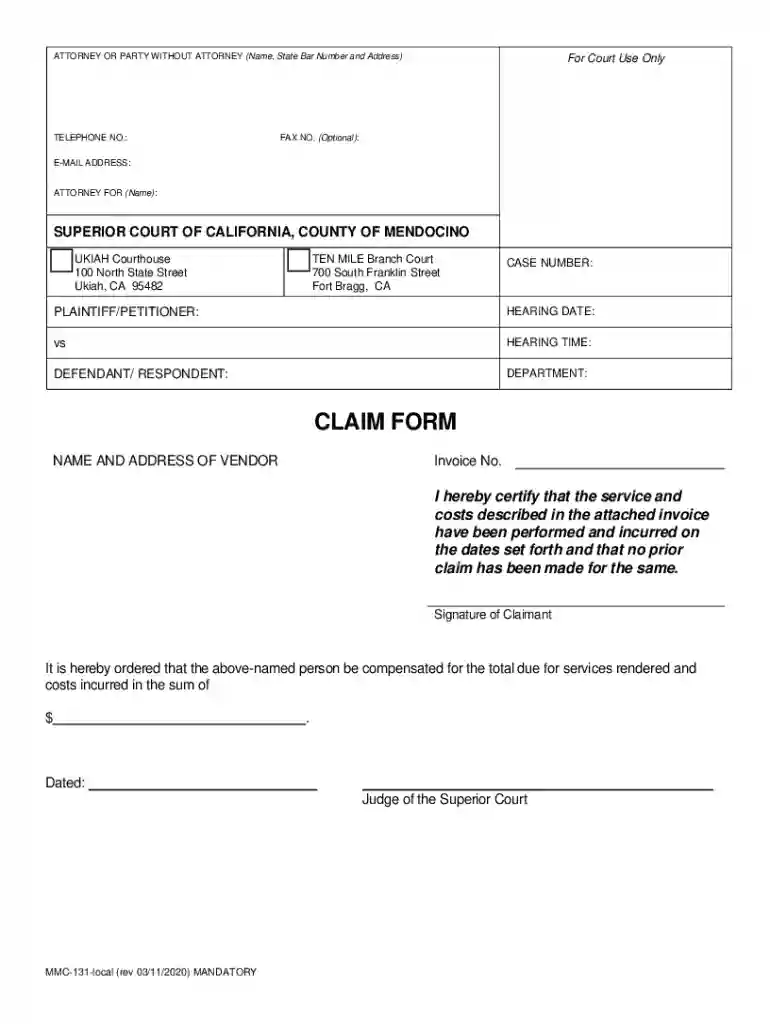
Type text, add images, blackout confidential details, add comments, highlights and more.

Draw your signature, type it, upload its image, or use your mobile device as a signature pad.

Send it via email, link, or fax. You can also download it, export it or print it out.
The Office of the District Attorney in Mendocino County, CA, acts as the chief prosecutor for the county, representing the government in criminal cases. Their role encompasses evaluating evidence, deciding on charges, and overseeing legal proceedings. This office is pivotal in ensuring justice and maintaining public safety, handling cases ranging from minor infractions to serious felonies. Their duties often extend into advising law enforcement during investigations and participating in community-based crime prevention programs.
Understanding the function of the Office of the District Attorney in Mendocino County gives insight into the broader judicial process within the region. It signifies a structured approach to law enforcement, emphasizing a close collaboration with other judicial and investigative entities.
Engaging with the Office of the District Attorney in Mendocino County typically involves several steps:
Contacting the Office: Start by reaching out to the office via phone or through their official website. This contact can be for reporting a crime, seeking legal advice regarding pending charges, or inquiring about ongoing cases.
Consultation: Arrange a consultation if you are a victim or witness in a criminal case. The office provides guidance on legal rights, the prosecution process, and what to expect in court.
Case Participation: For those involved in cases as victims or witnesses, participation is crucial. This may involve providing witness statements, attending court hearings, or reviewing case developments with assigned prosecutors.
Community Resources: Utilize programs and resources offered by the office aimed at crime prevention and community education. These initiatives can provide valuable information on legal processes and personal safety.
Engaging effectively with the Office of the District Attorney can influence the outcome of a case and ensure that justice is served.
Filling out legal documents for cases involving the Mendocino County District Attorney requires attention to detail and a comprehensive approach:
Gather Required Information: Before filling out forms, collect all pertinent information such as personal identification, details of the incident, and relevant evidence or documentation.
Review the Form Instructions: Each form comes with specific instructions. Carefully read through these to understand the required information and format.
Complete the Form: Fill out each section accurately, ensuring all mandatory fields are completed. Use legible handwriting or type, depending on the form requirements.
Attach Supporting Documents: Include any necessary documentation, such as police reports, witness statements, or photographic evidence, to support your case.
Submit the Form: Submit the completed form via the specified method, whether online, by mail, or in person, to ensure timely processing.
It is crucial to follow these steps to avoid delays or complications in the legal proceedings.
Understanding legal terminology is fundamental when dealing with the Office of the District Attorney. Here are some key terms:
These terms frequently appear in dealings with the District Attorney's Office and can impact how legal processes unfold.
The legal utilization of the District Attorney's Office involves using the office's resources and legal authority to address criminal activities appropriately:
These legal uses ensure that justice is pursued effectively and the rule of law is maintained.
Several essential components define the operation of the District Attorney's Office:
These elements help in seamlessly orchestrating the complex nature of criminal legal proceedings.
Adhering to deadlines is critical in legal processes managed by the DA's Office:
Failure to adhere to these deadlines can lead to case dismissals or other legal complications.
The Office of the District Attorney in Mendocino County offers several submission methods:
Selecting the appropriate submission method can expedite processes and ensure compliance with legal requirements.
At DocHub, your data security is our priority. We follow HIPAA, SOC2, GDPR, and other standards, so you can work on your documents with confidence.


Feb 2, 1983 ⚫ For more information call: Computer Faire, 345 Swett Road, Woodside, CA 94062 (415) 851-7077. Ask for your FREE subscription to the Faires
Address: Mendocino County District Attorney, PO Box 1000, Ukiah, CA 95482-1000. Phone: 707-972-3904 | Fax: 707-472-0945. Email: Not Available | Website:
RICHARD J. HENDERSON. JONATHAN M. LEHAN. ALBERT J. KUBANIS. VINCENT T. LECHOWICK. ANDREW J. REESE. DEPUTY DISTRICT ATTORNEYS. P. O. BOX 185 COURTHOUSE.


