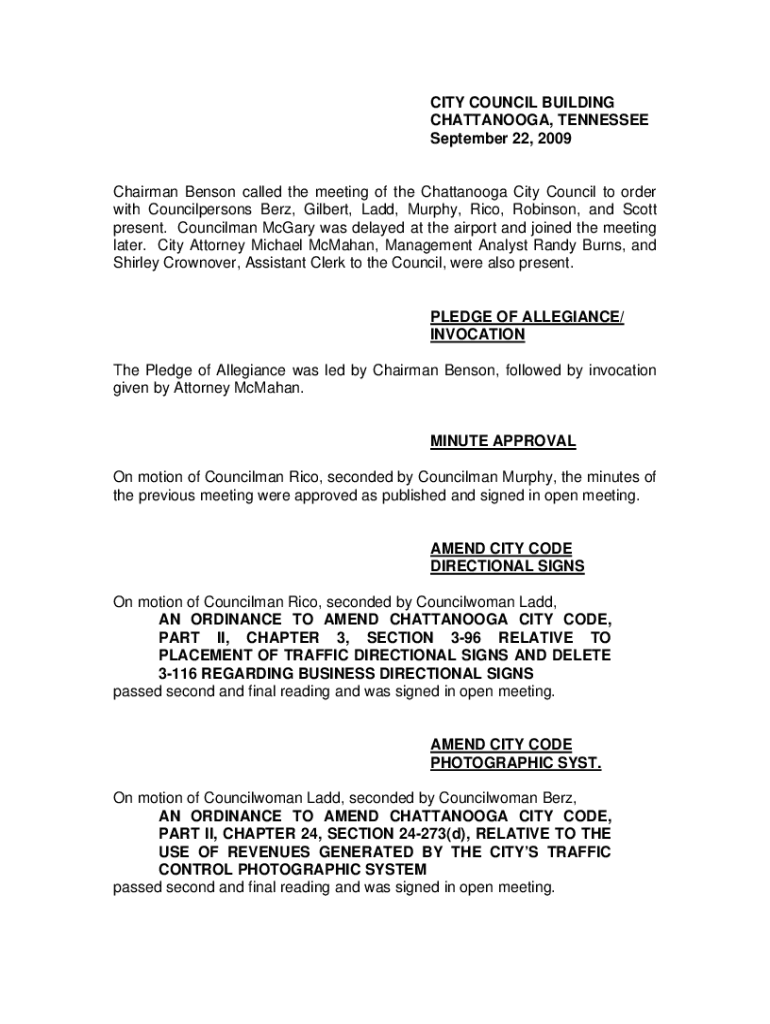







Definition & Meaning
The "city council building - Chattanooga" refers to the administrative headquarters where Chattanooga's city council conducts its affairs. This building is central to local governance, housing various municipal offices and serving as a venue for city council meetings. Such meetings typically address community issues, legislative decisions, and city management, embodying the democratic process at a local level.
Important Facilities within the Building
- City Council Chambers: A designated space for council meetings and public hearings.
- Administrative Offices: Areas where city officials and staff manage operations, policies, and public records.
- Public Access Areas: Sections open to the public for attending meetings or accessing city services.
Historical Context
The building has a rich history, symbolizing the city's growth and evolving governance. It is integral to Chattanooga's civic engagement, housing numerous historical documents and records reflecting the city's legislative journey.
How to Use the City Council Building - Chattanooga
Utilizing the city council building involves multiple forms of interaction, ranging from participating in meetings to accessing public records. Citizens can engage with the city council through:
Attending Meetings
- Public Sessions: Open to all citizens, offering a platform for public comments and insights into decision-making processes.
- Special Hearings: Focused on particular issues like budget proposals or policy changes, where public input is especially valuable.
Accessing Services
- Information Desks: Provide guidance on municipal services and direct visitors to the appropriate city departments.
- Record Request Facilities: Locations within the building where individuals can request public records, resolutions, and minutes from past meetings.
Key Elements of the City Council Building - Chattanooga
The building's design and facilities cater to both functional and civic requirements, ensuring a conducive environment for governance and public participation.
Architectural Features
- Design: Blending traditional and modern architectural styles, reflective of Chattanooga's heritage and progress.
- Sustainability Initiatives: Incorporating energy-efficient systems and eco-friendly materials to reduce the building's environmental footprint.
Technological Infrastructure
- Digital Displays: For real-time updates and agendas of ongoing meetings.
- Online Access Points: Providing digital access to municipal services and resources for remote users.
Steps to Access Services at the City Council Building - Chattanooga
-
Identify the Required Service: Determine the specific municipal service or department needed, such as zoning, public works, or city permits.
-
Visit the Information Desk: Upon arrival, head to the information desk for directions and assistance in navigating the building.
-
Attend Scheduled Appointments: While some services allow walk-ins, others may require scheduling an appointment in advance for more specialized resources.
-
Access Digital Resources: Utilize available computers or kiosks within the building to access online services, submit forms, or make public record requests.
Who Typically Uses the City Council Building - Chattanooga
The building serves a wide demographic, primarily involving:


Citizens and Residents
- Engagement: Residents participate in council meetings and public hearings to voice concerns and influence local governance.
City Officials and Employees
- Administration: Staff work within various departments housed in the building, focusing on city management and policy implementation.
Legal Use of the City Council Building - Chattanooga
Utilizing the building requires adherence to specific legal and procedural norms designed to ensure orderly conduct and security.
Access Regulations
- Security Protocols: All visitors may be required to undergo security checks to ensure safety within the premises.
- Code of Conduct: Guidelines governing behavior during public sessions, including decorum and adherence to allotted speaking times.
Legal Implications of Participation
- Freedom of Information: Ensures that public requests for municipal records are processed in compliance with state and federal transparency laws.
- Public Input: Legally permits citizens to participate in council meetings, promoting transparency and accountability in civic processes.
Examples of Using the City Council Building - Chattanooga
The building regularly hosts various events applicable to both government officials and the public:
Community Involvement
- Public Consultations: Sessions focused on community projects and initiatives, facilitating feedback from residents.
- Workshops and Seminars: Conducted to educate citizens on civic duties, local policies, and community development projects.
Government Functions
- Legislative Sessions: Regular city council meetings where laws and procedures are discussed and enacted.
- Budget Hearings: Critical evaluations and recommendations concerning city expenditure and fiscal strategy.
State-Specific Rules for the City Council Building - Chattanooga
The use and administration of the council building follow Tennessee-specific legal frameworks that govern municipal operations:
Local Ordinances
- Meeting Notifications: Requirements for publicizing meeting times and agendas in advance to ensure community participation.
- Transparency Initiatives: State mandates on open records and meetings, reinforcing public accessibility to government proceedings.
Compliance Requirements
- Zoning Laws: Ensuring that all activities within the building adhere to local zoning and structural safety codes.
- Environmental Regulations: State-imposed measures for sustainable operation and reduced ecological impact.