







Definition and Meaning
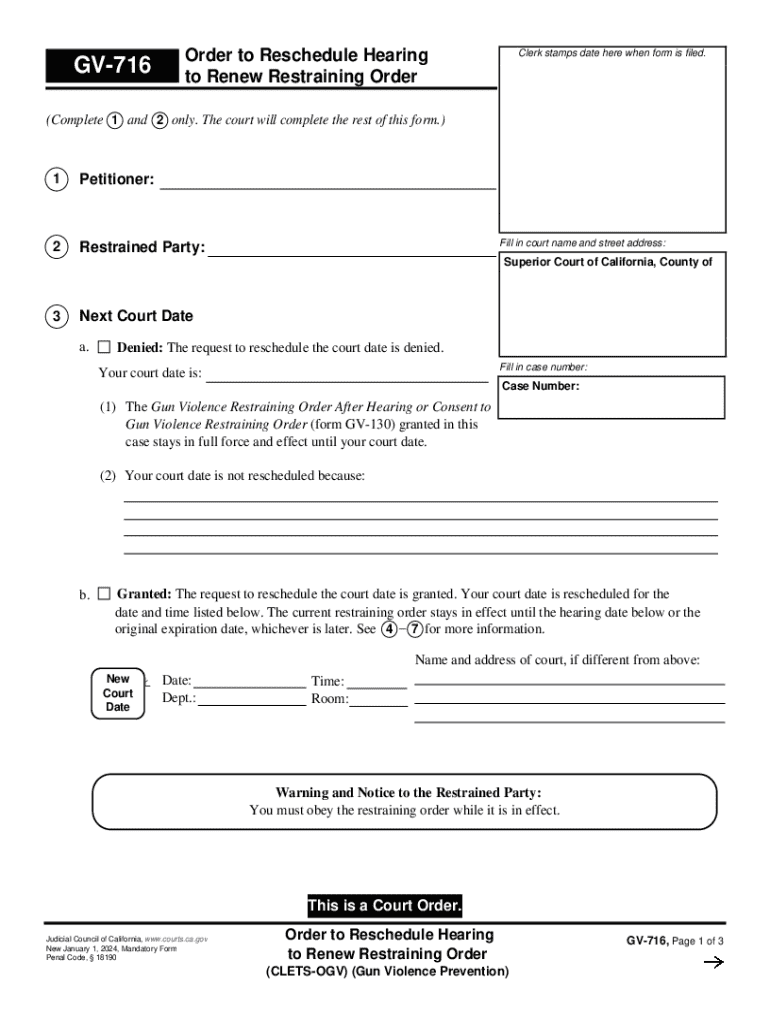
The GV-716 form is a legal document used to reschedule a hearing for the renewal of a gun violence restraining order. This form plays an integral role in ensuring that both petitioners and restrained individuals are formally notified about changes to their court dates, maintaining the effectiveness of the restraining order until the new hearing occurs. Understanding the procedural importance of the GV-716 is crucial for those involved in legal processes related to gun violence restraining orders. This form provides a structured means to navigate the complex legal pathways involved in these sensitive matters.
How to Use the GV-716
When using the GV-716 to reschedule a hearing, several steps must be followed to ensure compliance with legal procedures. Initially, both parties involved—the petitioner, who is requesting the reschedule, and the respondent, who is subject to the restraining order—should familiarize themselves with the conditions under which a scheduling change can occur. Typical scenarios require demonstrating a valid reason for the reschedule request, such as conflicting appointments or unforeseen circumstances. Once the form is completed, it must be submitted appropriately to the local court where the original restraining order was issued.
How to Obtain the GV-716
To obtain the GV-716 form, individuals can typically access it through the official website of their state's judicial branch. It is often available in the forms section, categorized under restraining order forms. Additionally, local courthouses provide physical copies of the form. It is advisable to verify the most recent version of the form, as legal documents can be subject to updates and changes.
Steps to Complete the GV-716
- Identify Parties Involved: Begin by clearly listing the petitioner and respondent's details, including names and contact information.
- Specify the Current Hearing Details: Indicate the original hearing date and location to provide context for the reschedule request.
- State the Reasons for Rescheduling: Use the appropriate section to explain the necessity for a new hearing date. This should include any supporting documentation that validates the reason for rescheduling.
- Propose New Dates: Offer alternative dates for the hearing. This demonstrates willingness to cooperate and find a mutually agreeable new date.
- Sign and Submit: Ensure all sections are duly filled, signed, and dated before submission. The form may require notarization depending on jurisdiction.
Who Typically Uses the GV-716
The GV-716 is primarily used by individuals involved in gun violence restraining orders, including both the person protected by the order and the individual subject to it. Legal representatives or attorneys might also handle the form on behalf of their clients to facilitate the rescheduling of hearings. The form ensures both parties are legally informed of any changes to the hearing dates, maintaining transparency and procedural fairness.


Important Terms Related to GV-716
- Petitioner: The individual requesting the hearing reschedule.
- Respondent: The person against whom the restraining order is filed.
- Restraining Order: A legal order issued to protect individuals from harassment or harm by another party.
- Hearing: A session conducted in court to resolve legal matters pertaining to the restraining order.
Legal Use of the GV-716
Using the GV-716 within the legal framework requires adherence to state-specific guidelines and court protocols. The form helps in maintaining the legal integrity of the restraining order by ensuring that the request to reschedule is both formally submitted and acknowledged by the court. Failure to use the form properly may result in denial of the reschedule request and continued enforcement of the original hearing schedule.
State-Specific Rules for the GV-716
Rules regarding the use of GV-716 can vary notably by state. Specific jurisdictions may have diverse procedural nuances, such as deadlines for submission, required documentation, or eligibility criteria for requesting a reschedule. Individuals should consult state-specific legal resources or seek legal advice to ensure compliance with all local rules and requirements when submitting a GV-716 form.
Examples of Using the GV-716
Consider a scenario where a petitioner can no longer attend the hearing due to medical reasons, which requires them to reschedule the court date. By completing the GV-716 form and providing supporting medical documentation, the court can consider the rescheduling request. Another case might involve a respondent needing to adjust the hearing due to a scheduling conflict with another legal engagement. Proper completion of the form ensures both parties have the chance to present their situations fairly.
These sections provide a detailed exploration of the GV-716 form, offering in-depth insights into its purpose, usage, and the legal frameworks that govern its application.




