






Definition and Purpose of the EA-715
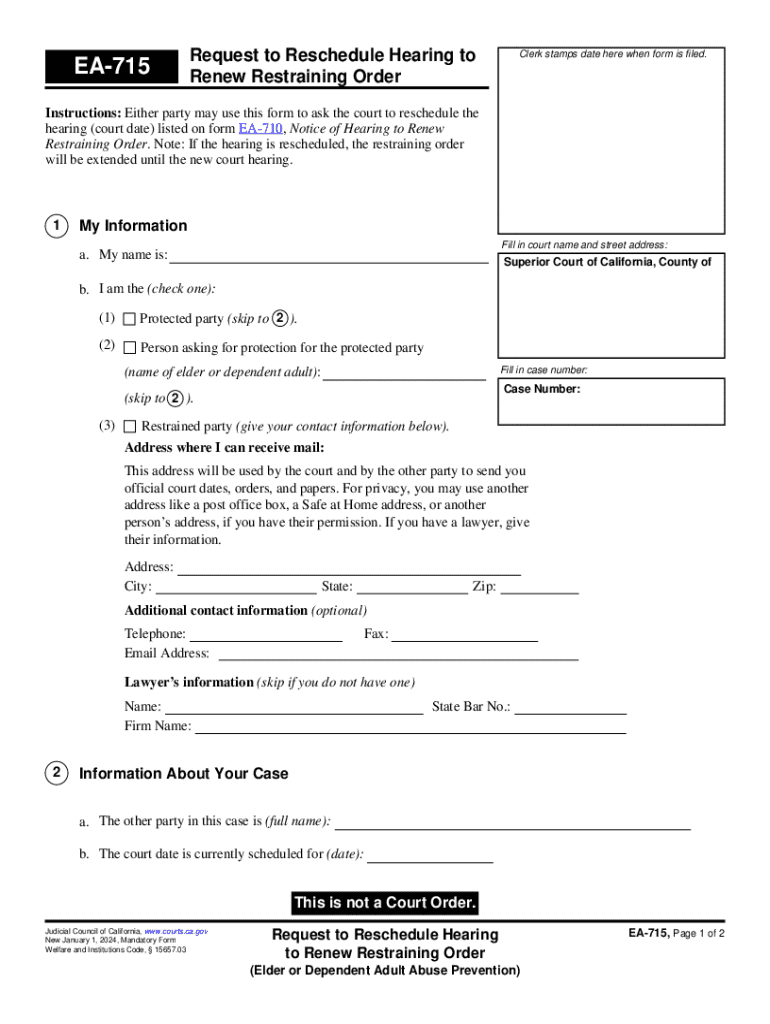
The EA-715 form serves as a formal request to reschedule a court hearing specifically dealing with the renewal of a restraining order. This form is predominantly used in cases involving elder or dependent adult abuse, ensuring that individuals can manage legal proceedings effectively. Understanding the form's primary role provides clarity on its importance in the legal process, especially for those seeking to protect vulnerable individuals.
How to Use the EA-715 Form
To use the EA-715 form, individuals need to fill out personal information sections accurately, including case details and the reason for requesting a rescheduling. The form acts as a legal document, requiring precision and honesty to guarantee that the request is considered valid by the court. Users should ensure all fields are completed correctly to avoid any delays in processing.
Obtaining the EA-715 Form
Obtaining the EA-715 form can generally be done through several channels:
- Court Websites: Many jurisdictions offer downloadable versions of court forms on their official sites.
- In-Person: Visiting a local courthouse will allow individuals to pick up a physical copy of the form.
- Legal Assistance Services: Law offices or legal aid services often provide necessary forms and can assist in filling them out properly.
Making the form accessible ensures that all parties involved in a legal procedure can participate fully and timely.
Completing the EA-715 Form: Step-by-Step
Completing the EA-715 form requires attention to detail and adherence to instructions:
- Personal Information: Fill in your full name, contact details, and role in the case.
- Case Details: Provide the current case number and the scheduled hearing date.
- Reason for Rescheduling: Clearly articulate the reasons for seeking a new hearing date, attaching any supporting documentation.
- Signatures: Ensure the form is signed and dated before submission to authenticate the request.
Following these steps ensures the form's compliance with legal standards and its acceptance by the judiciary system.
Key Elements of the EA-715 Form
Critical components highlighted in the EA-715 include:
- Applicant's Information: Name and contact details must be precise.
- Current Court Date and Time: The existing schedule must be mentioned for context.
- Justification for Rescheduling: This is perhaps the most vital part, requiring a well-reasoned argument in writing.
Understanding these elements can prevent misunderstandings and delays during the legal proceedings.
Legal Use and Implications of the EA-715
The EA-715 is primarily used within the legal system to ensure due process for cases involving renewal of restraining orders. Utilizing this form legally binds individuals to the information they provide, necessitating accuracy and honesty. Any misinformation may lead to legal consequences such as the dismissal of the rescheduling request or other court-initiated actions.
State-Specific Rules for the EA-715
Certain states may have specific rules regarding the EA-715 form:
- Submission Deadlines: Some jurisdictions impose strict timelines for rescheduling requests.
- Supporting Documents: Additional documentation requirements can vary by state.
- Variations in Form Structure: Though generally standardized, some states might have nuanced versions requiring attentiveness.
Awareness of these state-specific variations ensures compliance and smoother legal navigation.
Important Terms Associated with the EA-715 Form
Several terms are crucial for understanding the EA-715's context:
- Restraining Order: A legal order issued to protect individuals from harassment or physical harm.
- Dependent Adult: A person over eighteen who requires assistance due to physical or mental limitations.
- Rescheduling: The process of altering the date or time of a scheduled hearing for justified reasons.
Familiarity with these terms enhances one's ability to properly complete and submit the form without misunderstandings.