01. Edit your form online
Type text, add images, blackout confidential details, add comments, highlights and more.

Type text, add images, blackout confidential details, add comments, highlights and more.

Draw your signature, type it, upload its image, or use your mobile device as a signature pad.

Send it via email, link, or fax. You can also download it, export it or print it out.
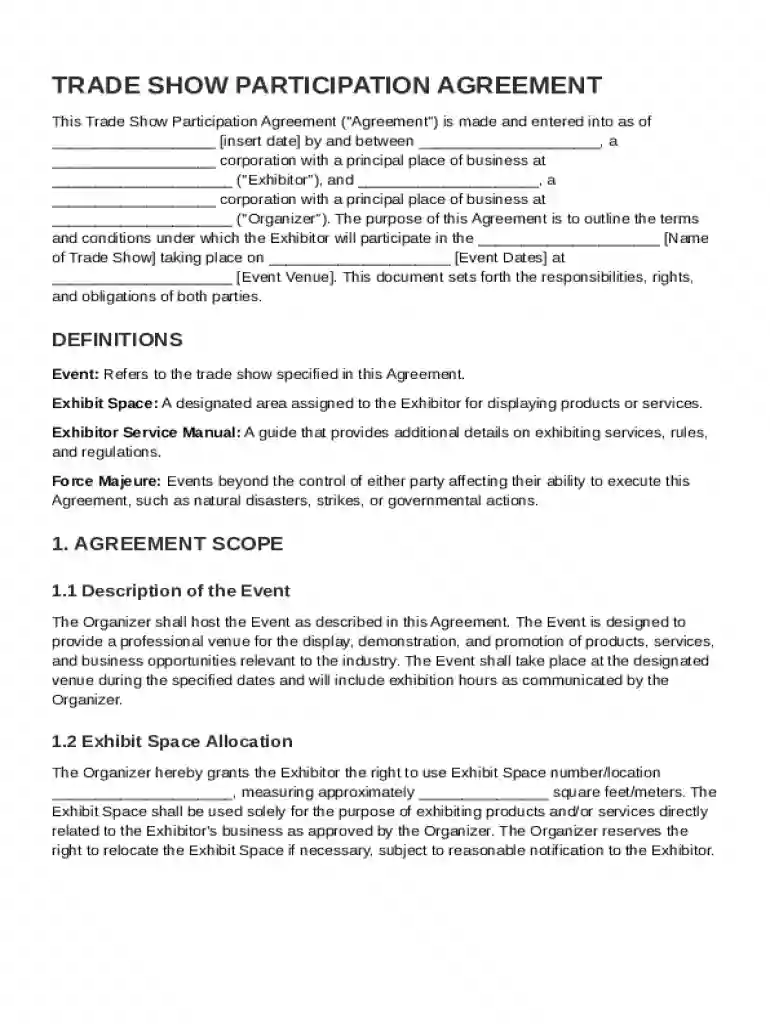
A Trade Show Contract Template serves as a comprehensive agreement between an exhibitor and the organizer of a trade show. It details the specific terms and conditions that govern the exhibitor's participation in the event. This template is essential as it outlines responsibilities, rights, and obligations of both parties, ensuring a mutual understanding and smooth operation of the event. The contract typically covers critical aspects such as booth allocation, payment schedules, cancellation policies, and compliance with regulations imposed by the organizers. Additionally, it addresses liability concerns, insurance obligations, and safety measures crucial for maintaining an organized and secure environment during the trade show.
Using a Trade Show Contract Template involves several key steps that ensure both parties understand their responsibilities. This structured approach minimizes the risk of disputes.
Customization: Begin by tailoring the template to reflect the specifics of the trade show event, adjusting sections like dates, venue, and participating parties. Precise customization guarantees clarity.
Review: Examine each clause in the contract meticulously to ensure it aligns with the goals and conditions applicable to your participation. Check payment terms, space allocations, and any special requirements.
Negotiation: Before signing, both parties should negotiate any terms that seem unfair or need clarification. This might involve adjusting fees, altering booth location, or modifying insurance requirements.
Legal Consultation: It's advisable to consult with a legal expert familiar with trade shows to review the document. This can provide an added layer of security, ensuring all legal requirements are met.
Execution: Once satisfied with the terms, both parties should sign the document, acknowledging their agreement to adhere to its provisions.
Several key terms are integral to understanding a Trade Show Contract:
When filling out a Trade Show Contract Template, focus on the following core elements:
Completing a Trade Show Contract Template involves several critical steps to ensure legality and clarity.
Filling Personal Information: Enter the names, addresses, and contact details of the exhibitor and organizer.
Specify Event Details: Include the trade show name, location, dates, and any relevant deadlines.
Define Payment Terms: Clearly state payment amounts, deadlines, and methods for fee submission.
Outline Booth Specifications: Document the exact booth dimensions, location preferences, and included amenities.
Confirm Compliance Adherence: Assure that both parties understand and agree to meet any regulatory or insurance requirements.
Finalize and Execute: After due diligence and confirmation of all details, execute the contract with signatures from authorized representatives of both parties.
Ensure compliance with applicable laws and regulations by accurately using a Trade Show Contract Template. A legally sound contract protects exhibitors and organizers by:
Practical applications of a Trade Show Contract Template highlight its significance:
Various business sectors leverage trade show contracts to enhance their market presence and network scope.
Trade shows provide a valuable platform across industries for expanding brand awareness, networking, and securing business growth, making the contract template a pivotal organizational tool.
At DocHub, your data security is our priority. We follow HIPAA, SOC2, GDPR, and other standards, so you can work on your documents with confidence.