






Definition & Meaning
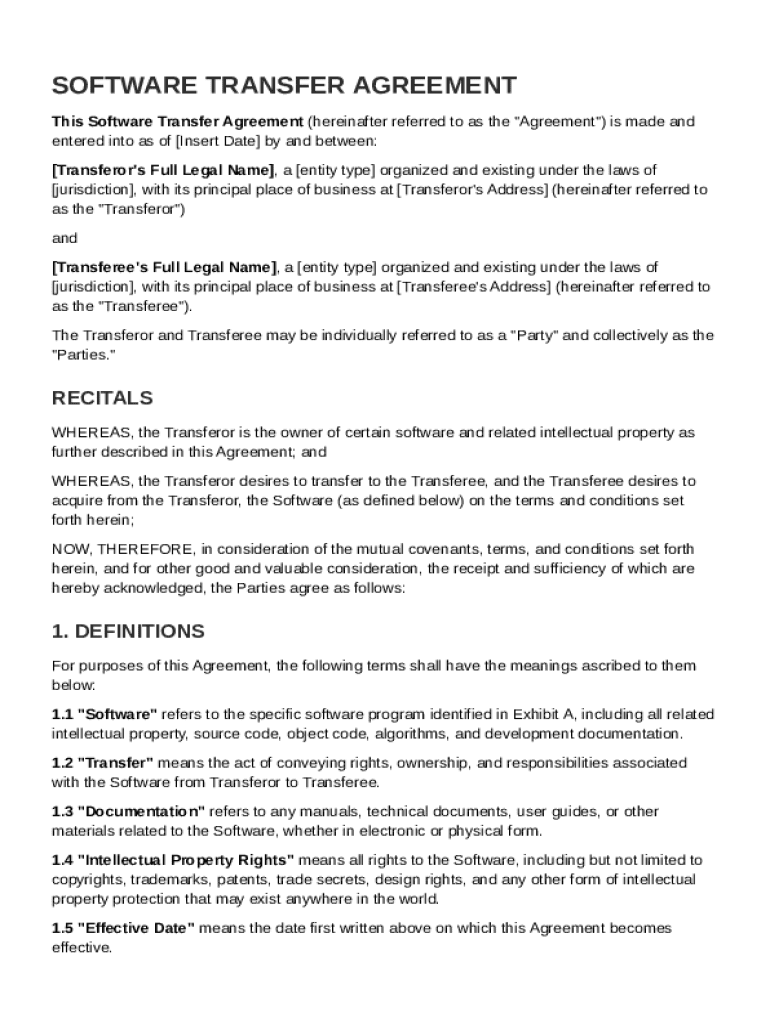
A Software Transfer Agreement Template is a legal document outlining the terms under which software ownership and related intellectual property rights are transferred from a Transferor to a Transferee. This agreement is crucial in delineating the rights and responsibilities of each party, ensuring a clear understanding of ownership changes, and stipulating conditions under which the transfer occurs. By setting these provisions, it aims to protect both parties from potential disputes and ensure compliance with applicable laws.
Key Components
- Scope of Transfer: This details what exactly is being transferred. It includes the specific software application, any included databases, the utility programs, and accompanying documentation.
- Ownership Rights: Specifies the rights that the Transferee gains through the transfer, such as usage rights, distribution rights, and intellectual property.
- Limitations on Use: This section highlights any restrictions on the use of the software post-transfer, including licensing constraints or prohibited activities.
- Governing Law: Identifies which jurisdiction’s laws will govern the agreement, which is essential for resolving disputes.
How to Use the Software Transfer Agreement Template
Utilizing a Software Transfer Agreement Template involves several steps to ensure comprehensive coverage and legal compliance. This process requires careful customization and understanding of the specific requirements of both parties.
Step-by-Step Usage Guide
- Customizing the Template: Begin by inserting the names and addresses of the Transferor and Transferee. Ensure all identifying details are correct to avoid potential issues later.
- Detailing the Transfer Scope: Clearly define the software components being transferred. Include any associated documentation and support materials.
- Enumerating Payment Terms: If there is a financial component, outline the payment structure clearly, including any milestones or due dates for payments.
- Specifying Warranties and Liabilities: Detail any warranties provided by the Transferor and discuss liabilities associated with software defects or breaches of contract.
Key Elements of the Software Transfer Agreement Template
Designing a robust Software Transfer Agreement requires attention to specific elements that ensure all parties’ interests are addressed and protected.
Essential Clauses
- Confidentiality: This section ensures that any confidential information exchanged during and after the transfer is protected from unauthorized disclosure.
- Indemnification: Outlines that the Transferor will hold the Transferee harmless against any claims related to pre-existing software defects or intellectual property claims.
- Termination Conditions: Specifies how and under what circumstances the agreement can be terminated by either party.
- Signatories: Concludes the agreement with the signature of authorized representatives from both parties, indicating mutual consent.
Important Terms Related to Software Transfer Agreement Template
Several critical terms commonly appear in Software Transfer Agreements and understanding these is crucial for effective use and execution.
Definitions
- Intellectual Property Rights: Includes copyrights, patents, and any proprietary claims related to the software.
- Transferor and Transferee: The parties involved in the transfer, typically the seller and buyer or licensor and licensee.
- Licensing: The permission granted by the software owner to the transferee to use the software in specific ways.
- End-User License Agreement (EULA): Often included as part of the template to outline terms for software end-users.
Legal Use of the Software Transfer Agreement Template
A thorough understanding of legal implications is crucial when using a Software Transfer Agreement Template, especially within the United States context due to varying state laws.
Compliance and Legal Considerations
- Governing Law: Clearly specify the state or federal laws that will govern the agreement. This provides a basis for legal resolution should disputes arise.
- Regulatory Compliance: Ensure the transfer complies with U.S. laws, including export regulations and intellectual property laws.
- International Transfers: Address any additional requirements if the transfer involves international parties, such as cross-border data transfer regulations.
Examples of Using the Software Transfer Agreement Template
Real-world scenarios illustrate the practical application and versatility of the Software Transfer Agreement Template across various industries.
Practical Applications
- Corporate Acquisitions: Used when a company acquires another and needs to transfer software assets as part of the transaction.
- Licensing Agreements: Individuals or organizations using the software under specific licensing terms, requiring clear transfer agreements when ownership changes occur.
- IP Portfolio Sales: Applied when selling software as part of an intellectual property portfolio, ensuring all rights and obligations are transferred properly.
State-Specific Rules for the Software Transfer Agreement Template
Different U.S. states may impose varying requirements or interpretations of software transfer agreements. Knowing these differences can be crucial for compliance.
State Variations
- California: Known for strong consumer protection laws; agreements may need to include specific language related to the rights of end-users.
- New York: Focuses heavily on business transaction transparency, requiring detailed disclosures within the agreement.
- Texas: Generally more business-friendly, but still requires strict adherence to intellectual property transfer procedures.
Who Typically Uses the Software Transfer Agreement Template
Understanding who commonly uses this template helps in designing and tailoring it to meet target users' specific needs.


Typical Users
- Software Developers: Who sell or license their products to other companies or individuals.
- Businesses: Engaging in mergers or acquisitions that involve transferring software assets.
- Legal Professionals: Assisting clients in transactions involving software or intellectual property.