




Here's how it works
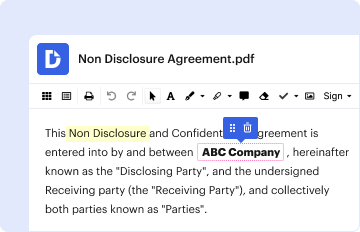
01. Edit your rg2 form online
Type text, add images, blackout confidential details, add comments, highlights and more.
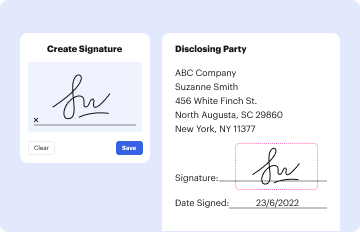
02. Sign it in a few clicks
Draw your signature, type it, upload its image, or use your mobile device as a signature pad.

03. Share your form with others
Send uk registration devices via email, link, or fax. You can also download it, export it or print it out.
How to use or fill out UK registration devices with our platform

- Click ‘Get Form’ to open the RG2 registration form in the editor.
- Begin by entering the date of notification in Part 1. Indicate whether this is your first registration or a change of information by selecting the appropriate box.
- In Part 1, specify the status of your organization (Manufacturer, Authorised Representative, etc.) and ensure that an authorized signatory completes the declaration.
- Proceed to Part 2 and provide your full company name and postal address. Ensure that this information matches the packaging and labeling of your devices.
- In Part 3, complete payment information accurately. The statutory fee for registration is £70.00; include details of your payment method.
- Finally, fill out Part 4 with device information, including generic codes or descriptions as necessary. Ensure all required fields are completed before submitting.
Start using our platform today to streamline your document editing and registration process for free!
Fill out uk registration devices online
It's free
It's free
See more uk registration devices versions
We've got more versions of the uk registration devices form. Select the right uk registration devices version from the list and start editing it straight away!
Got questions?
We have answers to the most popular questions from our customers. If you can't find an answer to your question, please contact us.
Contact us
What are the classification of MDR devices in the UK?
In the UK Medical Devices are categorised into 6 classes, these are Class I, Class Is (sterile), Class Im (measuring), Class IIa, Class IIb and Class III. Class I devices are considered to be of low risk, Class II devices as medium risk and Class III devices as high risk.
What are class 1, class 2, and class 3 devices?
Class I medical devices present the lowest risk with minimal potential for harm. Class II medical devices are at moderate risk, having a higher risk than class I devices. Class III medical devices present the highest risk, encompassing devices that sustain or support life.
What is the Ukca mark on medical devices?
UKCA marking came into force in January 2021 when the UK left the EU. From this date to June 2025, Medical Devices and IVDs can be marked with either CE or UKCA. From July 2025, legislative transitional arrangements will apply for CE and UKCA marked Medical Devices and IVDs placed on the Great Britain market.
What are Class 1 2 3 devices examples?
Examples of FDA Class I medical devices include tongue depressors, manual stethoscopes, and bandages. FDA Class II medical devices contain wheelchairs, contact lenses, and blood glucose meters. FDA Class III medical device examples encompass pacemakers, defibrillators, and artificial hips.
What is an example of a class 2 device?
FDA defines a Class III medical device as one that supports or sustains human life or is of substantial importance in preventing impairment of human health or presents a potential, unreasonable risk of illness or injury.
Security and compliance
At DocHub, your data security is our priority. We follow HIPAA, SOC2, GDPR, and other standards, so you can work on your documents with confidence.
Learn more


People also ask
What is an example of a Class 1 device?
Class II medical devices, which pose a medium to high risk to patients and users, account for 43 percent of all medical devices in the United States. Some common examples of Class II devices are syringes, pregnancy test kits, electric wheelchairs, and catheters.