
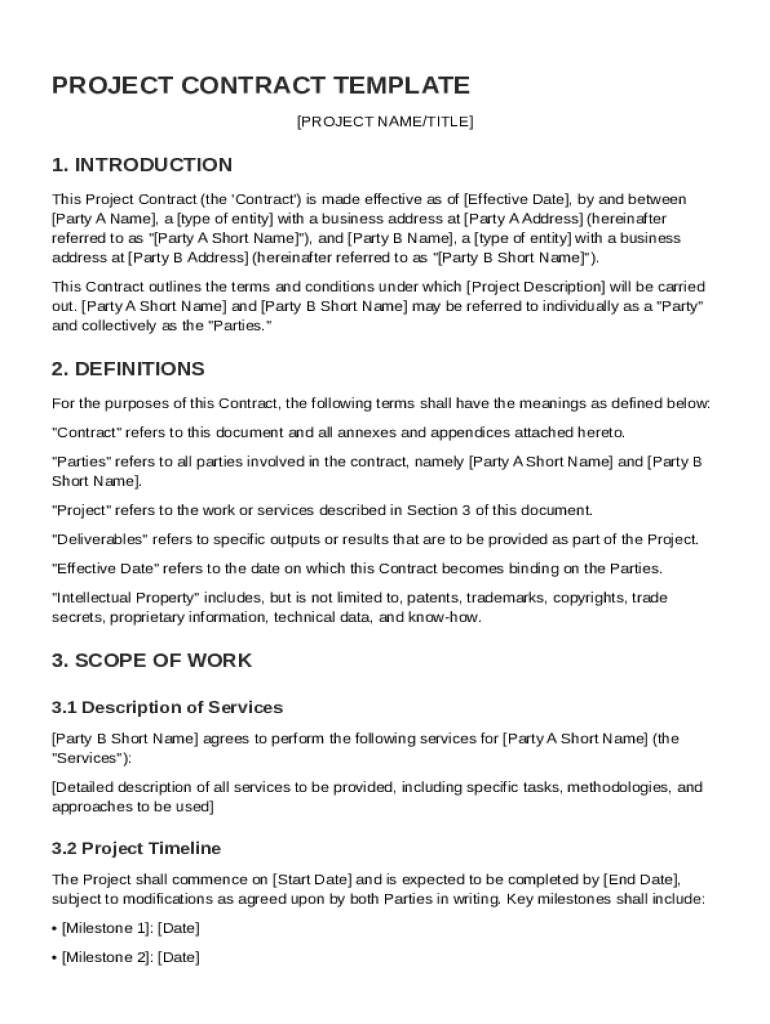







Definition and Meaning
A Project Project Contract Template is a standardized document designed to formally outline the terms and conditions of a project agreement between two parties. It typically includes essential sections such as the introduction, definitions, scope of work, compensation, deliverables, confidentiality provisions, intellectual property rights, liability, indemnification, and termination clauses. This template is integral to ensuring that all involved parties clearly understand their responsibilities and the project's overarching framework.
- Introduction and Definitions: This section provides a brief overview of the project and defines key terms used throughout the document, ensuring all parties share a common understanding.
- Scope of Work: Clearly outlines what the project will entail, including tasks, milestones, and specific deliverables that each party is responsible for completing.
Key Elements of the Project Project Contract Template
Each Project Project Contract Template is made up of several critical components that ensure its comprehensive nature and legal enforceability:
- Compensation and Payment Terms: Details the financial arrangements, including payment amounts, schedules, and any applicable incentives or penalties.
- Deliverables and Acceptance Criteria: Specifies what constitutes the completion of deliverables and sets criteria for acceptance to ensure the project meets predefined standards.
- Term and Termination: Outlines the project duration and the conditions under which parties can terminate the contract.
- Confidentiality and Intellectual Property: Sets forth the obligations of parties regarding sensitive information and intellectual property created during the project.
Steps to Complete the Project Project Contract Template
Completing a Project Project Contract Template involves several logical steps that ensure accuracy and comprehensiveness:
- Initial Preparation: Gather all necessary project details, including stakeholder information, scope of work, timelines, and budget constraints.
- Customizing the Template: Modify the template to fit the project's specific needs, ensuring all legally binding sections reflect realistic and agreed-upon terms.
- Review and Revise: Collaborate with all parties to review and, if necessary, revise the terms to ensure mutual understanding and agreement.
- Finalization and Signing: Once all modifications are agreed upon, circulate the final version for signatures from all involved parties.
Legal Use of the Project Project Contract Template
The legal use of a Project Project Contract Template involves understanding the contractual obligations and ensuring compliance with relevant laws:
- Governing Law: The template should specify which jurisdiction's laws will govern the agreement.
- Enforceability: For the contract to be legally binding, it must be signed by authorized representatives of all parties involved.
- Dispute Resolution: It typically includes a clause specifying the method of resolving disputes, whether through mediation, arbitration, or court litigation.
Examples of Using the Project Project Contract Template
To illustrate the practical applications of the Project Project Contract Template, consider the following scenarios:
- Technology Development Project: A startup hires a software development company to build a custom application. The contract ensures all features, timelines, compensation, and confidentiality agreements are clearly documented.
- Construction Project: A property developer engages a construction firm to build residential units. The template outlines payment milestones, project deliverables, and liability coverage for potential construction defects.
Important Terms Related to Project Project Contract Template
Several terms are commonly associated with Project Project Contract Templates, each bearing critical importance:
- Indemnification: Refers to the responsibility of one party to compensate for potential losses incurred by another party due to specific contract violations or legal claims.
- Force Majeure: A clause that alleviates parties from liability due to unforeseeable events that prevent them from fulfilling contractual obligations.
- Non-Disclosure Agreement (NDA): Ensures that any confidential information shared during the project remains protected.
Software Compatibility
In today's digital age, managing contract documents is often facilitated through software solutions:
- DocHub: A versatile tool compatible with various document types, allowing easy editing, sharing, and signing of templates directly from cloud storage services.
- Integration with Google Workspace: Enables seamless document management across Google Drive and Gmail, streamlining the workflow.
Business Types That Benefit Most from Project Project Contract Template
Several types of businesses can significantly benefit from employing Project Project Contract Templates:
- Startups: Using templates allows founders to establish clear agreements quickly, facilitating rapid collaboration and execution.
- Large Corporations: Established businesses can maintain consistency and legal compliance across multiple projects by using standardized templates.
- Freelancers and Consultants: Templates provide independent contractors with a professional framework for managing client relationships and protecting their interests.




