
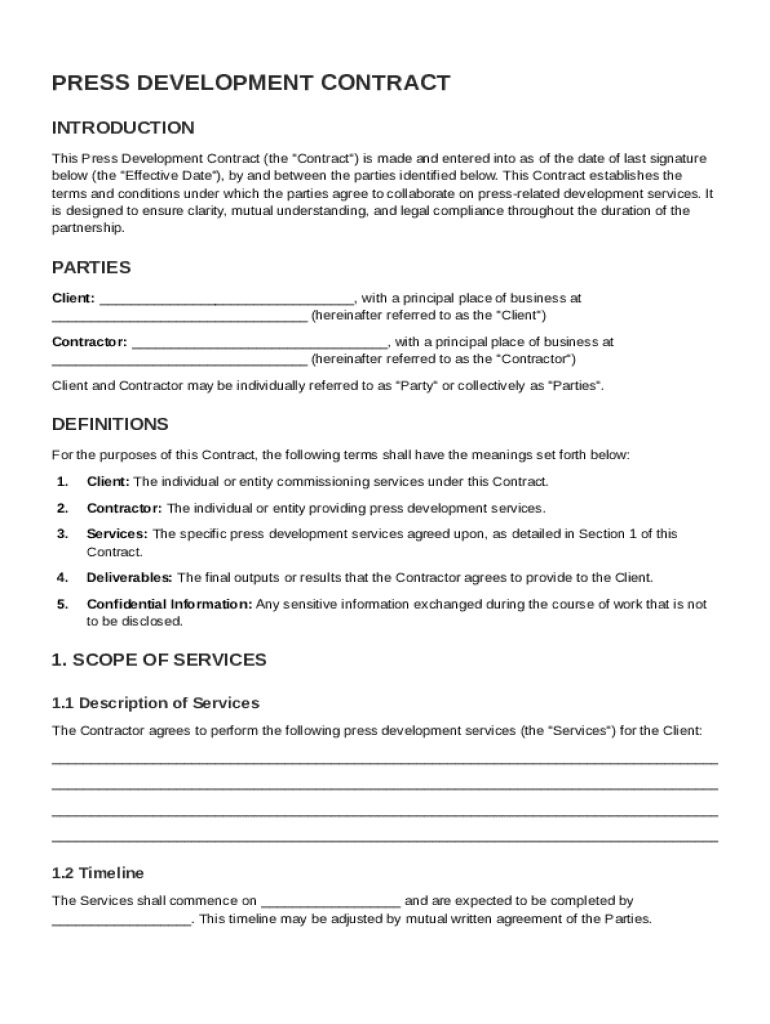







Key Elements of the Press Development Contract Template
The Press Development Contract Template is structured to ensure that all essential aspects of a press-related development service agreement are covered. The template includes sections that define critical terms to prevent misinterpretation and establish a clear understanding between the Client and the Contractor. This ensures that both parties are aligned on their expectations and obligations. Common elements include:
-
Scope of Services: This section outlines the specific services that the Contractor will provide. It is vital for detailing tasks, responsibilities, and timelines to avoid scope creep.
-
Compensation Structure: Clearly defines how the Contractor will be compensated, whether it is hourly, monthly, or per project. Discusses payment schedules and methods.
-
Deliverables: Lists all deliverables with associated deadlines, ensuring both parties understand what outcomes are expected.
-
Obligations of Parties: Specifies the duties of both the Client and Contractor, ensuring each party knows their responsibilities.
-
Confidentiality Provisions: Protects sensitive information shared between parties during and after the collaboration.
-
Termination Clauses: Details conditions under which either party can terminate the contract and the procedures that would follow.
-
Indemnification Responsibilities: Outlines how each party will handle risks and liabilities.
-
Governing Law: States the legal jurisdiction under which the contract falls, typically aligning with the location of the Client or Contractor.
-
Miscellaneous Provisions: Includes any additional terms agreed upon by the parties.
Steps to Complete the Press Development Contract Template
Effective completion of the Press Development Contract Template requires careful attention to detail. Here’s how you can complete it step-by-step:
-
Review Key Definitions: Begin by going through the definitions section to ensure clarity on terms used throughout the contract.
-
Outline Services: Clearly define the scope of services. Collaboratively clarify responsibilities to ensure no overlap or gaps in expectations.
-
Establish Compensation Terms: Negotiate and fill in compensation details, making sure that both parties agree and understand all conditions.
-
Identify Deliverables and Deadlines: List all expected deliverables with timelines. Use bullet points for clarity and to avoid miscommunication.
-
Clarify Confidentiality and Data Protection Terms: Specify what information is confidential and describe how it will be protected.
-
Specify Termination and Indemnification Terms: Define clear clauses for contract termination and indemnity that protect both parties.
-
Confirm Jurisdiction: Decide on the governing law based on logical jurisdictional relevance, usually where the majority of business takes place.
-
Review Final Contract: Both parties should review the contract thoroughly before signing to ensure all sections are complete and accurate.
Legal Use of the Press Development Contract Template
The Press Development Contract Template is a legally binding document that ensures compliance with U.S. laws when properly executed. Legal use requires:
-
Clarity and Mutual Consent: Both parties must clearly understand and agree to the terms for the contract to be enforceable.
-
Legal Capacity: The individuals signing the contract must have the legal authority and capacity to do so on behalf of their respective entities.
-
Adherence to Relevant Laws: The contract should comply with local, state, and federal laws, especially those relating to labor and intellectual property.
-
Proper Execution: Contracts must be signed by authorized representatives of both parties and dated upon agreement.
Important Terms Related to the Press Development Contract Template
Understanding the key terms within the Press Development Contract Template is vital for ensuring both parties' responsibilities and expectations are met:
-
Scope of Work: The detailed description of tasks and responsibilities expected from the Contractor.
-
Confidential Information: Any non-public information disclosed during the term of the agreement that is protected from sharing with unauthorized parties.
-
Force Majeure: Events outside the control of parties that could delay or prevent the fulfillment of contractual obligations, such as natural disasters.
-
Non-Disclosure Agreement (NDA): A binding document often included to protect confidential information shared under the contract.
-
Breach of Contract: Any failure to perform any term of a contract without a legitimate legal excuse.
Who Typically Uses the Press Development Contract Template
The Press Development Contract Template is often utilized by:
-
Media and Publishing Companies: Engaging independent contractors or freelancers for various press development projects.
-
Public Relations Firms: Contracting services to manage press releases and media coverage for their clients.
-
Contractors: Consultants and freelancers in communications and media development who require a formal agreement with clients to outline their services and ensure proper compensation.
-
Corporate Communications Departments: When outsourcing specific media projects or developing new press materials.

Examples of Using the Press Development Contract Template
Understanding practical applications can provide clarity in how this template might be utilized:
-
Scenario 1: A media company hires a freelancer to develop a series of articles for a new digital campaign. The template is used to define article topics, delivery schedules, and payment terms.
-
Scenario 2: A public relations firm engages a contractor to handle a product launch press release. The contract specifies services including drafting press materials, coordinating with media, and preparing post-launch reports.
-
Scenario 3: An independent consultant is brought on board to update a company’s press materials, with deliverables such as revamped press kits and media strategy outlines detailed in the contract.
State-Specific Rules for the Press Development Contract Template
While the Press Development Contract Template is designed for a broad application, certain state-specific considerations should be taken into account:
-
Jurisdiction: The applicable legal jurisdiction should align with either the client's or the contractor's primary place of business. This affects enforcement and legal proceedings.
-
Compliance with State Employment Laws: Certain states have specific rules defining the contractor and employee relationships, which might impact terms related to compensation and intellectual property.
-
Data Privacy Regulations: States like California have stringent data protection laws (e.g., CCPA) that need adherence when dealing with confidentiality terms in the contract.
Versions or Alternatives to the Press Development Contract Template
There are instances where variations of this template may be more suitable, including:
-
Short-Form Versions: For simple contracts requiring less detailed obligations and conditions.
-
Industry-Specific Templates: Tailored contracts for specific sectors like film, broadcasting, or digital media.
-
Customized Contracts: Modified templates that incorporate additional clauses for unique project needs, including international agreements or multilateral collaborations.




