
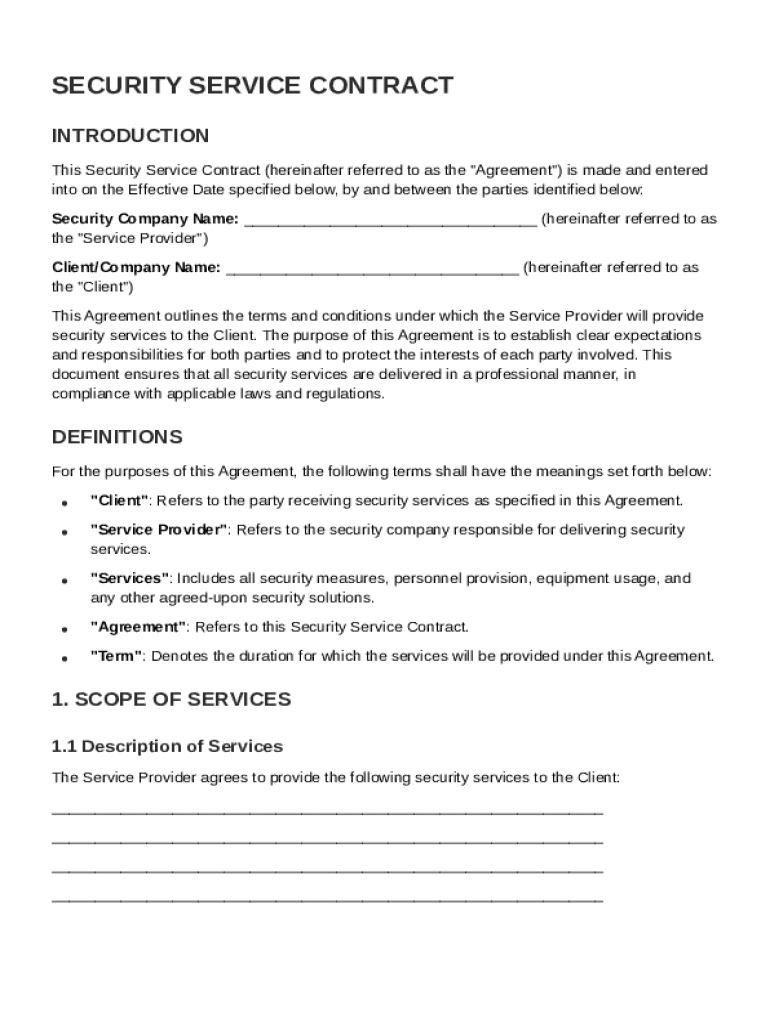







Definition and Meaning
A Security Service Contract Template is a comprehensive document outlining the terms and conditions under which a security service provider delivers their services to a client. These contracts are designed to clarify expectations by detailing various elements such as the scope of services, duration, compensation, and responsibilities of each party involved. They serve as a legal framework to protect the interests of both the client and the service provider.
Key Components
- Scope of Services: It precisely defines the type of security services to be provided, such as manned guarding, alarm response, and CCTV monitoring.
- Contract Duration: Specifies the start and end date of the contract, including provisions for renewing or terminating the agreement.
- Compensation Details: Outlines the payment structure, including rates, payment schedule, and terms for additional charges.
- Responsibilities of Parties: Both client and provider responsibilities are defined to ensure mutual understanding and prevent conflicts.
How to Use the Security Service Contract Template
Using the template involves tailoring it to meet the specific needs and requirements of both parties. First, review each section to ensure clarity and relevance to the intended services. Fill in the blanks with the necessary details, including the parties' names, specific security services, and any additional clauses required to address unique situations.
Steps for Customization
- Identify Specific Needs: Determine the specific security requirements and ensure that these are thoroughly outlined within the scope of services.
- Input Detailed Information: Enter the names, addresses, and contact details of both parties to personalize the contract.
- Modify Clauses: Add, remove, or adapt clauses as necessary to align with state laws or company policies.
- Review and Sign: Both parties should review the contract thoroughly, make any consensus-required changes, and sign to affirm their agreement.
Key Elements of the Security Service Contract Template
Understanding the critical components of the contract is essential to its effective implementation. These elements need to be clearly articulated to ensure both parties have a mutual understanding of their rights and obligations.
Essential Clauses
- Liability Limitations: Defines the extent of liability for both the client and provider, setting boundaries to manage risks.
- Confidentiality Obligations: Outlines what information must remain confidential between the parties and the duration of these obligations.
- Dispute Resolution Procedures: Describes how disputes will be addressed, whether through mediation, arbitration, or court proceedings.
- Force Majeure Clauses: Includes provisions for events beyond the control of either party that may impact contract fulfillment, such as natural disasters.
Legal Use of the Security Service Contract Template
The template should comply with legal standards and reflect any specific legal considerations relevant to its use. Ensuring legal validity involves incorporating enforceable clauses and protecting against potential liabilities.
Compliance Measures
- Aligning with State Laws: Modify the template to ensure it respects local statutory requirements, particularly in employment and contract law.
- Enforcement under ESIGN Act: Recognize the enforceativity of electronic signatures, simplifying signing procedures while maintaining legal integrity.
- Ongoing Legal Advice: Consult with a legal professional to keep the contract up-to-date with changing laws and regulations.
Examples of Using the Security Service Contract Template
Several scenarios illustrate how this template can be applied effectively across different contexts:
Real-World Applications
- Corporate Security Services: A corporation might use the template to hire a provider for comprehensive on-site security, specifying routine patrol schedules and emergency response procedures.
- Event Security: The contract can be tailored for temporary security at an event, detailing crowd control measures and access restrictions.
- Residential Community Protection: Homeowners' associations could use the template for ongoing patrol services, focusing on community safety and reporting duties.
State-by-State Differences
The Security Service Contract Template needs to accommodate variations in regulations, which can differ significantly across states. This requires customization depending on the jurisdiction in which the service will be provided.
Examples of Variations
- Licensing Requirements: Some states may have specific licensing requirements for security service providers that need to be reflected in the contract.
- Employment Laws: State-specific labor laws regarding security personnel employment terms, such as working hours and overtime, must be considered.
- Insurance Obligations: Variations in required insurance coverage levels or types can influence contract customization.
Software Compatibility
The Security Service Contract Template can be managed efficiently with the right software tools, enhancing productivity and ensuring seamless updates.
Compatible Platforms
- DocHub: Allows for editing, signing, and storage of the contract directly within the platform, improving accessibility and collaboration.
- Cloud Storage Solutions: Integration with services like Google Drive ensures easy access and sharing among authorized users.
- Document Management Software: Platforms compatible with DOC and PDF formats facilitate distribution and modification, catering to diverse professional needs.
Business Types that Benefit Most from the Security Service Contract Template
Different types of businesses can significantly benefit from using this template, especially those requiring regular or specialized security services.
Key Beneficiaries
- Retail Chains: Large-store operations benefit from defined security protocols to handle theft prevention and emergency scenarios.
- Financial Institutions: Banks and credit unions require stringent security measures, clearly stipulated in contracts for vendors.
- Healthcare Facilities: Hospitals and clinics utilize security contracts to ensure continuous on-site presence and emergency preparedness.




