
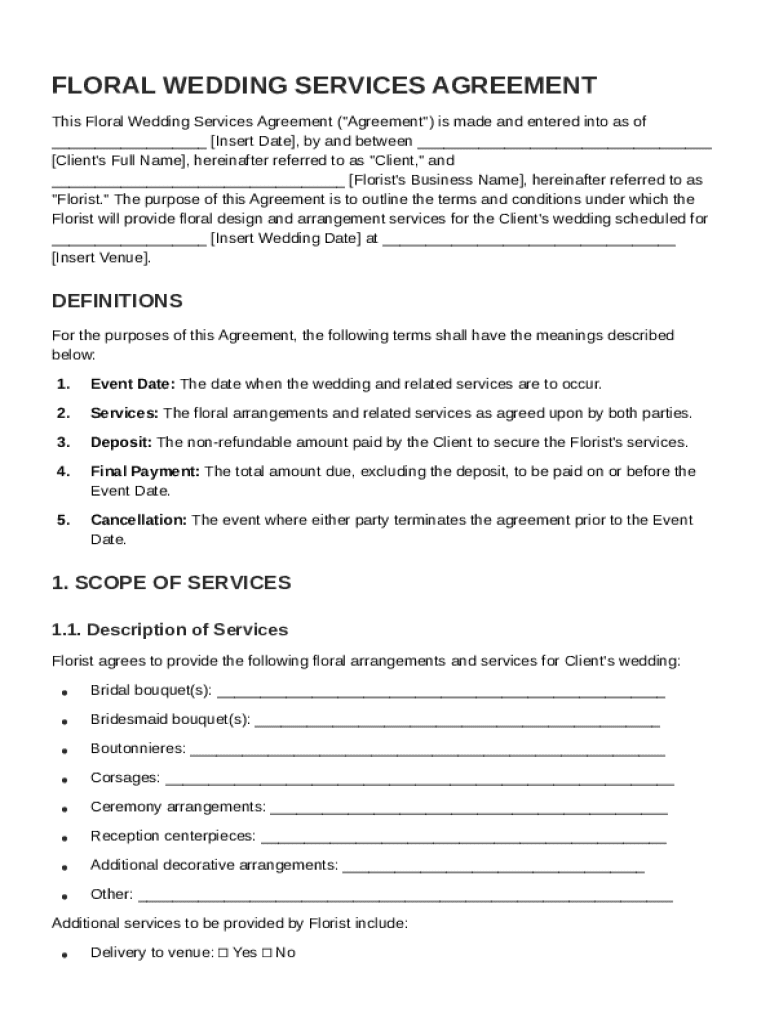







Definition & Meaning
The Floral Wedding Contract Template is a critical document used in the wedding industry to formalize the terms and agreements between a florist and a client for floral arrangements during a wedding. This template typically encompasses various sections that outline the scope of the service, including types of flowers, arrangements, delivery schedules, and setup logistics. By defining these elements clearly, both parties understand their commitments and expectations, which reduces the potential for misunderstandings.
Core Components
- Scope of Services: Specifies what the florist will provide, such as bouquets, centerpieces, and decorative floral arrangements.
- Pricing and Payment: Details the cost structure, including any deposits required ahead of time.
- Timeline & Deadlines: Important for ensuring timely delivery and setup around the wedding event.
How to Use the Floral Wedding Contract Template
Using the Floral Wedding Contract Template effectively involves several critical steps to ensure all aspects of the service are covered comprehensively.
- Customization: Begin by tailoring the template to suit the specific requirements of the event and the agreement terms.
- Complete Key Details: Fill in information such as venue details, dates, the specifics of floral arrangements, and delivery instructions.
- Review with Clients: Sit down with clients to go over each section to ensure clarity on both sides.
- Legal Considerations: Have a legal professional review the document to ensure it complies with local laws and industry standards.
- Formal Agreement: Once all parties agree on the terms, both should sign the document, making it legally binding.
Key Elements of the Floral Wedding Contract Template
There are several key elements that any Floral Wedding Contract Template should incorporate to maintain clarity and full coverage of relevant details.
Important Sections
- Cancellation Policy: Outlines under what circumstances either party can cancel the agreement and any penalties or refunds that may apply.
- Liability Disclaimer: Protects the florist from damages beyond their control, such as weather-related issues.
- Client Responsibilities: Specifies what is expected from the client, including access to venues at agreed times for setup.
Additional Considerations
- Modifications Clause: Provides a standardized way to handle changes in the plan or scope of services after signing.
- Governing Law: Specifies the jurisdiction that will govern any disputes, which is typically the state where the service is performed.
Steps to Complete the Floral Wedding Contract Template
Completing the Floral Wedding Contract Template requires attention to detail to ensure that every aspect of the floral arrangements is captured accurately.
- Gather Client Info: Collect personal and contact details of the client and the venue.
- Detail Floral Needs: Provide a comprehensive list of all flowers and designs required, including samples or references.
- Set Payment Terms: Outline how and when payments should be made, including any deposit.
- Include Setup Details: Specify any particular setup and takedown instructions, including access times.
- Signatures: Secure signatures from both the florist and the client to finalize the contract.
Legal Use of the Floral Wedding Contract Template
Understanding the legal aspects of using the Floral Wedding Contract Template is key to protecting both parties involved.
Binding Agreement
- ESIGN Act Compliance: Ensure digital signatures are legally binding if the document is executed electronically.
- Contractual Obligations: Specify that the contract is enforceable under applicable law, including repercussions for non-compliance.
Legal Advice
- Legal counsel should be consulted to ensure the template adequately covers all critical legal areas, is free from ambiguities, and complies with state-specific laws.
Important Terms Related to the Floral Wedding Contract Template
The Floral Wedding Contract Template often includes specific terms that require clear definitions to prevent misunderstandings.
Common Terms
- Retainer Fee: An initial payment to secure the florist’s services, often non-refundable.
- Force Majeure: A clause that frees parties from liability or obligation when extraordinary events prevent fulfilling the contract.
Contractual Language
- Use clear, precise language to avoid ambiguity, especially regarding deliverables and deadlines.
Examples of Using the Floral Wedding Contract Template
Understanding how other florists and clients have used the Floral Wedding Contract Template can offer valuable insights.
Real-World Scenarios
- Scenario One: A florist who provided a custom arrangement for a destination wedding, noting specific import timelines and duties.
- Scenario Two: A client who requested last-minute changes to the types of flowers, necessitating an amendment clause in the contract.
Best Practices
- Demonstrating flexibility and a willingness to incorporate last-minute changes when possible is often beneficial, provided they are documented within the contract.
State-Specific Rules for the Floral Wedding Contract Template
Requirements and guidelines for using a Floral Wedding Contract Template can vary by state, and understanding these differences is essential.
State Considerations
- Jurisdiction: Specify which state laws will affect the contract in case of disputes.
- Consumer Protection Laws: Be aware of specific laws regarding cancelation timelines and payment terms, which may dictate additional clauses in the contract.
Tailoring to State Requirements
- Customizing your template to align with the state's regulations ensures compliance and reduces the risk of legal challenges.




