






Definition and Meaning
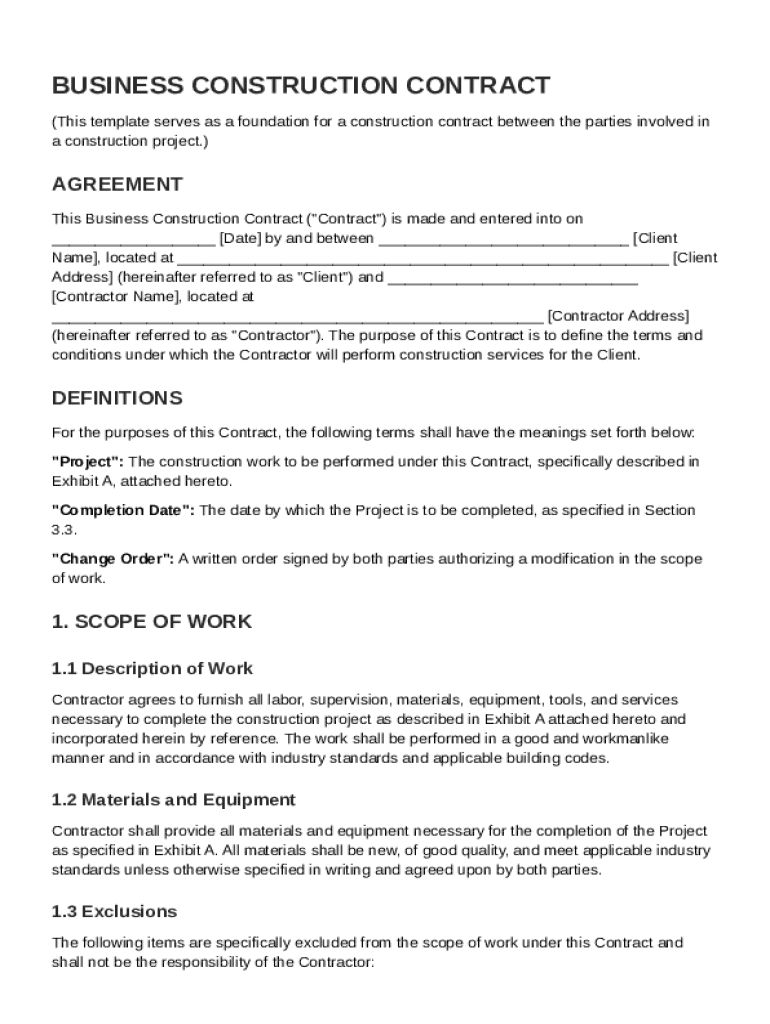
The "Business Construction Contract Template" is a formal document that outlines the contractual agreement between a client and a contractor for construction services. This template is designed to detail important components such as the scope of work, payment terms, and timelines. Its primary purpose is to ensure that both parties have a clear, mutual understanding of their responsibilities and expectations during the construction project.
Core Components of the Definition
- Scope of Work: Defines the specific tasks and deliverables the contractor is responsible for completing as part of the construction project.
- Payment Structure: Details how and when payments will be made throughout the project's lifecycle.
- Project Schedule: Establishes key milestones and completion dates to ensure timely project execution.
- Responsibilities and Rights: Clarifies what is expected from both the client and the contractor, including any obligations and entitlements.
Practical Examples
For example, in a residential home construction, the template would specify the type of materials to be used, deadlines for each phase of construction, and the total project budget. In a commercial building contract, it might outline adherence to commercial building codes and specify the penalties for late project delivery. These examples highlight the versatility of the construction contract in various settings.
How to Use the Business Construction Contract Template
To effectively use the "Business Construction Contract Template," it's essential to follow a structured approach. This ensures all necessary details are covered and the contract serves the intended purpose.
Step-by-Step Instructions
- Review The Template: Start by carefully reviewing the template to understand its structure and components.
- Customize for Specific Needs: Modify sections such as the scope of work and payment terms to align with the specific requirements of your project.
- Include Legal Counsel: Consulting with a lawyer to review your customized contract ensures it complies with local laws and addresses all potential legal concerns.
- Fill Out Required Information: Complete all necessary fields, including names, contact information, and project specifics.
- Collaborate and Review: Share the draft with the other party involved in the contract to receive feedback and make any required adjustments.
- Finalize and Sign: Once both parties agree on the content, finalize the document and proceed with obtaining signatures to make it legally binding.
Real-World Scenarios
A contractor working on a new office building might adjust the contract to include specific materials requested by the client. Alternatively, a homeowner might desire additional clauses covering unforeseen delays due to weather conditions. These scenarios illustrate the importance of tailoring the template to fit the unique needs of each project.
Key Elements of the Business Construction Contract Template
Every Business Construction Contract Template should incorporate essential elements to protect the interests of both parties and ensure a smooth construction process.
Essential Sections
- Change Orders: Procedures for making modifications to the project scope, including how changes are documented and approved.
- Quality Standards: Specifications for the quality of materials and workmanship expected throughout the project.
- Termination Clauses: Conditions under which either party can terminate the contract, including notice periods and any associated penalties.
Detailed Explanations
For instance, in a larger construction project, the change order process might require detailed documentation and approval from regulatory bodies. Quality standards ensure there is no compromise on the safety and durability of the construction, protecting the client’s investment. Termination clauses safeguard both parties, allowing for an exit if circumstances make project completion impossible.
State-Specific Rules for the Business Construction Contract Template
Construction contracts may be subject to varying state laws and regulations, affecting how they are drafted and enforced.
Understanding State Variations
- Licensing Requirements: Some states have specific licensing requirements for contractors that must be met and documented within the contract.
- Dispute Resolution: The method for resolving disputes (e.g., arbitration vs. litigation) may vary based on state regulations.
- Insurance Minimums: States may impose different minimum insurance requirements for construction projects.
Case Studies
In California, which has stringent construction and environmental regulations, the contract must comply with both state and local building codes. By contrast, a project in Texas might emphasize different priorities such as worker safety regulations outlined by the state. Understanding these differences ensures compliance and prevents legal issues.
Legal Use of the Business Construction Contract Template
The legal enforceability of a Business Construction Contract Template is vital to ensuring that all parties abide by the agreed terms.
Legal Considerations
- Compliance with Laws: Ensuring the contract adheres to all applicable federal, state, and local laws.
- Binding Signatures: An enforceable contract must include the signatures of all parties involved, with clear consent to the terms.
- Record Keeping: Maintaining copies of the executed contract and any amendments as part of official project records.
Legal Precedents
In legal disputes, court decisions often hinge on clearly defined contract terms. For example, a homeowner in Florida might win a case against a contractor who fails to adhere to agreed quality standards, thanks to a robust contract. Legal precedents reinforce the necessity of a clearly articulated contract template in mitigating disputes.
Who Typically Uses the Business Construction Contract Template
This contract template is versatile and utilized by various entities within the construction industry.


Typical Users
- Contractors and Builders: Use the template to formalize the construction agreement with clients, ensuring project deliverables and payment schedules are defined.
- Project Managers: Implement the template to oversee the project timeline and ensure every stakeholder adheres to their responsibilities.
- Legal Advisors: Utilize the template in reviewing and advising on potential contractual obligations and risks for their clients.
Scenarios of Use
Project managers overseeing a mixed-use construction project might employ the contract template to ensure coordination among multiple contractors and service providers. Home renovation contractors could use it to establish clear expectations with clients regarding project phases and stylistic outcomes.
Important Terms Related to the Business Construction Contract Template
Understanding specific terminology within the contract template is crucial for the parties involved.
Key Terms and Definitions
- Warranties: Promises made by the contractor concerning the quality and longevity of the construction work.
- Indemnity Clauses: Provisions designed to protect one party from legal liability arising from the other party’s actions.
- Governing Law: Specifies which jurisdiction’s laws will govern the contract and interpret its terms.
Examples in Context
Inclusion of clear warranty terms might be pivotal when disputes arise over material defects. Indemnity clauses serve to shield the client from legal repercussions should any issues arise from the contractor's actions. Governing law provisions determine where and how legal proceedings will unfold in case of disputes.
Steps to Complete the Business Construction Contract Template
Successfully completing and formalizing the construction contract requires precise attention to detail.
Completion Steps
- Information Gathering: Collect all relevant project details, including timelines, budget constraints, and specific requirements.
- Preliminary Drafting: Fill in the template with gathered information and customize sections to fit project specifics.
- Review and Collaboration: Engage in a thorough review process with all parties, making necessary revisions.
- Final Approval: Once all changes are made and reviewed, obtain final approval from all stakeholders.
- Execution: Have all parties sign the contract, making it legally binding.
- Distribution and Storage: Distribute copies to all involved entities and store securely for future reference.
Application
A new public library construction project would require comprehensive collaboration among city planners, contractors, and legal teams to ensure the contract not only covers all required legal aspects but also meets municipal standards for public buildings.
By adhering to these structured guidelines and considering practical applications of the Business Construction Contract Template, users can ensure all vital aspects of construction projects are accounted for and legally protected.