
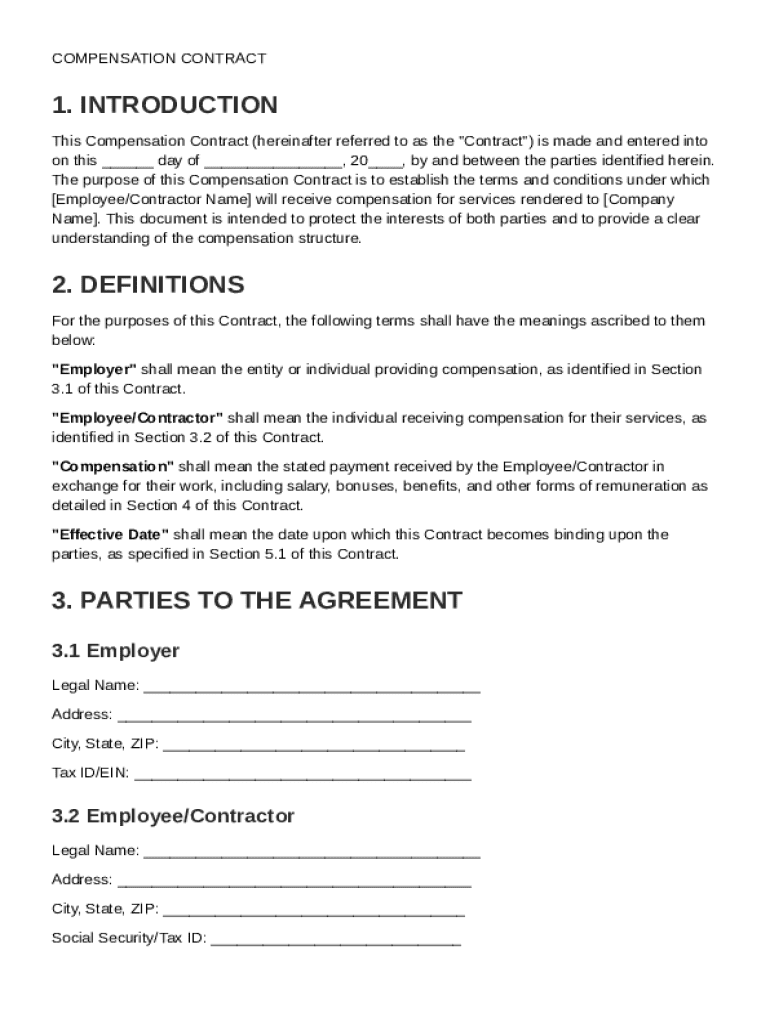







Definition & Meaning
The "Compensation Contract Template" is a standardized document used to outline the employment terms between an employer and an employee or contractor. It specifies the compensation arrangements such as salary, bonuses, benefits, and reimbursement of expenses. The contract serves not only as a financial agreement but also establishes the duration of employment, termination conditions, and confidentiality obligations. Utilizing this template protects both parties by ensuring that compensation terms are clear and legally documented.
Key Elements of the Template
- Compensation Details: This section includes the salary, payment schedule, bonuses, and other financial components of the employment agreement.
- Employment Duration: Specifies start and end dates or conditions for employment continuity.
- Termination Conditions: Lists the conditions under which either party can terminate the contract.
- Confidentiality Obligations: Outlines confidentiality requirements to protect company information.
- Governing Law: Identifies the jurisdiction's laws that govern the contract.
- Amendment Procedures: Provides a process for making changes to the contract.
How to Use the Compensation Contract Template
To effectively use the Compensation Contract Template, follow these steps for ensuring thorough documentation of the employment terms.
Steps to Complete the Template
- Download the Template: Obtain the template from a trusted platform supporting document editing.
- Fill Out Employee/Contractor Information: Enter the names and details of both the employer and employee or contractor.
- Specify Compensation Terms: Detail the salary, bonuses, and payment frequency.
- Define Employment Duration: Indicate how long the employment term is intended to last.
- Outline Termination Conditions: Clearly state the conditions under which the contract can be terminated.
- Add Confidentiality Clauses: Ensure both parties understand any confidentiality agreements.
- Review Governing Law: Confirm that the appropriate state law is referenced within the contract.
- Secure Signatures: Both parties should sign the document to confirm agreement to the terms.
Legal Use of the Compensation Contract Template
The Compensation Contract Template is legally binding when correctly executed, meaning both parties have affixed their signatures and both parties have a clear understanding of the terms. To ensure legal compliance:
- Verify State Laws: Ensure the contract aligns with state-specific employment laws.
- Modify Template as Needed: Adjust the template to meet specific legal requirements or company policies.
- Consult Legal Counsel: If uncertainties arise, seek legal advice to ensure the contract is enforceable.
Important Terms Related to the Compensation Contract Template
Understanding key terms within the Compensation Contract Template is essential for accurate interpretation:
- Base Salary: The fixed annual amount paid to the employee.
- Bonuses: Additional compensation linked to performance or company profits.
- Non-Disclosure Agreement (NDA): A confidentiality clause protecting sensitive company information.
- Reimbursement: Terms covering the repayment of work-related expenses.
- Non-Compete Clause: A provision restricting the employee from working with competitors post-employment.
Examples of Using the Compensation Contract Template
Different contexts in which the Compensation Contract Template might be used include:
- Full-Time Employees: Establishing clear compensation and benefit terms.
- Contractors: Outlining payment schedules and project-based fees.
- Seasonal Workers: Specifying duration and terms for temporary employment.
- Internships: Defining any stipend or compensation provided to interns.
State-Specific Rules for the Compensation Contract Template
Compensation contracts must adhere to state laws, which can vary significantly. It's important to:
- Identify State Laws: Some states have specific requirements regarding employment contract terms.
- Tailor Contracts: Modify the template to reflect state-specific legal terminology and conditions.
- Comply with Local Regulations: Ensure the contract meets any local employment and compensation regulations.
Who Typically Uses the Compensation Contract Template
The broad utility of the Compensation Contract Template makes it ideal for several types of users:
- Large Corporations: Streamlines consistent compensation agreements across departments.
- Small Businesses: Keeps employment terms organized and standardized.
- Freelancers and Independent Contractors: Ensures clear payment terms for their services.
- Human Resource Departments: Facilitates the onboarding process with structured agreements.


State-by-State Differences
Understanding variations in state requirements for compensation contracts can prevent legal issues. Key considerations include:
- Wage Requirements: Minimum wage and overtime laws differ by state.
- Non-Compete Agreements: Some states limit or prohibit non-compete clauses.
- Benefits Provisions: States may have different mandates for benefits like health insurance.
By recognizing these differences, you can adapt the Compensation Contract Template to ensure compliance with state-specific regulations and enhance its utility across various employment scenarios.




