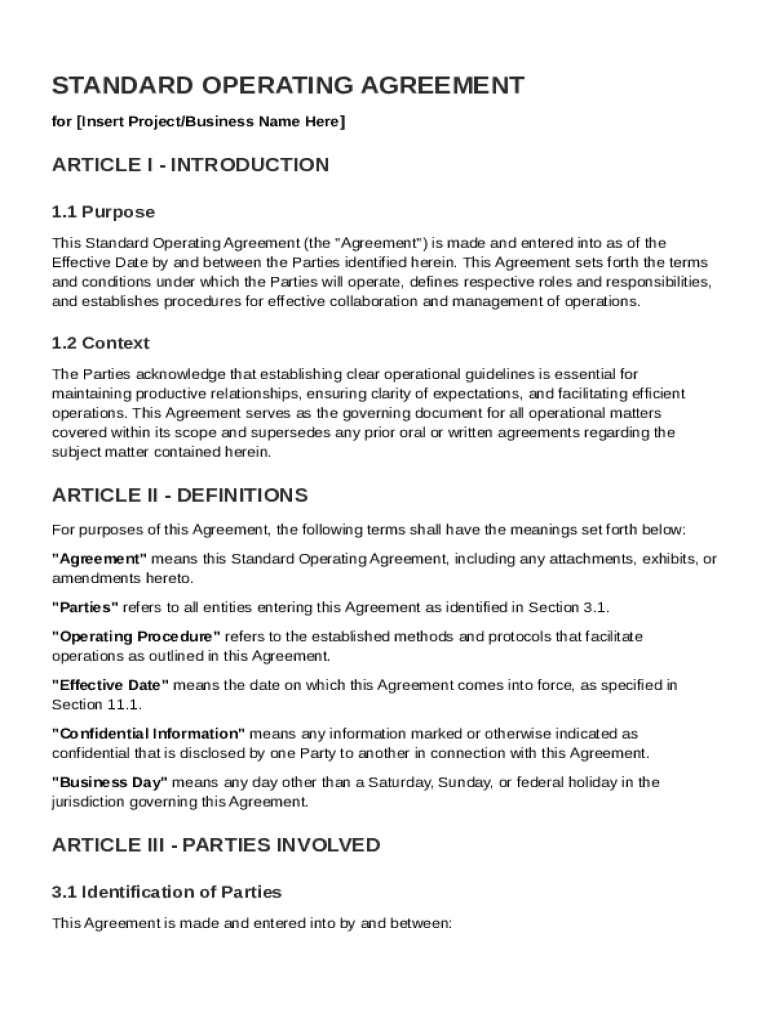







Definition & Meaning of the Standard Operating Agreement Template
The Standard Operating Agreement Template serves as a foundational document outlining the roles, responsibilities, and procedures for collaboration between parties involved in a business or project. This template is designed to ensure clarity and consistency in operations by defining operational procedures, decision-making protocols, financial commitments, and confidentiality requirements. It also includes provisions for conflict resolution and termination procedures. By establishing these guidelines, the template helps prevent misunderstandings and disputes, maintaining smooth business operations.
The agreement acts as a living document, adapting to the needs and changes within a business environment. It serves not only as a contract but also as a roadmap for effective management and communication among involved parties. The inclusion of signatures signifies a mutual understanding and acceptance of the outlined terms, making the template legally binding and enforceable.
How to Use the Standard Operating Agreement Template
Using the Standard Operating Agreement Template involves several crucial steps to ensure it's tailored to the specific needs of your project or business collaboration. Begin by thoroughly reviewing the template to understand the standard provisions it contains. This includes sections on responsibilities, decision-making, and conflict resolution. Once familiar, engage all parties involved in the collaboration to gather input and make necessary adjustments to the template. This collaborative approach ensures that the agreement reflects the realities and expectations of all parties.
After customization, the template should be reviewed by legal counsel to ensure compliance with relevant laws and regulations. Legal review is critical as it verifies that the terms are enforceable and align with the legal framework applicable to your business type or jurisdiction. Finally, once all adjustments are made and legal reviews completed, distribute the document to all parties for signature. This formalizes the agreement, and each party should retain a copy for their records.
Key Elements of the Standard Operating Agreement Template
This template includes several key components essential for its functionality and effectiveness.
Roles and Responsibilities
- Clearly defines the role of each party involved
- Outlines specific duties and obligations
- Sets expectations to avoid overlap or neglect
Operational Procedures
- Details the procedures for daily operations
- Provides guidelines for decision-making processes
- Includes steps for conflict resolution and expected timelines
Financial Obligations
- Specifies financial contributions and obligations of each party
- Details payment schedules, revenue sharing, or profit distribution
- Includes terms for dealing with financial disputes
Confidentiality Clauses
- Establishes the handling and protection of sensitive information
- Defines the scope of confidentiality for all involved parties
- Provides terms for consequences in the event of a breach
These elements ensure that all parties have a clear understanding of their obligations and the overall functioning of the partnership.
Steps to Complete the Standard Operating Agreement Template
-
Gather Business Information: Collect all necessary details about the parties involved, including names, roles, and contact information.
-
Review and Customize the Template: Modify the document to suit the specific needs of the partnership. Adjust sections on roles, procedures, and financial obligations.
-
Legal Review: Submit the customized template for legal counsel to ensure compliance with applicable laws and regulations.
-
Finalize Content: Make any required changes following legal review and confirm that all parties agree with the content.
-
Signatures: Obtain signatures from all parties to make the document legally binding. Ensure each party has a copy of the signed agreement.
-
Implement the Agreement: Distribute copies to relevant stakeholders, and implement the terms outlined in the agreement in daily operations.
Following these steps ensures the template functions appropriately as a guiding document for your business arrangements.
Important Terms Related to the Standard Operating Agreement Template
Understanding the terminology within the Standard Operating Agreement Template is crucial for its effective utilization. Key terms include:
- Parties: The individuals or organizations entering into the agreement.
- Obligations: The duties each party is expected to fulfill under the agreement.
- Amendments: Changes or modifications to the agreement after initial implementation.
- Termination: The process or grounds upon which the agreement can be ended.
- Dispute Resolution: Methods and procedures for resolving conflicts that arise during the term of the agreement.
Familiarity with these terms will lead to better comprehension and management of the agreement's provisions.
State-Specific Rules for the Standard Operating Agreement Template
State-specific legislation can impact how a Standard Operating Agreement Template is utilized and enforced. Each state in the U.S. might have unique requirements or additional clauses that need to be included in the template.
- Governing Law: Determine the state laws that will govern the agreement and ensure compliance.
- Specific Clauses: Some states may require particular clauses, such as those dealing with liability or partnership formation.
- Notarization and Witnesses: Certain states might necessitate notarization or require witnesses to validate the agreement.
Before finalizing, it’s important to consult with a legal professional familiar with state-specific requirements to avoid non-compliance issues.
Legal Use of the Standard Operating Agreement Template
The legal use of this template requires adherence to both statutory provisions and negotiated terms relevant to the specific collaboration. The legality is upheld by:
- Compliance with Regulations: Ensuring the document adheres to federal, state, and local laws.
- Binding Nature of Signatures: Obtaining proper signatures from all parties involved affirms consent and comprehension of the agreement.
- Inclusion of All Necessary Clauses: Ensures thorough coverage of all possible areas of concern or dispute.
Legal validation by a qualified attorney guarantees that the document not only aligns with the intentions of the parties involved but is also enforceable in the event of a dispute.
Who Typically Uses the Standard Operating Agreement Template
The Standard Operating Agreement Template is predominantly used by businesses of various types and sizes seeking to formalize their internal or external collaborations.
- Startups and Small Enterprises: Often used to articulate partnerships and operational strategies in evolving environments.
- Joint Ventures: Entities joining resources for a specific project commonly utilize this template to define the scope and responsibilities.
- Professional Partnerships: Law firms, medical practices, and consulting partnerships leverage this document to delineate roles and share profits or liabilities.
By providing structure and clear guidelines, these templates assist in maintaining a collaborative, productive partnership among diverse business entities.