






Definition & Meaning
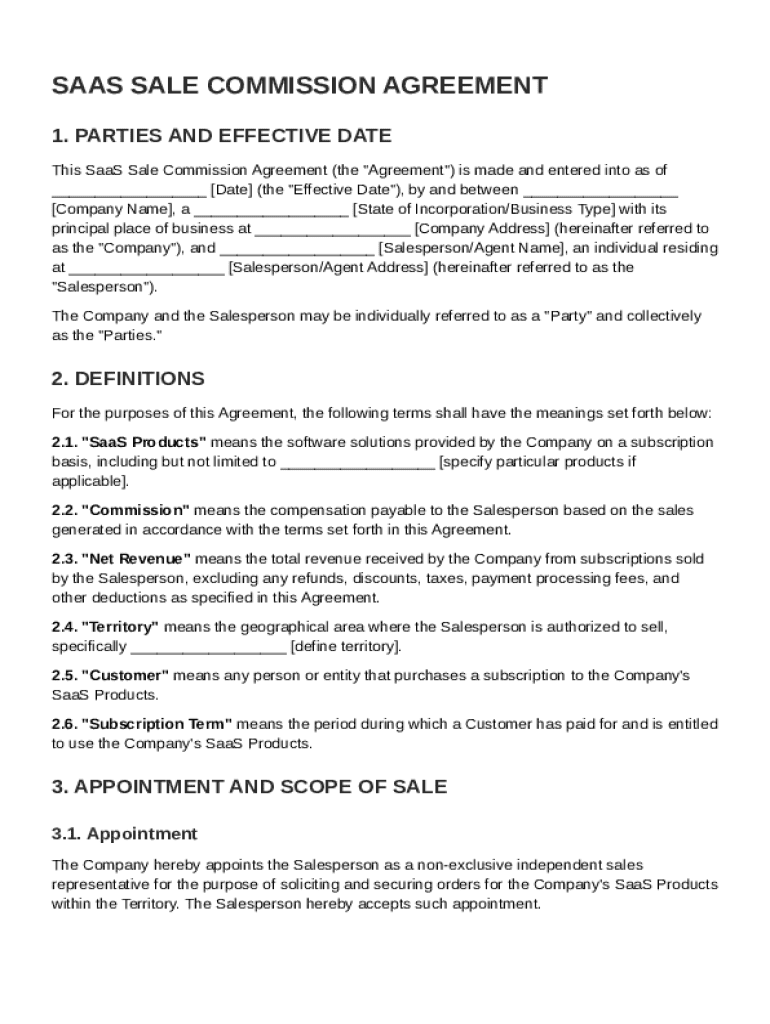
A SaaS Sale Commission Agreement Template is a legally binding document that outlines the terms of the relationship between a company that offers Software as a Service (SaaS) products and a salesperson. This agreement specifies the salesperson's role in promoting and selling the company's software solutions. It defines key terms such as "commission," "software products," and "sales targets," providing a clear framework for expectations and responsibilities. By establishing the guidelines for collaboration, it ensures mutual understanding between the involved parties, which is crucial for minimizing disputes and enhancing productivity.
Key Elements of the SaaS Sale Commission Agreement Template
The SaaS Sale Commission Agreement Template includes several essential components that ensure a comprehensive understanding of the terms involved. These elements typically cover:
- Commission Structure: Detailed information on how commissions are earned, calculated, and paid, often based on sales performance.
- Roles and Responsibilities: The specific duties of the salesperson, including the requirement to act as an independent contractor.
- Confidentiality Clauses: Obligations regarding the handling of sensitive company information.
- Term and Termination: Conditions under which the agreement may be terminated by either party, along with any requisite notice period.
- Dispute Resolution: Processes and mechanisms to resolve disagreements that may arise from the agreement.
How to Use the SaaS Sale Commission Agreement Template
Using this template effectively involves several steps to tailor it to the specific needs of your business. Here is a typical approach:
- Review and Understand the Template: Familiarize yourself with the sections and terms to ensure you understand how they apply to your specific circumstances.
- Customize the Details: Modify the template by adding specific information such as the salesperson's name, commission rates, and any unique conditions.
- Consult Legal Expertise: Work with legal counsel to ensure the terms are in compliance with relevant laws and regulations.
- Discuss with the Salesperson: Make sure the salesperson understands the agreement, answering any questions they might have before signing.
Legal Use of the SaaS Sale Commission Agreement Template
To ensure legality, it is crucial to align the template with the applicable laws within your jurisdiction. This typically involves compliance with federal and state employment and contract laws. The agreement must clearly establish that the salesperson is not an employee but an independent contractor, preventing misclassification issues. Utilize legal counsel to verify that the agreement meets all regulatory criteria, ensuring that it serves as a legally defensible document in case of disputes.
Steps to Complete the SaaS Sale Commission Agreement Template
Completing the SaaS Sale Commission Agreement Template involves several key steps:
- Input Company Details: Insert the name and contact information of the company.
- Specify Salesperson Information: Include the full name and address of the salesperson.
- Define Compensation: Clearly outline the commission structure and payment terms.
- Set Confidentiality Terms: Insert clauses pertaining to confidentiality and data protection.
- Agree on Termination Clauses: Establish the terms and conditions under which either party may terminate the agreement.
- Finalize and Sign: Both parties should review the document carefully, sign, and retain copies for their records.
Important Terms Related to SaaS Sale Commission Agreement Template
Understanding the language within the SaaS Sale Commission Agreement Template is critical. Important terms may include:
- Commission: A percentage of the sales revenue earned by the salesperson.
- Independent Contractor: A designation indicating that the salesperson operates independently and is not an employee.
- Non-Solicitation Clause: A term preventing the salesperson from soliciting the company’s clients or employees after termination.
- Termination for Cause: Conditions under which the company can terminate the salesperson's contract without notice.
Examples of Using the SaaS Sale Commission Agreement Template
This template is applicable in various scenarios within the SaaS industry:
- A software company hiring a freelance sales consultant to expand its market reach could use the template to outline sales targets and commission rates.
- A startup aiming to incentivize its sales team with performance-based compensation may use the template to detail expected sales levels and corresponding commissions.
- An established vendor seeking to protect proprietary information when employing external sales agents would benefit from the template's confidentiality provisions.
Business Types that Benefit Most from SaaS Sale Commission Agreement Template
The SaaS Sale Commission Agreement Template is particularly beneficial for businesses in the technology and software sectors, especially those focused on:
- Startup SaaS Firms: Looking to incentivize external sales expertise without full-time employment.
- Agencies Managing Multiple Products: Offering a wide range of software solutions and requiring multiple sales representatives.
- Consulting Firms with SaaS Clients: Needing formalized agreements for sales activities on behalf of clients.
- Tech Companies in Expansion: Engaging independent contractors to quickly enter new markets without the overhead of employee benefits.
State-by-State Differences
While the SaaS Sale Commission Agreement Template provides a general framework, variations exist based on state laws:
- California: Requires clear distinctions between an independent contractor and an employee, with specific legal tests to validate the contractor status.
- New York: May impose specific wage protection laws that affect how and when commissions are paid post-termination.
- Texas: Offers more flexibility but still requires adherence to intellectual property and confidentiality laws.
Employers should tailor their agreements to adhere to local regulations in these states, among others, to ensure compliance and enforceability.