






Definition and Meaning
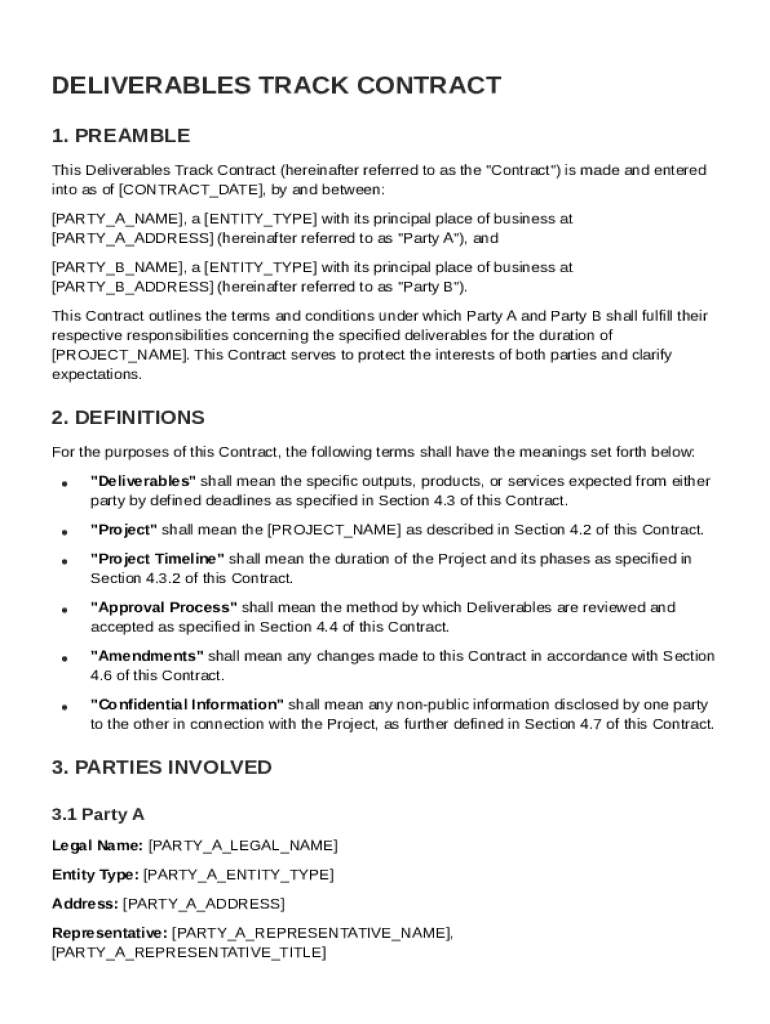
The Deliverables Track Contract Template is a formal document used to outline the duties and obligations of involved parties regarding their contributions to a project. The agreement stipulates responsibilities for specified deliverables, which can range from physical products to services or milestones within a project timeline. In compliance with standard contractual practices, this template includes definitions, project overview, scope of work, and approval processes. It serves as a foundational piece in project management by detailing the expectations for each party, thereby minimizing misunderstandings and ensuring all deliverables are met within the project's scope.
Key Elements of the Deliverables Track Contract Template
The template contains several crucial components to ensure clear communication and safeguard legal interests. These elements include:
- Scope of Work: Outlines the specific tasks and duties to be performed, ensuring a mutual understanding of the project requirements.
- Performance Milestones: Details the schedule and deadlines for project phases or individual tasks, facilitating timely deliverables.
- Payment Terms: Defines payment structures, specifying when payments are due and acceptable methods of payment, which benefits cash flow management.
- Confidentiality Obligations: Sets forth guidelines for protecting sensitive information exchanged between parties during the project.
- Intellectual Property Rights: Clarifies ownership and usage rights of any intellectual property created during the project, crucial for both parties to safeguard their creations.
How to Use the Deliverables Track Contract Template
To effectively utilize the Deliverables Track Contract Template, parties must follow specific steps to ensure a comprehensive and binding agreement. This process involves:
- Customizing the Template: Modify sections to fit the unique needs and specifics of the project at hand, including inserting relevant names, project descriptions, and deadlines.
- Defining and Agreeing on Responsibilities: Both parties should collaborate to clearly articulate their roles and responsibilities within the project scope, thus preventing overlaps or gaps.
- Finalizing Contractual Terms: Negotiate and agree upon all contractual terms, including dispute resolution and termination clauses, ensuring all parties are satisfied with the conditions.
- Reviewing for Compliance: Consult legal counsel to review the contract for compliance with relevant laws, ensuring all stipulations adhere to regulatory standards.
- Execution and Archiving: Once agreed upon, both parties should sign the contract, after which it should be securely archived for future reference.
Important Terms Related to the Deliverables Track Contract Template
Several important terms are central to the understanding and execution of this template:
- Indemnification: A legal provision requiring one party to compensate the other for certain losses or damages incurred during the project.
- Force Majeure: A clause that relieves parties from contractual obligations due to extraordinary events beyond their control, like natural disasters.
- Limitation of Liability: Caps the amount one party must pay the other for damages arising from contract breaches, mitigating financial risk.
- Governing Law: Specifies which jurisdiction’s laws will govern the contract, an important aspect for international projects.
- Dispute Resolution: Provides mechanisms to resolve disagreements, which can include mediation, arbitration, or litigation processes.
Legal Use of the Deliverables Track Contract Template
The legal framework supporting the Deliverables Track Contract Template ensures that it meets the necessary standards for enforceability within the United States:
- Compliant with U.S. Contract Law: To be legally binding, the template includes important elements such as mutual consent, capacity, consideration, and legality.
- Electronic Signatures: Thanks to platforms like DocHub, electronic signatures used in this contract are valid under the ESIGN Act, streamlining the signing process.
- Customization to Specific Industries: Depending on the industry, there may be additional regulatory requirements that the template must meet (e.g., FDA standards for pharmaceuticals), ensuring adherence to sector-specific legal norms.
Steps to Complete the Deliverables Track Contract Template
To complete the Deliverables Track Contract Template effectively, parties should take a systematic approach:
- Input Project Details: Begin by filling out relevant fields with project names, parties involved, and specific timelines.
- Clarify Roles and Responsibilities: Detail each party's duties within designated sections and align expectations.
- Specify Approval Processes: Outline procedures for reviewing and approving deliverables, assigning responsibility to the appropriate personnel.
- Define Payment and Milestone Criteria: Set clear guidelines for payment releases upon completion of specific tasks or project milestones.
- Incorporate Legal Provisions: Add clauses addressing confidentiality, intellectual property rights, and termination conditions for comprehensive coverage.
Examples of Using the Deliverables Track Contract Template
The Deliverables Track Contract Template finds application across various sectors, adapting to differing project needs. Examples include:
- Technology Development Projects: Used by software companies to manage deliverables for app or system development projects, ensuring timely software releases.
- Construction Contracts: Employed by builders and developers to monitor construction phases and deliverables, from initial excavation to final inspection.
- Consulting Services: Utilized by consultants to set parameters for services rendered, defining clear outputs for advisory projects.
State-Specific Rules for the Deliverables Track Contract Template
While the Deliverables Track Contract Template is designed for broad application, state-specific legal requirements may necessitate modifications:
- Variations in Contractual Terms: Certain states might have unique requirements for clauses like non-compete agreements or indemnification limitations.
- Registration Requirements: Some states may impose specific filing requirements for contracts exceeding certain monetary values, necessitating additional documentation.
- Governing Law Preferences: Contracts may need to reference state-specific statutes, especially when projects are based in jurisdictions like California or New York.