






Definition & Meaning
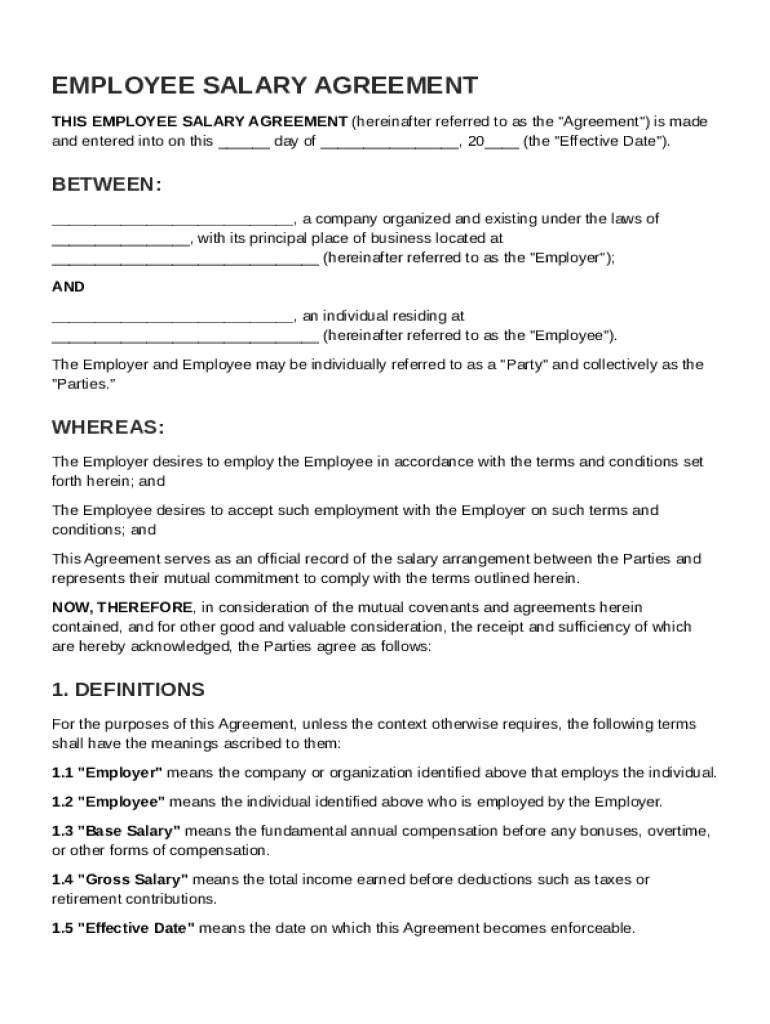
An Employee Salary Agreement Template is a formal document outlining the salary arrangement and other terms of employment between an employer and an employee. Designed to set clear expectations, this agreement ensures both parties understand the compensation structure, benefits, and other employment conditions. By establishing a clear set of terms, it minimizes potential disputes and enhances transparency in the employment relationship.
- Formal Record: Serves as an official record of the salary and mutual commitments.
- Legal Reference: Provides legal clarity and can be referenced in case of disputes.
- Comprehensive Documentation: Covers definitions, compensation, benefits, confidentiality, and governing law.
Employee Salary Agreements are crucial in maintaining a professional relationship by documenting expectations and commitments.
Steps to Complete the Employee Salary Agreement Template
- Pre-Preparation: Gather all necessary information, such as employee details, salary figures, and benefits.
- Template Filling: Open the template and start filling in the basic information, like name and contact details of both parties.
- Salary Details: Clearly outline the salary structure, including base salary, bonuses, and incentives.
- Benefits Description: List out any benefits offered, such as health insurance, retirement plans, or stock options.
- Employment Terms: Define terms such as the start date, probation period, and working hours.
- Review and Amend: Carefully review the document for any errors or omissions and make necessary amendments.
- Signing: Both parties should sign the agreement, securing the document as a binding contract.
These steps ensure that the Employee Salary Agreement Template is completed accurately and efficiently.
Key Elements of the Employee Salary Agreement Template
- Identification Information: Includes names, addresses, and job titles of both employer and employee.
- Salary Structure: Details on how and when salary will be paid, including any deductions or withholdings.
- Benefits Package: Lists offered benefits and conditions for eligibility.
- Employment Duration: Specifies whether the employment is for a fixed term or at-will.
- Confidentiality Clause: Protects sensitive information during and after employment.
- Governing Law: Indicates which state laws will apply in case of a dispute.
Ensuring these elements are well-defined and precise is essential for the agreement's clarity and effectiveness.
Important Terms Related to Employee Salary Agreement Template
- Base Salary: The initial rate of compensation excluding benefits, bonuses, or raises.
- Incentive Payments: Additional financial benefits tied to performance or milestones.
- Non-Compete Agreement: A clause preventing the employee from working with competitors post-employment.
- Severability: The ability of the agreement to remain effective even if one part is invalidated.
- Probation Period: Initial phase after hiring during which the employee’s performance is evaluated.
Understanding these terms helps both parties to navigate the document effectively.
Legal Use of the Employee Salary Agreement Template
This agreement template adheres to laws and regulations that govern employment contracts. It reflects compliance with the ESIGN Act, making electronic signatures legally binding. Legal use also involves:
- Compliance with Labor Laws: Both parties must ensure the agreement aligns with federal and state labor laws.
- Employment Dispute Resolution: Provides a basis for resolving any employment-related disagreements.
- Contractual Obligations: Clearly outlines obligations of both the employer and the employee.
Utilizing this template lawfully protects both parties' rights and interests.
Examples of Using the Employee Salary Agreement Template
- Corporate Employment: Medium to large enterprises use the template for new hires to formalize employment conditions.
- Small Business Scenarios: Provides small businesses with a structured way to document employment agreements, aiding in professionalizing operations.
- Freelance or Gig Workers: Ensures clarity in compensation and project terms for freelancers, reducing potential miscommunications.
These examples highlight the template's versatility in different employment scenarios.
Digital vs. Paper Version
Modern businesses often prefer the digital version of the Employee Salary Agreement due to its convenience and integration capabilities:
- Digital Version: Can be easily edited, updated, and signed electronically. Secure and environmentally friendly.
- Paper Version: Offers a tangible record and may be necessary for locations lacking digital infrastructure.
The choice between digital and paper versions depends on the organization's operational setup and preference.
Who Typically Uses the Employee Salary Agreement Template
Typically utilized by HR departments, managers, and business owners, this template serves a broad range of users:
- HR Professionals: To standardize employment agreements across the organization.
- Small Business Owners: To formalize terms with new employees in a legally sound manner.
- Independent Contractors: To establish clear terms with associates or temporary staff.
These stakeholders use the template to ensure consistent and compliant employment practices.