




Here's how it works
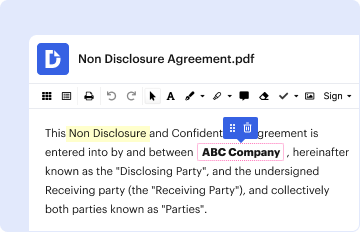
01. Edit your property loss report form online
Type text, add images, blackout confidential details, add comments, highlights and more.
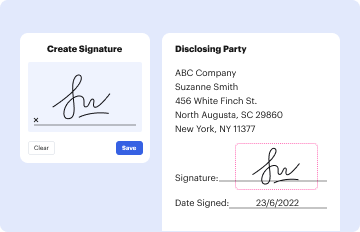
02. Sign it in a few clicks
Draw your signature, type it, upload its image, or use your mobile device as a signature pad.
03. Share your form with others
Send property loss damage form via email, link, or fax. You can also download it, export it or print it out.
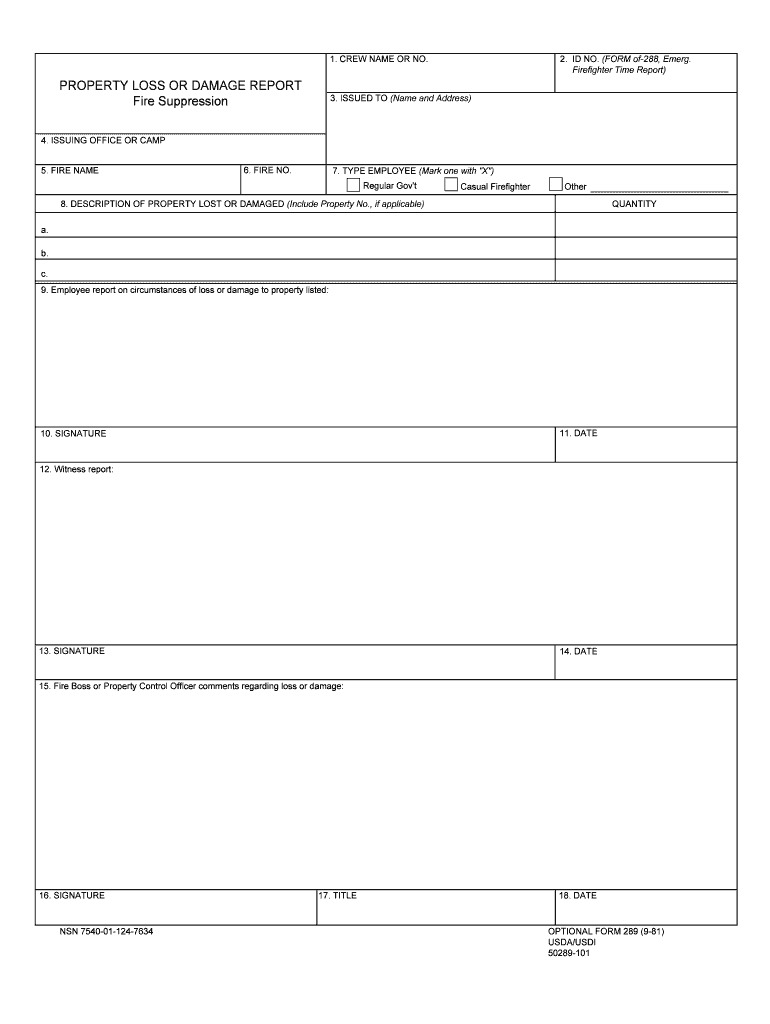
How to use or fill out Incident Time Report - US Forest Service with our platform

- Click ‘Get Form’ to open the Incident Time Report in the editor.
- Begin by entering the 'Crew Name or No.' at the top of the form. This identifies your team for record-keeping.
- Fill in the 'ID No.' which corresponds to the Emerg. Firefighter Time Report, ensuring accurate tracking.
- Provide details in the 'Issued To' section, including name and address, to specify who is responsible for this report.
- Indicate the 'Issuing Office or Camp' and include relevant information about the fire by filling in 'Fire Name' and 'Fire No.'.
- Select your employment type by marking one option with an 'X' under 'Type Employee'.
- In the 'Description of Property Lost or Damaged', list items clearly, including property numbers if applicable.
- Document circumstances of loss or damage in the employee report section, providing a detailed account.
- Complete the form by signing and dating where indicated, ensuring all necessary signatures are obtained from witnesses and supervisors.
Start using our platform today to streamline your Incident Time Report process for free!
Fill out Incident Time Report - US Forest Service online
It's free
It's free
See more Incident Time Report - US Forest Service versions
We've got more versions of the Incident Time Report - US Forest Service form. Select the right Incident Time Report - US Forest Service version from the list and start editing it straight away!
| Versions | Form popularity | Fillable & printable |
|---|---|---|
| 1981 | 4.8 Satisfied (35 Votes) |
Got questions?
We have answers to the most popular questions from our customers. If you can't find an answer to your question, please contact us.
Contact us
What is the Forest Service Critical Response Protocol?
The Critical Response Protocol (CRP) is an agency-level investigation that typically occurs with fatalities or burn-overs involving multiple people. It is the process the USDA Forest Service uses to learn from tragic events.
What is an ad in the Forest Service?
The Administratively Determined Pay Plan for Emergency Workers (AD casual hire) allows individuals to be hired on an as-needed basis to supplement regular federal employees in responding to emergencies threatening life and property.
What is the ad pay plan?
Some pay plan codes, such as AD, may be used by any agency with an independent authority to administratively determine the rates of pay for any group or category of employees. Each agency must follow its own unique statutory pay authority when setting and adjusting pay under an AD pay system.
What is an ad hire?
Hiring Seasonal Employees as AD Employees The Administratively Determined (AD) Pay Plan for Emergency Workers (Casuals) is a valuable hiring authority that is available to the National Park Service to rapidly bring on staff to respond to sudden and unexpected emergencies.
How many US Forest Service employees got fired?
Trump administration fires 3,400 U.S. Forest Service employees, 10% of the agencys workforce - YouTube.
Security and compliance
At DocHub, your data security is our priority. We follow HIPAA, SOC2, GDPR, and other standards, so you can work on your documents with confidence.
Learn more


People also ask
Who is the head official of the US Forest Service?
Tom Schultz As the 21st Chief of the Forest Service, Schultz leverages his extensive expertise in the science of forestry, his ontheground experience with the Idaho Department of Lands and Montanas Department of Natural Resources and Conservation, and his experience as a former U.S. Air Force Officer.
What is an ad fire crew?
An AD is a temporary emergency employee for the USDA Forest Service. While IDNR will manage your records, training, experience, and red carding the Forest Service will pay your salary, expenses, and travel. As an AD you will have a package of paperwork to be completed prior to wildfire mobilization.