






Definition & Meaning
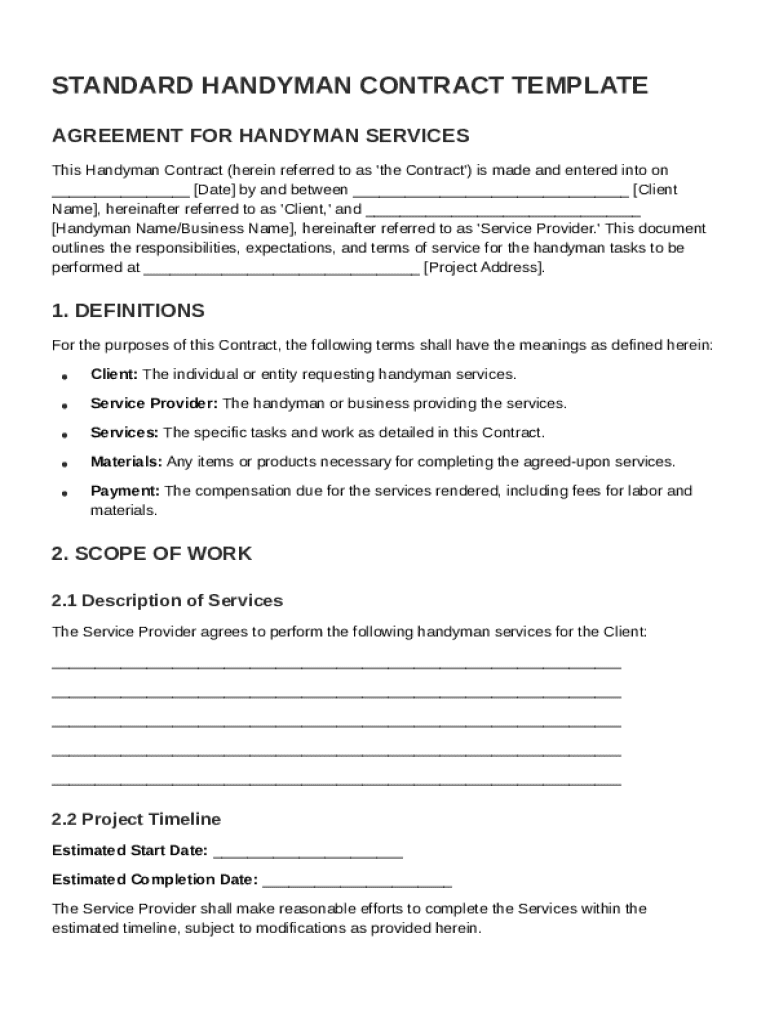
The Standard Handyman Contract Template serves as a legal document outlining the terms and conditions between a client and a handyman service provider. This template includes vital definitions that delineate responsibilities, project scope, and other key elements to prevent misunderstandings. It establishes the legal framework necessary to protect both parties, ensuring each side comprehends their obligations and rights within the agreement. By drafting a well-defined contract, both the client and the service provider can mitigate disputes and streamline the service delivery process.
Key Elements of the Standard Handyman Contract Template
The contract template comprises several essential components designed to outline the agreement comprehensively:
-
Scope of Work: Details the specific tasks and services the handyman will perform. Precise descriptions help avoid discrepancies and ensure all parties maintain the same expectations.
-
Payment Terms: Includes the fee structure, payment schedule, and any deposit requirements. Clear terms prevent payment disputes and ensure the handyman's compensation is transparent from the outset.
-
Responsibilities: Clarifies the duties of both the client and the handyman, which might include preparing the workspace or providing necessary materials. This section fosters cooperation and ensures efficiency.
-
Liability and Warranty: Outlines the handyman's responsibility for the quality of the work and any warranties provided. It clarifies the extent of liability in case of defects or property damage resulting from the services rendered.
-
Termination Clauses: Defines conditions under which the contract can be terminated, including breach of terms and mutual consent. This protects both parties from continued engagement under unsatisfactory circumstances.
Legal Use of the Standard Handyman Contract Template
Ensuring the Standard Handyman Contract Template is legally compliant involves aligning the document with current laws applicable in the U.S. It must adhere to the ESIGN Act for electronic signatures, thereby confirming that e-signatures are valid and enforceable. Legal considerations ensure that all aspects, from payment terms to dispute resolution, conform to state and federal laws. This compliance not only validates the contract but also fortifies it against potential legal challenges.
Who Typically Uses the Standard Handyman Contract Template
The template is typically utilized by homeowners, property managers, and small business owners seeking handyman services for repairs, maintenance, or small renovations. Handyman service companies and independent contractors also benefit from this template by presenting a professional and comprehensive contract to their clients. This professionalism can enhance trust and communication between the parties involved, resulting in successful project completions and satisfied clients.


Steps to Complete the Standard Handyman Contract Template
Completing the Standard Handyman Contract Template requires careful attention to detail:
-
Gather Required Information: Collect details about the client, service provider, and project specifics. This includes contact information, job location, and an itemized list of tasks.
-
Customize the Template: Tailor the contract to align with the agreed-upon terms, ensuring all sections are appropriately filled out and relevant to the specific project.
-
Review Significant Terms: Both parties should carefully review the contract, focusing on major clauses like payment, termination, and scope of work to ensure clarity and mutual agreement.
-
Sign and Date: Once finalized, the document is signed and dated by both parties. If using DocHub, electronic signatures can be easily incorporated, ensuring a legally binding document.
State-Specific Rules for the Standard Handyman Contract Template
While the Standard Handyman Contract Template provides a universal framework, certain terms must adapt to state-specific regulations that may affect elements like licensing requirements, permissible working hours, zoning restrictions, or warranty stipulations. Contractors and clients should verify compliance with local laws to ensure the contract's validity in its jurisdiction. Where differences exist, the template should be adjusted to reflect these state-specific rules, maintaining legality and enforceability.
Examples of Using the Standard Handyman Contract Template
Consider a case where a homeowner hires a handyman for deck repairs. Using the Standard Handyman Contract Template, the parties may specify the restoration materials, expected duration, and costs upfront. If additional damages are encountered, the change order process within the contract provides structure for negotiating new terms. This allows the homeowner to trust the service provider's commitments while ensuring their property is cared for responsibly.
Important Terms Related to Standard Handyman Contract Template
Understanding critical terms within the handyman contract is essential:
-
Change Order: A documented modification to the original scope of work, necessary due to unforeseen circumstances or adjustments requested by the client.
-
Dispute Resolution: Procedures outlined for resolving potential conflicts, often through arbitration or mediation, to avert litigation.
-
Indemnification: A clause where the service provider agrees to compensate the client for any losses or damages arising from the work performed.
Each term carries weight in the contract, ensuring respective parties are aware of their commitments and legal positions in different scenarios.