






Definition and Meaning
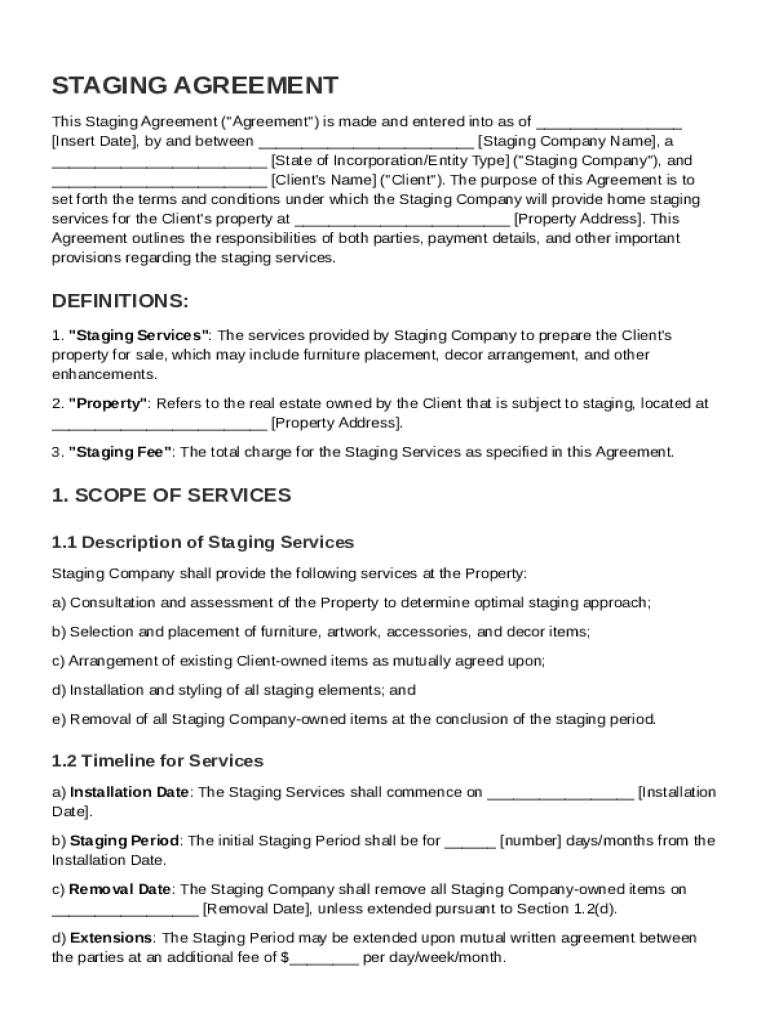
The Staging Agreement Template serves as a foundational document outlining the terms and conditions between a staging company and a client for staging services on a designated property. This agreement specifies the responsibilities of both parties to ensure clarity and prevent misunderstandings during the home staging process. It typically includes elements like the scope of services, payment terms, and liability clauses, clarifying the rights and obligations of each party.
Key Elements of the Staging Agreement Template
Key components of a Staging Agreement Template are crucial for its effectiveness. These elements ensure that the agreement is comprehensive and can address potential issues:
- Scope of Services: Describes the specific staging services to be provided, including timelines, materials, and methodologies.
- Payment Terms: Details about payment schedules, fees, and any provisions for late payments.
- Liability and Indemnification: Outlines the responsibilities and protections regarding potential damages or losses during the staging process.
- Cancellation Policies: Specifies conditions under which either party can cancel the agreement, including notice periods and potential penalties.
- Governing Law: Identifies the legal jurisdiction under which the agreement will be interpreted and enforced.
- Amendment Procedures: Provides guidance on how any changes to the agreement should be handled.
Steps to Complete the Staging Agreement Template
Completing a Staging Agreement Template requires careful attention to detail to ensure its legal soundness. Follow these steps:
- Review the Template: Ensure that the pre-filled sections align with the arrangement specifics between the parties.
- Fill in the Details: Include relevant information such as names, addresses, and contact information of both the client and the staging company.
- Define the Scope and Payment Structure: Clearly state the services to be provided and the associated costs.
- Customize Clauses: Tailor any standard clauses to fit the particular agreement, especially concerning payment terms and liability.
- Add Signatures: Both parties should sign and date the document to execute the agreement legally.
- Retain Copies: Each party should keep a signed copy for their records.
Legal Use of the Staging Agreement Template
Using the Staging Agreement Template legally demands adherence to local regulations and contractual laws. Some important considerations include:
- Compliance with State Laws: Ensure that the contract conforms to state-specific legal requirements which may impact enforceability.
- Clarity in Terms: Vague terms can lead to disputes. The agreement should employ clear and unambiguous language.
- Confidentiality Clauses: When handling sensitive client information, including provisions that protect privacy and data security.
- Professional Review: Consider having a legal professional review the agreement to ensure that all provisions are valid and enforceable.
Who Typically Uses the Staging Agreement Template
The primary users of Staging Agreement Templates are staging companies and their clients seeking to clarify the staging engagement. This agreement is essential in several scenarios:
- Homeowners or Real Estate Agents: Engaging staging services to enhance property appeal for sale or rent.
- Interior Designers: Providing staging services as a portion of a larger design project.
- Event Planners: Occasionally use staging agreements for temporary setups involving home-like environments.

Why Use a Staging Agreement Template
Employing a Staging Agreement Template offers numerous benefits that ensure effective and conflict-free service provision:
- Clarity of Expectations: Helps both the client and the service provider understand their obligations and what is expected from the staging process.
- Legal Protection: Provides a legally binding framework that outlines recourse in the event of disputes.
- Organizational Efficiency: Streamlines the process of engaging staging services with a standardized approach, facilitating quicker agreement execution.
Versions or Alternatives to the Staging Agreement Template
While the traditional Staging Agreement Template works for most situations, certain modifications or alternatives might be appropriate for specific needs:
- Customized Contracts: Depending on unique client or project requirements, highly personalized agreements may replace standard templates.
- Digital Templates: Offered by online services or software platforms for easy electronic completion and integration with document management systems.
- Specific Project Templates: Tailored for particular types of staging projects, such as luxury homes or small apartments.
State-Specific Rules for the Staging Agreement Template
Each state in the U.S. may have varying requirements or norms regarding staging agreements. It's vital to consider:
- Licensing Requirements: Certain states might require staging companies to hold specific business licenses.
- Consumer Protection Laws: Relevant statutes may dictate how agreements should be structured to protect consumer interests.
- Local Market Practices: While not legally binding, understanding local market customs can improve compliance and client satisfaction.
Digital vs. Paper Versions
The choice between digital and paper versions of a Staging Agreement Template depends on various operational preferences:
- Digital Versions: Offer flexibility with online access, easier correction capabilities, and seamless integration with other document workflows.
- Paper Versions: May provide comfort and familiarity for parties less accustomed to digital processes, ensuring easy physical annotation and signing.
In conclusion, selecting the relevant blocks is crucial to maximize the effectiveness of a Staging Agreement Template, ensuring it meets diverse business needs and legal standards within the United States.