
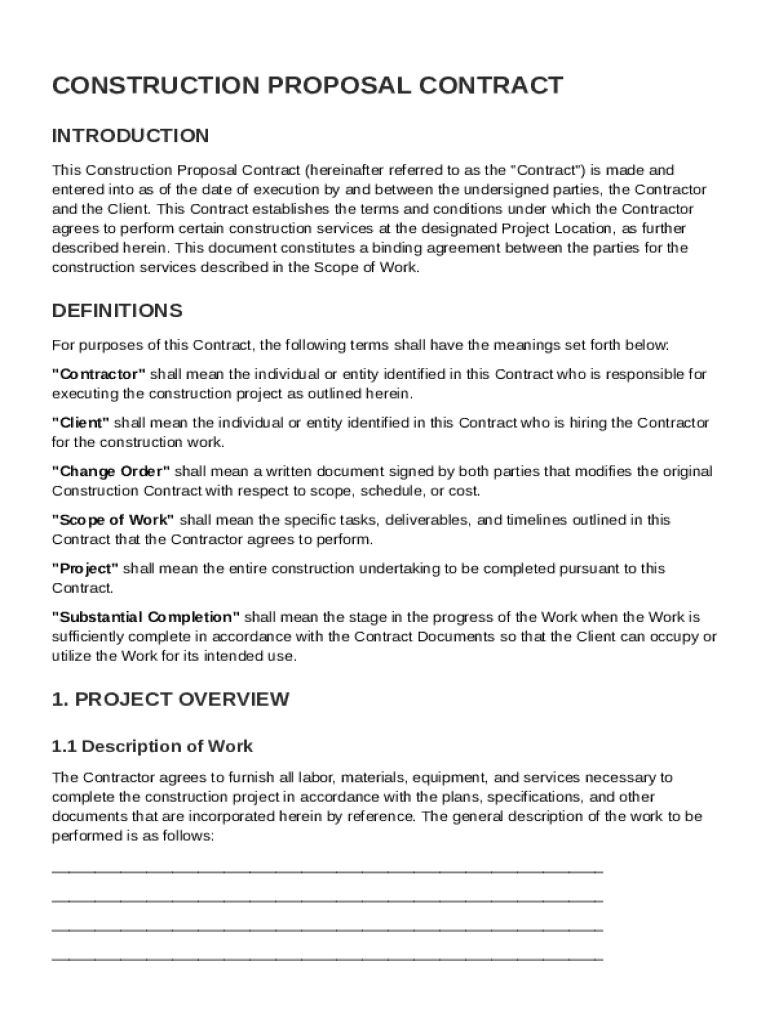







Definition and Meaning
The Construction Proposal Contract Template is a legal document that serves as an agreement between a contractor and a client for construction services. It sets out specific terms, such as the scope of work, timeline, payment plan, and dispute resolution methods. This template is used to ensure that both parties are clear about their responsibilities and expectations, minimizing potential disputes or misunderstandings.
- Scope of Work: Clearly outlines what is to be completed, including detailed descriptions of tasks and deliverables.
- Project Timeline: Specifies start and end dates, along with key milestones for project phases.
- Payment Structure: Details how and when payments will be made, often linked to project milestones or completion stages.
How to Use the Construction Proposal Contract Template
Using the Construction Proposal Contract Template involves customizing it to meet the specific needs of the construction project. Here’s how you can effectively use this template:
- Review the Template: Begin by reading through the entire document to understand its structure and content.
- Customize Content: Tailor each section to fit the project's specifics, including modifying descriptions, timelines, and payment details.
- Consult a Professional: It is advisable to have a legal professional review the customized document to ensure compliance with local laws and standards.
- Finalize and Sign: Once both parties have reviewed the contract and agreed to the terms, each should sign and date the document.
Key Elements of the Construction Proposal Contract Template
The template includes several key components that are essential for a comprehensive construction agreement:
- Change Order Procedures: Describes the process for making changes to the contract, including how changes will be documented and approved.
- Warranties and Guarantees: Lists out any assurances regarding the quality of work or materials used, providing a timeframe for these guarantees.
- Insurance Requirements: Specifies the types and minimum amounts of insurance the contractor must hold, such as liability or worker’s compensation.
- Termination Conditions: Outlines the circumstances under which either party can terminate the contract and the procedures for doing so.
Important Terms Related to the Construction Proposal Contract Template
Understanding the terminology within the Construction Proposal Contract Template is crucial:
- Client: The individual or entity commissioning the construction project.
- Contractor: The individual or company responsible for executing the construction project.
- Subcontractor: Third-party entities hired by the contractor to perform specific tasks within the larger project.
- Governing Law: The jurisdiction's legal framework that applies to the contract, influencing how disputes are resolved.
Legal Use of the Construction Proposal Contract Template
The template provides a framework for creating a legally binding agreement, aligning with regulations under U.S. law:
- Compliance Assurance: Ensures that the contract adheres to federal and state regulations, reducing legal risks.
- ESIGN Act Compliance: When using DocHub, electronically signed contracts within the template are legally binding.
- Dispute Resolution: Specifies methods for resolving disagreements, such as mediation or arbitration, to avoid litigation.
State-Specific Rules for the Construction Proposal Contract Template
Different states might have unique requirements affecting construction contracts:
- License Requirements: Some states necessitate contractor licensing, which must be verified before signing.
- Lien Laws: The contract may need to address local lien statutes, ensuring clients are informed of potential claims for unpaid services.
- State-Specific Addenda: Consider including additional clauses required by particular states to enhance compliance.
Examples of Using the Construction Proposal Contract Template
In practice, the Construction Proposal Contract Template can be adapted to various scenarios:
- Residential Construction: Used for home renovations or new builds, detailing work plans specific to residential settings.
- Commercial Projects: Adapted for office buildings or retail spaces, potentially involving more complex terms due to scale.
- Government Contracts: When dealing with public sector work, additional regulations may apply requiring further customization.
Digital vs. Paper Version
With advancements in technology, choosing between digital and paper versions affects how this document is used:
- Digital Version: Offers ease of editing, sharing, and storing. Enables the use of electronic signatures for efficient processing.
- Paper Version: May be required by certain entities or individuals preferring traditional methods for documentation and signing.
- DocHub Benefits: Supports seamless integration for importing, editing, and signing digitally, leveraging platforms like Google Drive for streamlined workflows.




