Definition and Key Components of the Dispute Resolution Agreement Template
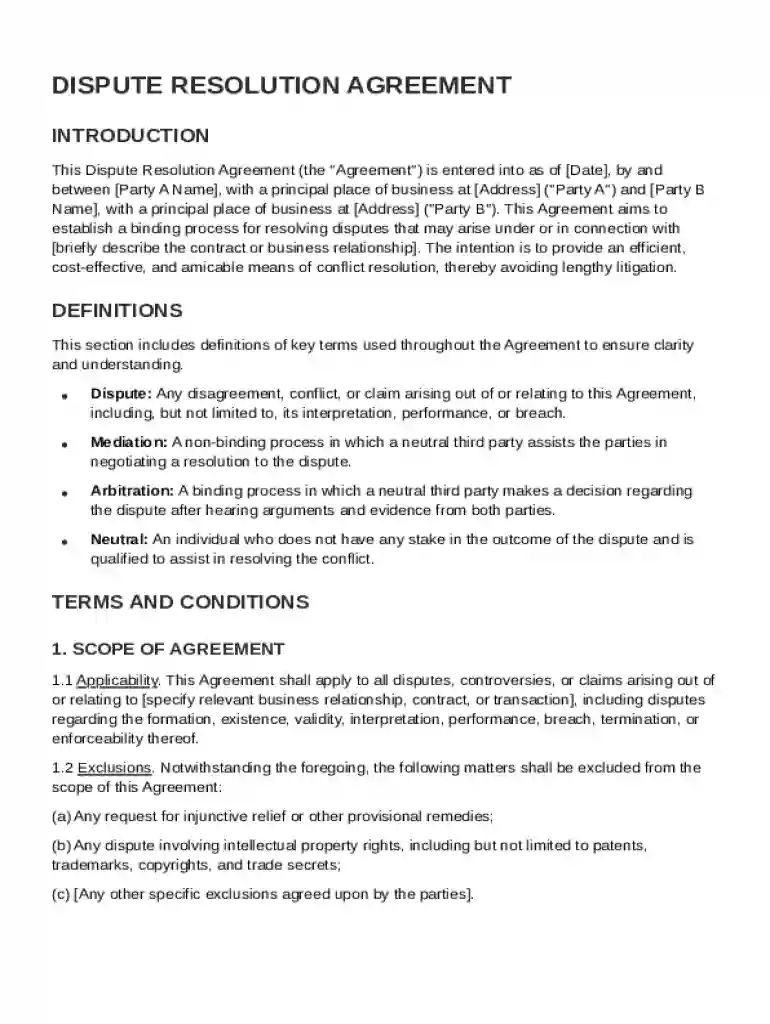
A Dispute Resolution Agreement Template is a structured document designed to facilitate the resolution of disputes that may arise between parties engaged in a business relationship. It formalizes the procedures that parties must follow to handle disagreements efficiently and effectively. This template ensures clarity by outlining essential elements such as negotiation, mediation, and arbitration processes.
- Negotiation: The agreement typically begins with provisions for negotiation, encouraging parties to resolve issues amicably before proceeding to formal dispute mechanisms.
- Mediation: If negotiation fails, mediation is often the next step, allowing an independent third party to assist in reaching a mutually agreeable solution.
- Arbitration: As a last resort, arbitration provides a binding decision. The agreement specifies the rules governing the arbitration, including the selection of arbitrators, venue, and applicable laws.
- Confidentiality: One key aspect is confidentiality clauses that protect sensitive information disclosed during negotiations or arbitration.
- Governing Law: The agreement dictates which jurisdiction’s legal framework will apply to resolve disputes.
How to Use the Dispute Resolution Agreement Template
To effectively utilize the Dispute Resolution Agreement Template, follow these procedures:
- Identify the Parties: Clearly list the names and roles of all involved parties.
- Customize the Template: Adjust the template to fit the specific context of your business relationship. This may involve filling in details concerning timelines, choice of mediators, and arbitration forums.
- Review with Legal Counsel: It is advisable to consult with legal professionals to ensure the template is comprehensive and aligns with your legal needs.
- Sign and Share: Both parties should sign the document to affirm their agreement to the terms outlined. Distribute copies to all involved stakeholders.
Steps to Complete the Dispute Resolution Agreement Template
Completing the Dispute Resolution Agreement Template involves a series of detailed steps:
- Gather Information: Collect necessary details about the parties involved, including official names and business addresses.
- Define Terms: Clearly articulate all terms, emphasizing the definitions to avoid ambiguity.
- Outline Procedures: Specify the procedures for negotiation, mediation, and arbitration, detailing the sequence and timelines involved in each step.
- Include Confidentiality Clauses: Provide terms for maintaining confidentiality of all proceedings and related documentation.
- Agree on Governing Law: Decide on and document the applicable law that will guide the arbitration and resolution process.
Important Terms Related to the Dispute Resolution Agreement Template
- Arbitration: A legal method for resolving disputes outside courts, where the arbitrator’s decision is binding.
- Mediation: A voluntary process where a neutral third party assists in resolving disputes.
- Governing Law: Refers to the legal jurisdiction that applies to the agreement.
- Confidentiality: Obligation to keep information private unless agreed otherwise by the parties.
Legal Use of the Dispute Resolution Agreement Template
The template is legally binding upon all parties involved once signed. Its use is intended to:
- Standardize the Dispute Process: Provides a clear framework that must be followed, reducing the need for court intervention.
- Ensure Compliance with Legal Standards: The template adheres to typical U.S. legal standards for dispute resolution.
- Promote Fairness and Transparency: Offers an impartial process to all parties, thus promoting fairness.
Key Elements of the Dispute Resolution Agreement Template
An effective Dispute Resolution Agreement contains several critical sections:
- Introduction and Parties: Clearly identifies the parties and establishes the purpose of the agreement.
- Resolution Methods: Details the hierarchy of resolution methods, such as negotiation, mediation, and arbitration.
- Roles and Responsibilities: Clarifies the roles of each party and any third parties, such as mediators or arbitrators.
- Financial Obligations: Outlines the allocation of costs associated with the dispute resolution process.
- Termination Conditions: Specifies conditions under which the agreement can be terminated before resolution is achieved.
Who Typically Uses the Dispute Resolution Agreement Template
The Dispute Resolution Agreement Template is widely used by:

- Businesses and Corporations: To manage commercial disputes with partners or clients.
- Service Providers: Such as legal and consulting firms that frequently engage in complex contractual relationships.
- Partnerships and Joint Ventures: Ensures smooth resolution of potential conflicts in multi-party business endeavors.
- Franchisees and Franchisors: To address disagreements specific to franchise operations.
Examples of Using the Dispute Resolution Agreement Template
Real-world applications of the template demonstrate its versatility:
- Corporate Mergers and Acquisitions: To preemptively address disputes during integration processes.
- Supplier and Vendor Agreements: To handle conflicts over delivery terms or payment disputes.
- Intellectual Property Rights: To charter a course for resolving patent controversies without litigation.
- Employment Contracts: For settling grievances between employees and employers regarding contractual terms.
Business Types That Benefit Most from the Dispute Resolution Agreement Template
Certain business entities experience significant benefits from employing the Dispute Resolution Agreement Template:
- Limited Liability Companies (LLCs): Facilitates internal resolution of member disputes without jeopardizing business continuity.
- Partnerships and S-Corps: Assists in resolving partner disagreements efficiently to maintain operational harmony.
- Franchises: Ensures consistent dispute resolution processes across franchise operations nationwide.
- Joint Ventures: Manages expectations and terms, reducing conflict in collaborative ventures.
By utilizing these highly detailed blocks, the Dispute Resolution Agreement Template offers a comprehensive, tailored approach to managing disputes that reflects the intricacies and necessities of business law in the United States.