






Definition and Meaning of a Retail Contract Template
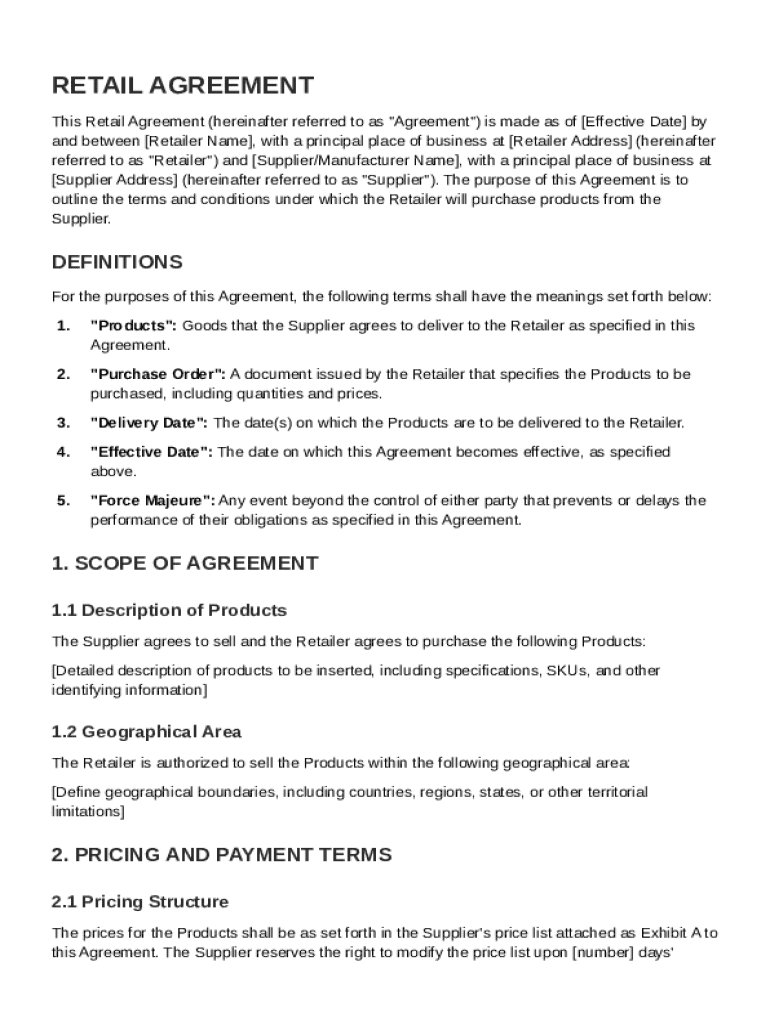
A Retail Contract Template is a standardized document used to outline the terms and conditions between a retailer and a supplier or manufacturer. This legal arrangement establishes the basis for the sale of goods, detailing the responsibilities and obligations of each party involved. The template simplifies the process of contract creation by providing a pre-structured format, which can be tailored to fit the specific needs of the business relationship.
Key Components of a Retail Contract Template
- Parties Involved: Clearly identifies the retailer and the supplier along with their contact information.
- Terms and Conditions: Details the terms under which the products are to be supplied, including pricing, payment methods, and delivery schedules.
- Product Specifications: Describes the products being supplied, including quality standards and specifications.
- Warranties and Liabilities: Outlines warranties provided on products and the liabilities of each party.
- Termination Clause: Describes how the contract can be terminated by either party, under what circumstances, and with what notice period.
How to Use the Retail Contract Template
The Retail Contract Template is designed to streamline the process of forming retail agreements by providing a comprehensive, yet adaptable, structure.
-
Review the Template: Start by thoroughly reviewing the entire template to understand its structure and contents. Ensure it covers all necessary components specific to your business needs.
-
Customize the Document: Modify sections to reflect the terms of your specific agreement. Add any additional clauses specific to your industry or business relationship.
-
Consult Legal Experts: Before finalizing, it’s advisable to consult with legal experts to ensure all modifications comply with applicable laws and that the contract accurately represents the agreed terms.
-
Final Review and Signatures: Conduct a final check to ensure completeness. Once satisfied, both parties should sign the document to make it enforceable.
Important Terms Related to Retail Contract Template
Commonly Used Terms
- Indemnification: Protects one party from any legal claims due to the other party’s actions or products.
- Confidentiality Clauses: Ensures that sensitive information disclosed during the business relationship is not publicly shared.
- Force Majeure: Excuses a party from liability if certain extraordinary events prevent the fulfillment of contractual obligations.
Understanding Legal Jargon
Avoid misunderstandings by familiarizing yourself with legal terms and language used frequently within the contract. Terms such as "obligation," "warranty," and "liability" should be clearly defined or understood. This understanding helps ensure all parties have the same expectations.
Key Elements of the Retail Contract Template
Essential Components
- Price and Payment Terms: Specifies the agreed price for the goods supplied, payment methods, and timeline for payment.
- Order Fulfillment Procedures: Describes the process from order placement to delivery. It may include lead times, delivery methods, and shipping logistics.
- Returns and Refund Policies: Provides guidelines on how returns will be handled, under what conditions refunds may be issued, and procedures for defective or damaged goods.
Detailed Clauses
These elements ensure transparency and a clear understanding between the involved parties. They serve as a reference during disputes or misunderstandings, emphasizing compliance with agreed terms.
State-Specific Rules for the Retail Contract Template
While the Retail Contract Template serves as a general guideline applicable across different states, it’s important to tailor the agreement to adhere to state-specific regulations.
Regional Variations
- Sales Tax Requirements: Different states have unique sales tax obligations that must be included in the contract to ensure compliance.
- Supplier Licensing: Certain states may have specific licensing requirements that affect the supplier’s eligibility to engage in retail agreements.
Legal Compliance
Incorporate state-specific rules regarding contract enforceability, dispute resolution, and statutory warranties. Consulting with a local legal professional can provide clarity on these regulations.
Examples of Using the Retail Contract Template
Real-World Scenarios
- Fashion Retailers: A fashion store entering a contract with a clothing manufacturer to specify seasonal inventory shipments.
- Electronics Suppliers: An electronics retailer outlining delivery and quality standards with a tech goods supplier for the holiday season.
Case Studies
Reviewing existing case studies where retail contract templates were effectively used can provide insights into best practices. It also highlights common pitfalls businesses face, offering a learning opportunity to better draft your agreement.
Who Typically Uses the Retail Contract Template


Relevant Parties
- Retailers and Suppliers: Generally used by businesses involved in the supply chain, ranging from small boutique stores to large retail chains.
Extended Use Cases
- Drop Shipping Businesses: Beneficial for online retailers using drop shipping models to document terms with manufacturers and logistics partners.
- Franchise Operations: Franchisors use it to ensure standard product delivery agreements across different franchise locations.
Legal Use of the Retail Contract Template
Contractual Validity
Legal enforceability is a vital aspect of using a Retail Contract Template. To be considered legally binding, contracts must meet certain criteria, including mutual consent, a legitimate purpose, and consideration.
Compliance with U.S. Laws
Ensuring your retail contract is compliant with the Uniform Commercial Code (UCC) regarding sales and leasing can safeguard against legal challenges. Additionally, adherence to digital signature laws, such as the ESIGN Act, is necessary for agreements executed electronically.