




Definition & Meaning
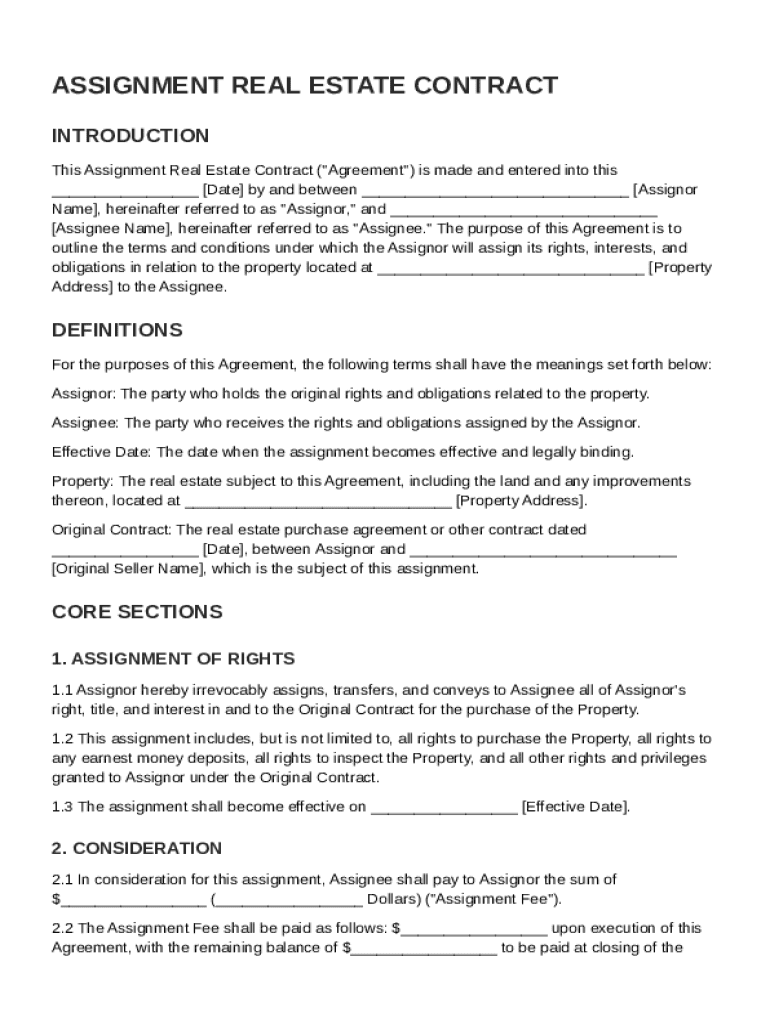
The Assignment Real Estate Contract Template is a legal document used to transfer the rights and obligations of a real estate contract from one party, the assignor, to another, the assignee. This contract outlines detailed terms and conditions, ensuring clarity for all parties involved in the transaction. Within the template, you will find various sections, such as definitions, the nature of the assignment, consideration for the assignment, and legal warranties. These elements help set expectations, protect interests, and define responsibilities and rights concerning the specific property under consideration.
Key Elements of the Assignment Real Estate Contract Template
Understanding the key components of this template is essential for both assignors and assignees to safeguard their interests. Principal elements include:
-
Definitions: Clarifies terms used throughout the document to ensure mutual understanding. Terms like "assignor," "assignee," and "contract of sale" are typically defined here.
-
Assignment Details: Lays out the specifics of the transfer including the property details and the conditions under which the assignment takes place.
-
Consideration for the Assignment: Describes the financial aspect of the transaction, detailing payment methods and any other agreed compensation.
-
Representations and Warranties: Involves promises made by both parties regarding the state of the property and the legality of the assignment process.
-
Indemnification Clauses: Protects parties by clarifying who is responsible for losses or damages incurred as a result of the assignment.
These elements collectively create a comprehensive framework for the real estate transaction to proceed smoothly and legally.
Steps to Complete the Assignment Real Estate Contract Template
Filling out the Assignment Real Estate Contract Template requires careful attention to ensure all sections are accurately populated. Follow these steps:
-
Identify the Parties: Clearly state the names and addresses of the assignor and assignee.
-
Detail the Property: Include a full description of the real estate, often with a reference to the original contract.
-
State the Assignment Agreement: Describe the terms of the assignment, including the date of effect and any conditions precedent for the transfer.
-
Outline Consideration: Specify the consideration amount and payment terms as agreed upon by both parties.
-
Incorporate Representations and Warranties: Ensure both parties agree to these terms, protecting themselves from false representations.
-
Review Indemnification Clauses: Understand who will be accountable for various liabilities or claims that may arise.
-
Sign and Date: Once completed, both parties should sign and date the document, with witnesses if required, to make it legally binding.
Legal Use of the Assignment Real Estate Contract Template
The legal utility of this template rests on its ability to furnish a structured framework for the lawful transfer of contract rights in real estate transactions. Compliant with the legal standards prevalent within the United States, the template includes customized sections for state-specific statutes and regulations that might affect the assignment. Key legal elements, like indemnification and warranties, aid in preemptively resolving conflicts, should any arise. Proper adherence to this template ensures legality in court proceedings, should any disputes necessitate judicial review.
State-Specific Rules for the Assignment Real Estate Contract Template
Real estate laws can differ significantly from one state to another across the United States. Consequently, the Assignment Real Estate Contract Template must consider these regional nuances to remain compliant:
-
Disclosure Requirements: Certain states administer strict guidelines on property disclosure that must be included in the template.
-
Governing Law: Identifying the applicable state law which will govern the contract interpretation and enforcement.
-
Recording Requirements: Some states may necessitate recording the assignment in public records, hence this section must be tailored as per state regulations.
Adjusting the template to incorporate these state-specific rules ensures legality and reduces the risks associated with non-compliance.
Who Typically Uses the Assignment Real Estate Contract Template
This template serves a wide array of professionals involved in real estate transactions:
-
Real Estate Investors: Frequently use this document to reassign purchase rights to another buyer.
-
Real Estate Agents: May leverage the template to assist clients in transferring contract rights efficiently.
-
Property Developers: Benefit from using the template to streamline transfers related to development projects.
-
Legal Professionals: Utilize the contract to advise clients and ensure compliance with all necessary legal obligations.
These users rely on the template’s structure to facilitate legitimate and seamless transaction processes.

Why Use an Assignment Real Estate Contract Template
Utilizing an Assignment Real Estate Contract Template provides several advantages:
-
Efficiency: Expedites the transaction process by offering a structured format.
-
Legal Protection: Mitigates legal risks by explicitly detailing obligations, rights, and consequences.
-
Clarity: Ensures all parties are aware of their roles and expectations, minimizing potential disputes.
-
Flexibility: The customizable nature of the template allows users to adapt sections according to unique transaction needs.
The benefits of using the template extend beyond mere convenience, offering robust protection and enhancing the clarity of complex legal agreements.
Software Compatibility with the Assignment Real Estate Contract Template
For digital processing and storage, the Assignment Real Estate Contract Template can be utilized with various digital platforms and software, enhancing its functionality:
-
DocHub: Offers seamless integration, enabling users to edit, sign, and share the contract online.
-
Google Workspace: Supports document import from Google Drive for easy access and sharing among collaborators.
-
Cloud Services Compatibility: Facilitates document storage and retrieval via Dropbox, OneDrive, and similar services, allowing for secure access from multiple devices.
Such digital compatibility ensures that stakeholders can manage the template efficiently while maintaining archival integrity and collaboration potential.