






Definition & Meaning
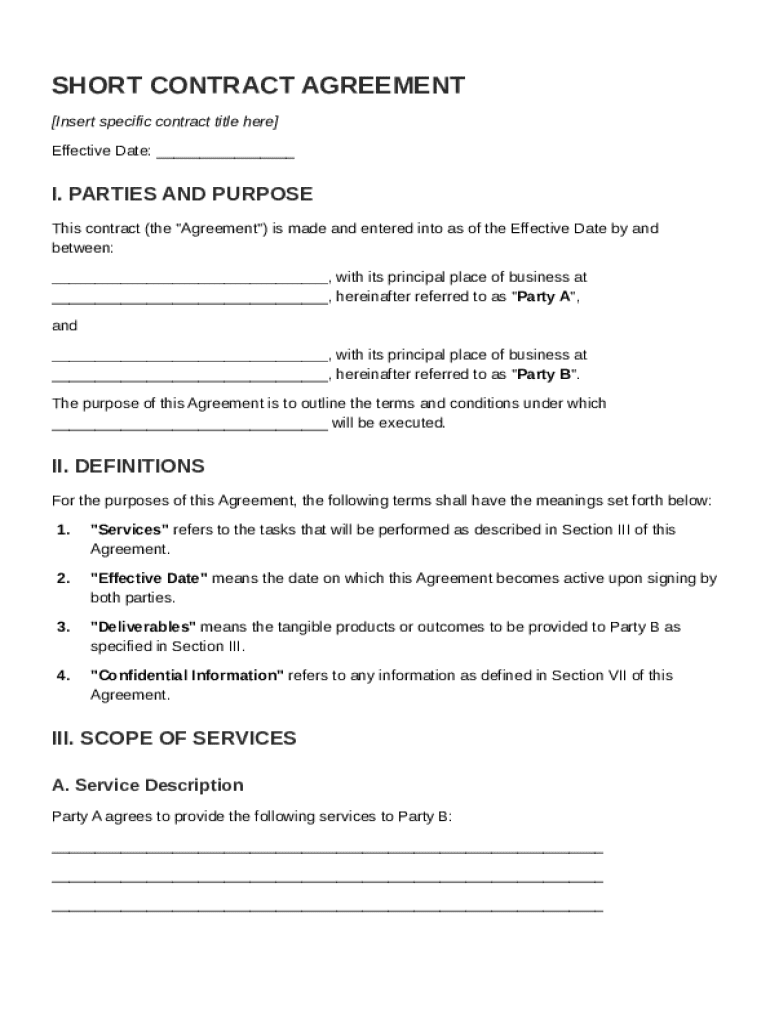
A "Short Contract Template" is a streamlined document designed to outline the terms and conditions of an agreement between two parties. These parties are typically referred to as Party A and Party B. The purpose of the template is to formalize the execution of specified services and deliverables while ensuring both parties understand their responsibilities and legal obligations. This type of contract is often used for straightforward agreements where a full-length contract may be unnecessary. It usually includes sections on scope of services, payment terms, confidentiality obligations, dispute resolution processes, and termination clauses.
Practical Examples
- Freelance Work: A freelancer and a client can use a short contract to outline project details, compensation, and deadlines.
- Consulting Services: A consultant may enter into an agreement with a company to provide expert advice or services within defined parameters.
- Lease Agreements: Property owners might use a short contract to lease equipment or property for a limited time.
Key Elements of the Short Contract Template
The short contract template typically contains several critical elements to ensure it fulfills its purpose efficiently:
- Scope of Services: Clearly outlines what services are to be provided, including any specific deliverables and deadlines.
- Payment Terms: Details the compensation structure, including rates, payment schedule, and method of payment.
- Responsibilities: Specifies the obligations of each party, ensuring clear understanding and compliance.
- Confidentiality: Includes clauses to protect sensitive information exchanged between parties during the contract’s duration.
- Dispute Resolution: Offers procedures for handling disputes, typically through mediation or arbitration, minimizing legal costs.
- Termination: Defines the circumstances under which the contract may be terminated, along with any related consequences.
Steps to Complete the Short Contract Template
- Identify Parties: Begin by clearly stating the full legal names of both parties involved in the contract.
- Define Scope and Services: Precisely document what services are being provided, expected deliverables, and deadlines.
- Set Payment Conditions: Detail the payment terms, including amount, schedule, and method of payment.
- Outline Responsibilities: Clearly outline each party’s responsibilities and obligations.
- Confidentiality Agreement: Include a clause to protect the confidentiality of shared information.
- Specify Dispute Resolution: Establish a procedure for resolving any disputes that may arise.
- Conclude with Termination Terms: Explain how and under what terms the contract may be terminated.
How to Use the Short Contract Template
Utilizing a short contract template can streamline the process of setting up agreements. Here’s a step-by-step guide to using one effectively:
- Modify the Template: Ensure that the template aligns with the specific needs of your agreement. Edit sections to add any unique terms or conditions.
- Review Legal Compliance: It is crucial that the contract complies with applicable laws and regulations. Consider consulting with a legal professional.
- Get Agreeable Terms: Discuss and negotiate terms with the other party to ensure a mutual understanding and agreement.
- Proofread and Edit: Carefully review the document for any errors or omissions.
- Secure Signatures: The contract becomes legally binding once signed by both parties. Use digital signature tools for convenience.
Legal Use of the Short Contract Template
It is essential to use the short contract template in a manner compliant with legal standards:
- Compliance with Laws: Ensure that the contract adheres to local, state, and federal laws relevant to the agreement.
- Legally Binding Signatures: Electronic signatures should comply with the ESIGN Act for them to be legally recognized.
- Conflict Resolution: Include legally valid resolution options like arbitration or mediation to handle disputes.
- Review by Legal Professional: Having the template reviewed by a legal expert can prevent potential legal issues.
Legal Scenarios
- Employment Contracts: Workers entering short-term employment might utilize these agreements to secure terms.
- Rental Leases: Landlords and tenants may use short contracts for temporary rental arrangements.
Important Terms Related to Short Contract Template
Understanding key terms used in short contracts can aid in their effective utilization:
- Arbitration: A method of dispute resolution where a neutral third party makes a binding decision.
- Indemnity: A clause where one party agrees to compensate the other for certain losses.
- Breach of Contract: Occurs when a party fails to fulfill its obligations as outlined in the contract.
Other Relevant Terms
- Force Majeure: Circumstances beyond control that may impact the fulfillment of contract terms.
- Consultancy Fees: Specific type of payment term used for consulting services.
Who Typically Uses the Short Contract Template
While applicable in various contexts, specific groups often rely on short contract templates:
- Freelancers: To formalize terms with clients for specific projects.
- Consultants: For securing agreements with firms for advisory roles.
- Small Businesses: Utilize these for straightforward vendor or service agreements.

Business Use Cases
- Project-Based Work: Companies frequently hire contractors for specific tasks under these agreements.
- Short-Term Employment: Employers may use them for seasonal or temporary job arrangements.
State-Specific Rules for the Short Contract Template
While the short contract template is versatile, users should be aware of state-specific regulations:
- Varying Laws: Terms such as non-compete clauses or confidentiality agreements can have differing enforcement across states.
- Local Legislation: Familiarize with any local business or contract laws that might affect terms like payment timelines or dispute resolutions.
Examples of Variations
- California: Has stringent rules regarding non-compete clauses.
- Texas: May have unique legal stipulations regarding contract termination.
Software Compatibility and Document Management
The ability to use these templates efficiently relies on software compatibility:
- PDF Editors: Commonly used to fill out and sign contracts digitally.
- Document Management Systems: Platforms like DocHub facilitate online signings and secure storage.
- Cloud Services: Enable easy sharing and collaboration when using digital contracts.
Enhancing Efficiency
- Integration with Google Workspace: Allows seamless editing and signing within Google’s ecosystem.
- Mobile Compatibility: Ensures access to contracts on the go, improving flexibility for both parties.
By understanding these various aspects, users can effectively utilize "Short Contract Templates" to streamline business and personal agreements while ensuring legal compliance and clear communication between involved parties.