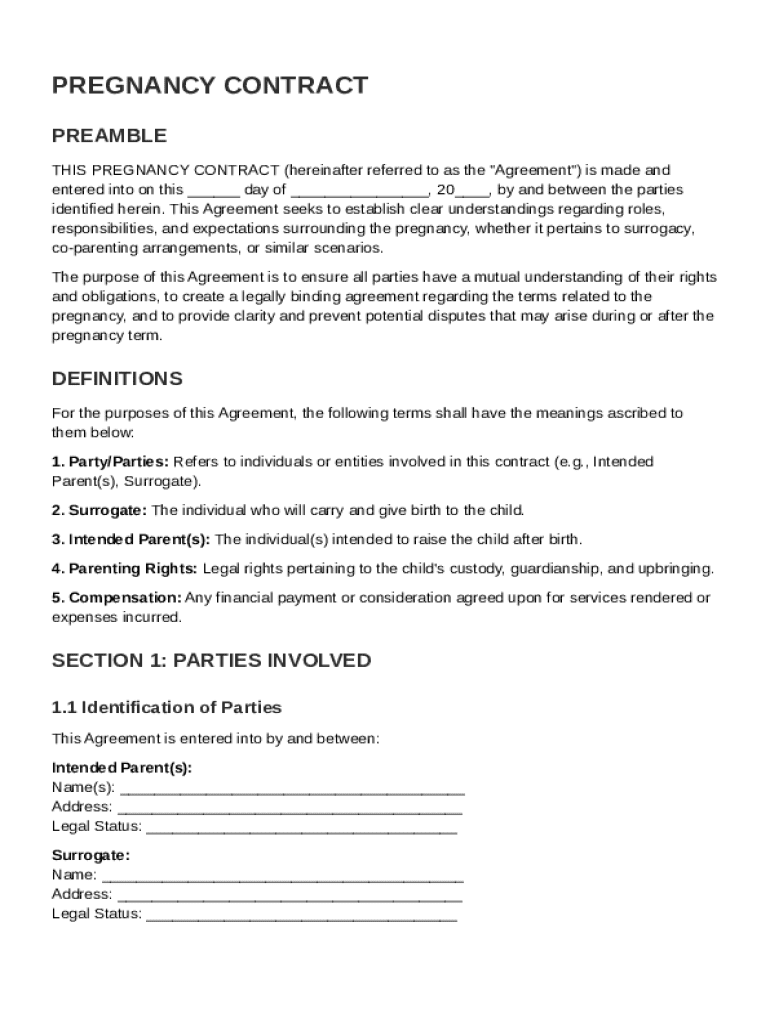







Definition and Purpose of a Pregnancy Contract Template
A Pregnancy Contract Template is a comprehensive document designed to formalize agreements between parties involved in a pregnancy arrangement, such as surrogacy or co-parenting. This template outlines the roles, responsibilities, and expectations of each party to ensure clarity and minimize the potential for disputes. Key areas covered include custody, financial arrangements, medical decisions, confidentiality, and dispute resolution mechanisms. By clearly defining the legal rights and obligations of all involved, the template helps establish a mutual understanding and provides a framework for resolving any disagreements that may arise.
How to Use the Pregnancy Contract Template
Using a Pregnancy Contract Template involves several clear steps designed to tailor the general template to the specific needs and circumstances of the involved parties. Begin by reviewing each section of the template to ensure all relevant topics are addressed. Users should then adapt the text to reflect their unique arrangement, customizing sections on custody, financial provisions, and other critical areas. It is also advisable to consult with legal professionals to ensure the contract aligns with state laws and adequately protects each party's interests. Collaboration is key, with all parties encouraged to discuss terms openly before finalizing the contract.
Steps to Complete the Pregnancy Contract Template
- Preliminary Discussions: Engage all relevant parties in initial discussions to understand each party's needs and expectations.
- Review Template Sections: Go through each section of the template, noting any areas that require personalization or additional details.
- Customization: Adjust the language and terms in the template to specifically address the roles, responsibilities, and agreements being made.
- Consult Legal Advice: Involve a family law attorney to review the draft for compliance with state laws and to ensure comprehensive protection for all parties.
- Finalize Terms: After any necessary revisions, all parties should agree on the final terms and language of the contract.
- Signing: Ensure all parties sign the contract in the presence of a notary public to authenticate the agreement.
- Distribution: Provide copies of the signed document to all parties involved for their records.
Key Elements of the Pregnancy Contract Template
The following are essential components commonly found in a Pregnancy Contract Template:
- Party Identification: Clearly identify all individuals involved in the agreement, using full legal names and contact information.
- Custodial Arrangements: Outline the custody terms that define the rights and responsibilities of each party regarding the child.
- Financial Arrangements: Detail all financial obligations, including compensation, healthcare costs, and other related expenses.
- Medical Decisions: Define who will have authority over medical and health-related decisions during the pregnancy.
- Confidentiality Clause: Include provisions to ensure all personal information remains confidential unless legally required to disclose.
- Dispute Resolution: Specify the preferred method of resolving disputes, such as mediation or arbitration, to avoid litigation.
- Termination Conditions: Clearly describe under what conditions the contract may be terminated by either party.
Legal Use and Validation of Pregnancy Contracts
Pregnancy contracts, including surrogacy agreements, must comply with state-specific regulations to be considered valid and enforceable. These legal documents establish binding agreements that depend on jurisdictional laws, which can vary significantly across states. It is crucial to consult legal counsel familiar with family and reproductive law to ensure the contract adheres to local statutes and adequately safeguards the parties involved. Legal validation typically requires the inclusion of specific clauses, such as those relating to financial arrangements and parental rights, to withstand legal scrutiny.
State-Specific Rules and Variations
The legal requirements governing pregnancy contracts can differ greatly from one state to another in the U.S. Some states have well-defined laws supporting surrogacy arrangements, while others may not legally recognize them at all. For instance, California is known for its surrogacy-friendly laws, offering extensive protections for surrogates and intended parents alike. Conversely, states like Michigan prohibit commercial surrogacy agreements. It is essential for parties to understand their respective state's stance on surrogacy to ensure compliance with legal requirements and avoid potential legal repercussions.
Important Terms Related to Pregnancy Contracts
Familiarity with specific terms used in pregnancy contracts is essential for understanding the obligations and rights involved. Key terms include:
- Intended Parents: Individuals who intend to become the legal parents of the child.
- Gestational Surrogate: A woman who carries and delivers a child for the intended parents.
- Compensation: Payments made to the surrogate for her services, as agreed upon in the contract.
- Parental Rights: The legal rights and obligations of parents towards their child.
- Termination Clause: Provisions outlining how and under what circumstances the contract may be ended.
Who Typically Uses Pregnancy Contract Templates
Pregnancy Contract Templates are primarily used by intended parents and surrogates in surrogacy arrangements. These templates are also valuable tools for individuals engaged in co-parenting agreements or other assisted reproductive scenarios that involve third-party participants. Attorneys specializing in family and reproductive law frequently use these templates to draft customized agreements for their clients. Additionally, agencies that facilitate surrogacy and other reproductive services often employ pregnancy contract templates as part of their standard processes to ensure all parties have a clear understanding of their commitments and rights.