






Key Elements of the Masonry Contract Template
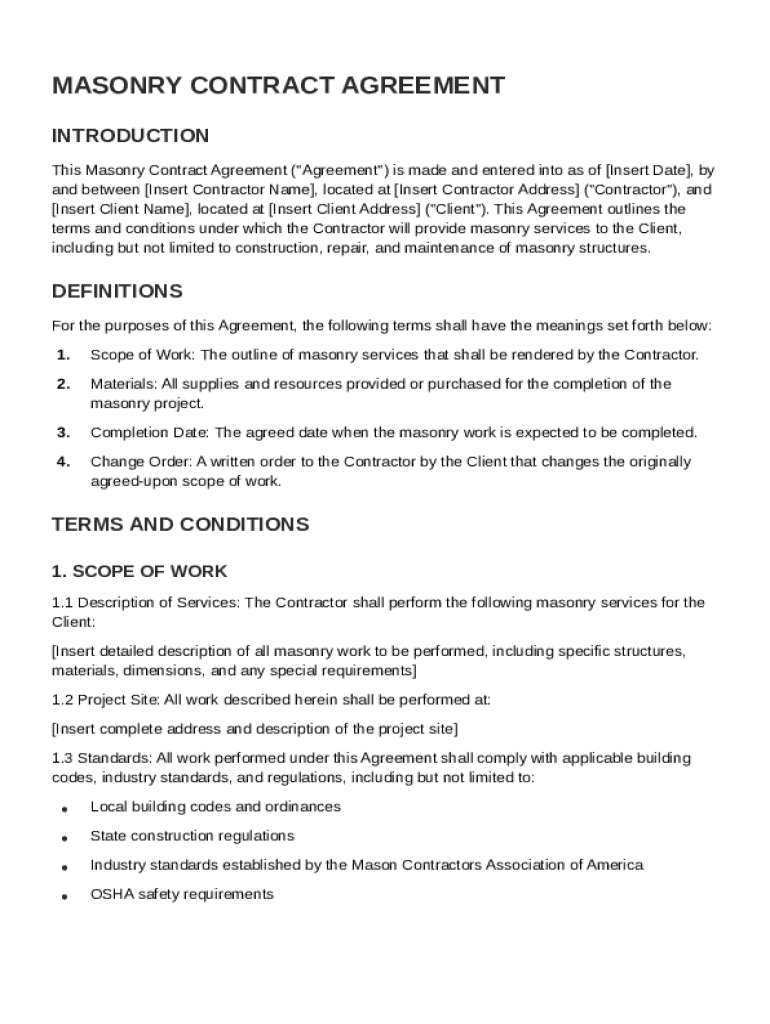
The Masonry Contract Template serves as an essential document that outlines crucial terms and conditions for a masonry project. It details the project scope, materials needed, responsibilities of parties involved, and legal implications. Below are the most significant components typically found in this template:
-
Scope of Work: Clearly defines the extent and nature of the masonry services to be provided, including construction, repair, or maintenance tasks. This helps prevent misunderstandings regarding project deliverables.
-
Materials: Lists the materials required for the project, specifying whether they will be supplied by the contractor or the client. It also includes standards for quality and specifications to be met.
-
Completion Date: Establishes timelines for the start and end of the project, outlining critical milestones along the way. This ensures accountability and timely delivery of services.
-
Payment Terms: Details the payment schedule, including upfront deposits, progress payments, and final payment upon project completion. It also covers methods of payment accepted.
-
Warranties: Describes any warranties provided by the contractor regarding workmanship and materials. This section assures the client of the quality and reliability of the service.
-
Change Orders: Provides a process for any changes in the scope or terms of the project, along with information about how these changes will impact cost and timeline.
-
Termination Clauses: Covers the conditions under which the contract can be terminated by either party without penalties, ensuring protection against breaches of contract.
How to Use the Masonry Contract Template
Using the Masonry Contract Template is a straightforward process designed to facilitate smooth collaboration between parties involved in a masonry project. Here's a guide on how to effectively utilize this template:
-
Download the Template: Obtain the template in a compatible format (PDF, DOC, etc.) from DocHub, ensuring it meets the needs of your specific project.
-
Fill in the Details: Enter party names, contact information, and other relevant details within the designated fields. Customize sections such as scope of work and payment terms to align with your project.
-
Review Legalities: Verify that all terms, including warranties, dispute resolution, and termination clauses, comply with local laws and regulations.
-
Sign the Document: Utilize DocHub’s electronic signature features to sign the document. Invite other parties to sign, ensuring that all stakeholders have formally agreed to the contract.
-
Distribute the Final Version: Save the completed contract and share it with all parties involved. Ensure that everyone receives a copy for their records.
Legal Use of the Masonry Contract Template
The legal use of the Masonry Contract Template ensures that both parties' interests are protected and that the agreement is enforceable in a court of law. Here are key considerations:
-
Compliance with Laws: The contract must adhere to state-specific regulations and industry standards, including licensing and permit requirements.
-
Enforceability: By using clear language and outlining terms such as indemnities and liability limits, the contract protects both parties in case of a dispute.
-
Confidentiality: Clauses addressing client and contractor confidentiality should be included to safeguard any shared proprietary information.
-
Dispute Resolution: Incorporate mediation or arbitration procedures to settle disagreements without resorting to litigation, which can be costly and time-consuming.
Steps to Complete the Masonry Contract Template
Properly completing the Masonry Contract Template involves several steps to ensure accuracy and comprehensive coverage of all contractual obligations. Follow these steps:
-
Gather Information: Collect necessary details about the project, including timelines, materials, and costs.
-
Draft Initial Terms: Use the template to begin filling out basic contract information, including parties’ names and project descriptions.
-
Consult with Professionals: Consider review by a legal professional to ensure compliance with applicable laws and avoid potential pitfalls.
-
Finalize and Edit: Make necessary edits to reflect agreed-upon terms, adding any specific clauses unique to your project needs.
-
Review and Confirm: Both parties should thoroughly review the document to ensure mutual understanding and agreement on all aspects.
-
Sign and Date: Use DocHub to apply legally binding electronic signatures from all parties involved, affixing dates to solidify the contract's effective date.
-
Issue Copies: Distribute signed copies to all parties for their records, ensuring that everyone has access to the finalized contract.
Important Terms Related to Masonry Contract Template
Understanding the terminology in a Masonry Contract Template is critical to ensuring all obligations and rights are acknowledged. Here are some essential terms:
-
Contractor: The individual or company performing the masonry services.
-
Client: The party hiring the contractor for the masonry work.
-
Subcontractor: Any third-party entity hired by the contractor to perform specific tasks within the project.
-
Indemnification: An agreement to compensate the other party for any potential losses incurred as a result of specific actions.
-
Force Majeure: A clause relieving parties from fulfilling contractual obligations due to circumstances beyond control, such as natural disasters.
Examples of Using the Masonry Contract Template
Practical scenarios where the Masonry Contract Template can be applied include:
-
Residential Projects: A homeowner contracts a masonry company to build a retaining wall, using the template to outline project specifics and payment terms.
-
Commercial Buildings: A business contracts for parking lot pavement construction, specifying industrial-grade materials and a set completion timeline within the template.
-
Government Projects: A local municipality hires a contractor for public park walkway repairs, including compliance with safety standards and public access requirements reflected in the contract.
Who Typically Uses the Masonry Contract Template
The template is widely used by:
-
Independent Contractors: Freelancers engaged in masonry work seek formal agreements to secure their payment and project terms.
-
Construction Companies: Larger firms utilize the template to standardize operations across multiple projects and clients.
-
Property Owners: Residential and commercial property owners use the template to establish clear communication and expectations with hired contractors.


State-specific Rules for the Masonry Contract Template
Different states may have unique legal requirements affecting the validity and enforcement of a Masonry Contract Template. Key aspects often include:
-
Licensing Requirements: Contractors may need to be licensed or registered according to state laws, which should be confirmed before finalizing the contract.
-
Building Codes: Compliance with local building codes is mandated, and should be clearly outlined within the contract.
-
Contractor Liability: States may impose specific insurance or liability requirements that must be reflected within the agreement to cover potential risks.