
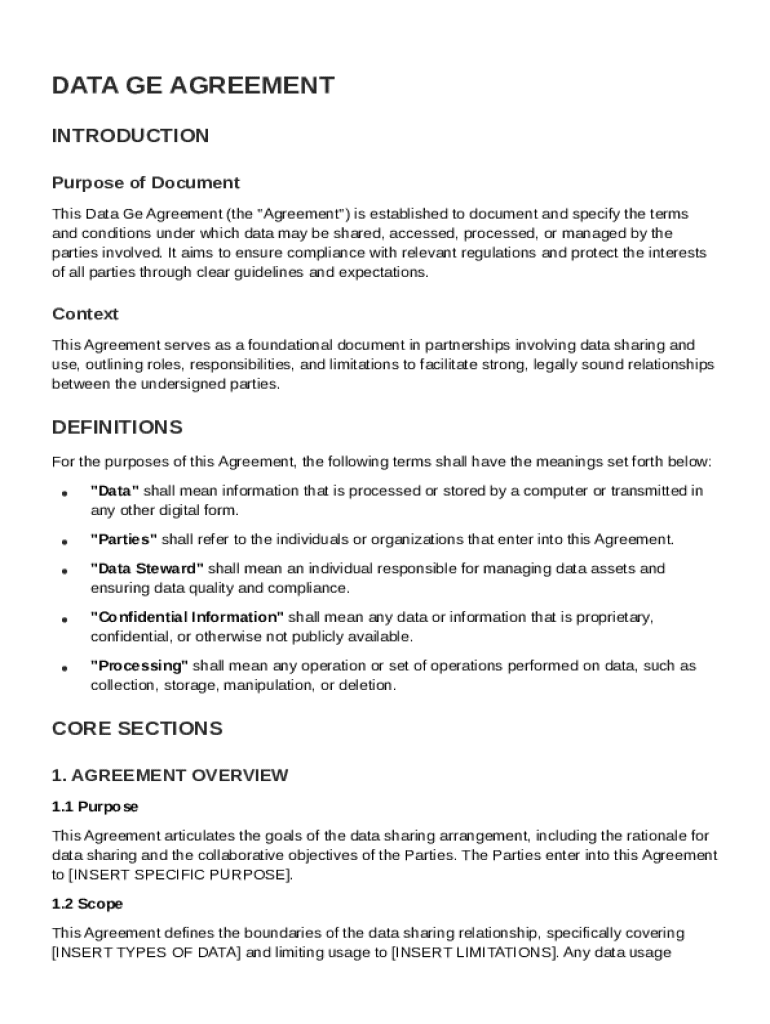







Definition and Meaning of the Data Ge Agreement Template
The Data Ge Agreement Template is designed to facilitate data sharing between parties by laying out explicit terms and conditions. This template emphasizes compliance with relevant regulations while safeguarding the rights and responsibilities of all involved parties. It delineates security protocols, data access levels, and management responsibilities, ensuring a clear understanding of each party's role. Additionally, the agreement covers ownership rights and legal obligations, addressing dispute resolution mechanisms and conditions for terminating the agreement.
How to Use the Data Ge Agreement Template
Using the Data Ge Agreement Template involves understanding each section of the document and filling in the necessary information accurately. The template typically requires inputs concerning the parties involved, the nature of the data being shared, and any specific conditions governing its use. Users should thoroughly review their obligations under the agreement to ensure compliance. Sections covering data protection measures and responsibilities for data breach notifications must be completed carefully to reflect the user's operational protocols accurately.
Key Elements of the Data Ge Agreement Template
The template includes several crucial components to ensure effective data management and compliance:
- Roles and Responsibilities: Clearly identifies each party's responsibilities in data handling and management.
- Security Measures: Outlines encryption standards and access control measures to safeguard data integrity.
- Ownership Rights: Defines data ownership and usage rights, ensuring clarity on intellectual property concerns.
- Legal Obligations: Details the legal framework each party must adhere to when handling shared data.
Steps to Complete the Data Ge Agreement Template
- Identify Participating Parties: Clearly list the entities or individuals involved in data sharing.
- Define the Scope: Specify the types of data to be shared and the purpose of sharing.
- Establish Security Measures: Detail the encryption and access controls in place to protect the data.
- Set Ownership and Usage Terms: Clarify data ownership, including any licenses or usage rights.
- Outline Dispute Resolution: Provide a framework for managing disagreements or breaches in agreement.
- Finalize and Sign: Review the completed template with all parties, make necessary revisions, and obtain signatures.
Important Terms Related to the Data Ge Agreement Template
Familiarity with key terms is vital for effective use of the template:
- Data Controller: The entity that determines the purposes and means of processing personal data.
- Data Processor: An entity that processes data on behalf of the data controller.
- SSL Encryption: A security protocol for establishing encrypted links between networked computers.
- OAuth 2.0: An authentication protocol providing secure delegated access.
State-Specific Rules for the Data Ge Agreement Template
While the general principles of data sharing are consistent, state-specific laws may influence certain provisions of the agreement:
- California: Must comply with CCPA regulations for data pertaining to California residents.
- New York: Adherence to the SHIELD Act is required to ensure data protection standards.
- Illinois: If applicable, consider biometric information regulations under the BIPA.
Legal Use of the Data Ge Agreement Template
The template provides a legally binding framework for data sharing agreements when filled out correctly and signed by all parties. Adhering to laws such as ESIGN ensures the electronic signatures used are legally recognized. Additionally, users must ensure the agreement aligns with federal regulations such as GDPR for international data transfers.
Examples of Using the Data Ge Agreement Template
Organizations of varying types can utilize this agreement for:
- Healthcare Providers: Ensuring secure sharing of patient information between medical institutions.
- Educational Institutions: Facilitating data exchange for academic research while safeguarding student privacy.
- Businesses: Collaborating on joint projects requiring the exchange of proprietary information within a secure framework.




