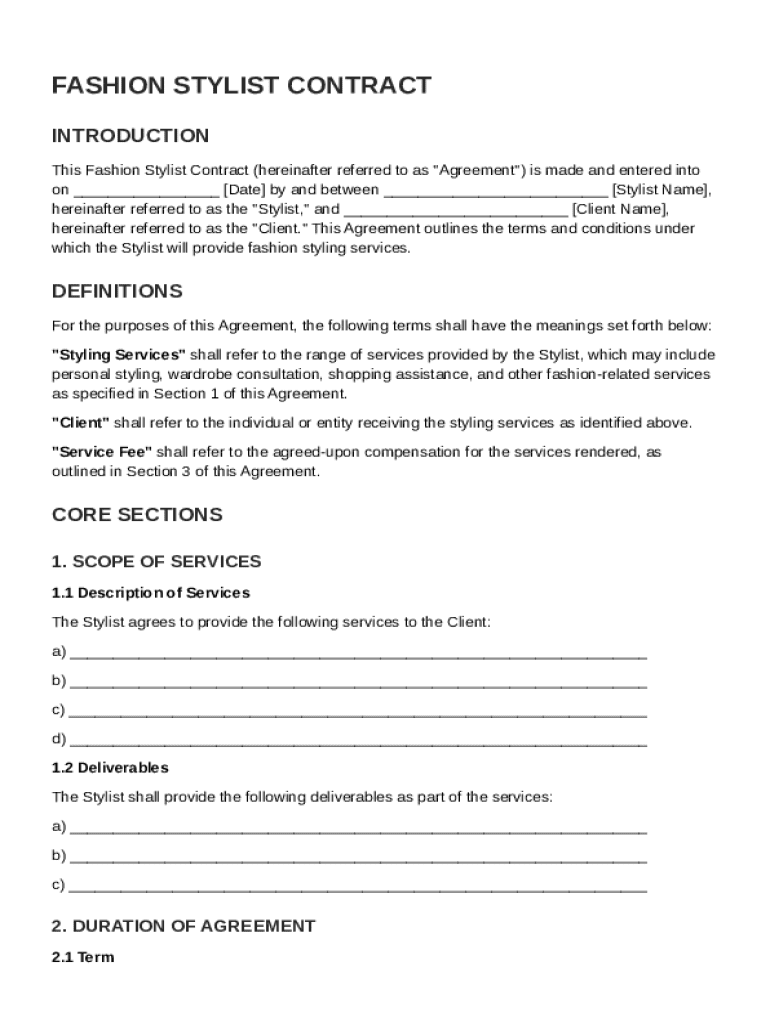







Definition & Meaning
A Fashion Stylist Contract Template is a standardized document used to establish clear terms and conditions between a fashion stylist and a client. It is essential for outlining the scope of styling services, including specific roles and responsibilities, timeline for services, compensation details, and expectations regarding confidentiality and liability. By using this form, both parties agree to a mutual understanding of service delivery and obligations, ensuring a professional relationship and minimizing potential disputes.
Key Elements of the Fashion Stylist Contract Template
Service Scope and Description
- Detailed Description: Clearly define the specific styling services to be provided. This includes wardrobe selection, fittings, shopping assistance, or any additional requested tasks.
- Duration of Services: Outline the schedule for service delivery and any significant deadlines or events the stylist must attend.
Compensation and Payments
- Payment Terms: Specify the stylist's fees, including any deposits required before services begin. Indicate whether payments will be hourly or a flat fee.
- Payment Schedule: Clearly state when payments are due, such as 50% upfront and 50% upon project completion.
Confidentiality and Non-Disclosure
- Confidential Information: Define what constitutes confidential information within the agreement, protecting both parties from the unwanted sharing of sensitive data.
- Agreed Privacy Terms: Establish the need for discretion, especially when working with high-profile clients or corporate projects.
Liability and Indemnification
- Limitations of Liability: Set conditions under which the stylist is not liable for outcomes beyond their control, such as fabric defects or unforeseen personal emergencies.
- Indemnification Clauses: Mandate that the client indemnifies the stylist against certain claims that may arise during the project.
Steps to Complete the Fashion Stylist Contract Template
- Identify the Parties: Clearly name and provide contact information for both the stylist and the client.
- Define the Services: Use detailed descriptions to list all services included in the scope.
- Agree on Compensation: Ensure all payment terms are outlined, agreed upon, and signed off by both parties.
- Commit to Confidentiality: Both parties should review and understand the confidentiality agreement, ensuring compliance.
- Finalize the Document: Each party should sign the contract and retain a copy for their records.
Legal Use of the Fashion Stylist Contract Template
Enforceability and Compliance
- Contractual Agreement: The template should adhere to the ESIGN Act when used electronically, ensuring legal recognition.
- State Laws: Compliance with state-specific regulations is crucial; verify your state's requirements, as they can affect contract enforceability and statutory obligations.
State-Specific Rules for the Fashion Stylist Contract Template
Variations by State
- California: Contracts must include specific clauses related to the right to cancel and refund policies.
- New York: Additional licensing information may be required to differentiate commercial from private styling services.
Who Typically Uses the Fashion Stylist Contract Template


Common Users
- Fashion Stylists: Professionals offering personalized wardrobe consultancy and styling services.
- Clients: Individuals or organizations requiring the styling services, ranging from private clients to fashion brands.

Examples of Using the Fashion Stylist Contract Template
Real-world Scenarios
- Individual Clients: A stylist providing personalized wardrobe reorganization services for a busy executive.
- Corporate Engagements: Styling services for a brand's advertising campaign requiring clear terms of service and deliverables.
Why Should You Use a Fashion Stylist Contract Template
Benefits of the Template
- Clarity and Professionalism: Helps establish a professional tone ensuring both parties are aware of their responsibilities.
- Minimizing Disputes: Reduces potential conflicts by detailing every aspect of the engagement in a mutually agreed format.
- Legal Protection: Offers protection by documenting agreed terms and preventing misunderstandings or contract breaches.