






Definition & Meaning
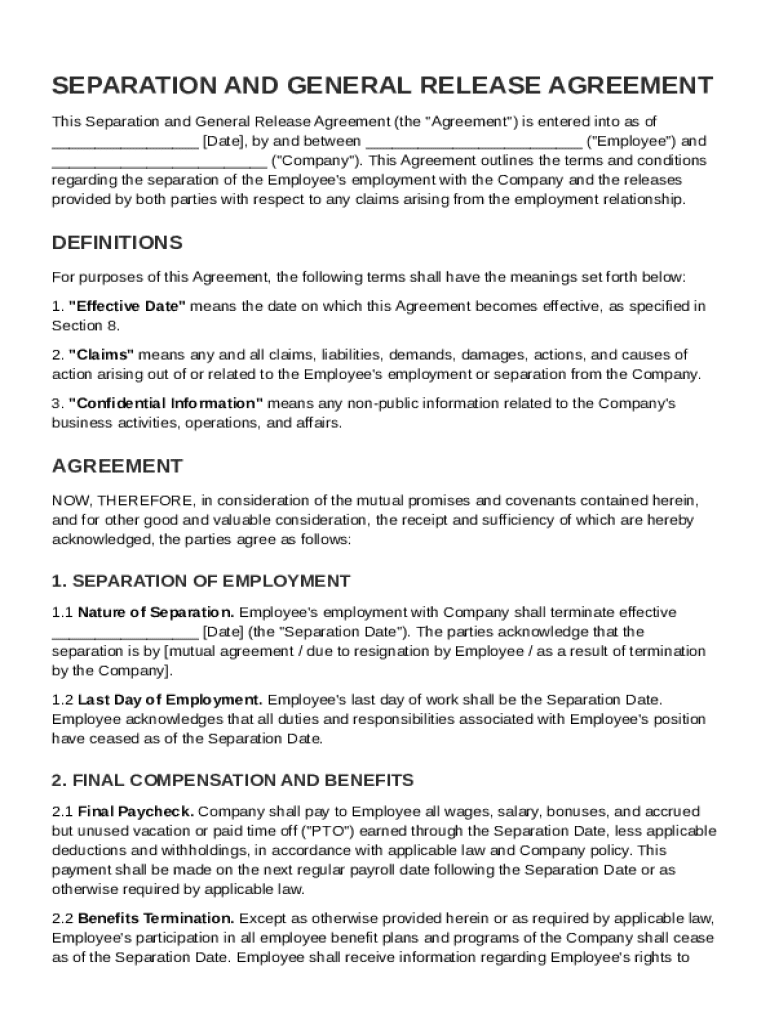
A Separation and General Release Agreement is a legal document outlining the terms under which an employee separates from a company. This agreement serves as a comprehensive settlement between the two parties, intended to mitigate potential disputes arising from the employment relationship. It includes definitions of key terms relevant to the separation and provides a legal framework for understanding the obligations and entitlements of both parties. Typically, this agreement specifies the nature of the separation—such as voluntary resignation or termination—and establishes final compensation and benefits owed to the departing employee. By signing this document, employees generally agree to release the company from any claims related to their employment.
Key Features
- Release of Claims: Employees waive any legal claims against the employer in relation to their employment.
- Confidentiality Obligations: Employees are often required to keep details about the agreement and their employment confidential.
- Non-Disparagement Clauses: Both parties may agree not to make negative statements about each other.
- Return of Company Property: Employees must return any materials or property belonging to the employer.
Key Elements of the Separation and General Release Agreement Template
The Separation and General Release Agreement Template is structured to ensure that all necessary legal aspects are covered within the document. Key elements typically found in the template include:
- Parties Involved: Clearly identifies the employee and the employer, the primary stakeholders of the agreement.
- Terms of Release: Specifies the claims or potential legal actions the employee is agreeing to waive against the company.
- Monetary Compensation: Outlines the financial terms, including any severance pay or continued benefits to be received by the employee.
- Confidentiality and Non-Disclosure: Includes clauses requiring the employee to maintain confidentiality about proprietary information and the details of the agreement itself.
- Non-Compete and Non-Solicitation Clauses: May include restrictions on the employee's ability to work for competitors or solicit the company’s clients or employees for a set period.
- Governing Law: Establishes which state’s laws will govern the agreement, ensuring legal clarity and enforcement.
- Additional Clauses: May include provisions for dispute resolution and miscellaneous provisions unique to the circumstances of the separation.
Steps to Complete the Separation and General Release Agreement Template
Completing a Separation and General Release Agreement Template involves several key steps to ensure legal compliance and clarity. Follow these instructions to execute the agreement effectively:
- Review the Template: Carefully read through the entire template to understand each clause and its implications.
- Fill in Personal and Company Details: Enter the names, titles, and contact details of both parties.
- Specify Terms of Separation: Clearly define the nature of employment termination and any related compensation.
- Negotiate Terms with Legal Advisors: Discuss terms with legal counsel to ensure both parties are in agreement.
- Sign and Date the Agreement: Both the employee and employer should sign and date the document, which may require notarization in some jurisdictions.
- Provide Copies to Both Parties: Ensure that each party receives a signed copy of the agreement for their records.
Potential Issues to Consider
- Review by Legal Counsel: Legal advice is critical to identify any problematic clauses or implications for either party.
- Amendment Opportunities: Consider provisions for amending the agreement if circumstances change post-signing.
- Acknowledgment of Understanding: Include an acknowledgment that both parties understand and accept the terms.
Legal Use of the Separation and General Release Agreement Template
Legal use of the Separation and General Release Agreement Template involves compliance with applicable laws and ensuring that the terms are enforceable. The agreement should adhere to state and federal laws to protect the rights of both parties:
Compliance Requirements
- Fairness and Clarity: The terms must not be misleading or exploitative.
- Voluntary Execution: Both parties should willingly enter into the agreement without coercion.
- Consideration: Employees must receive something of value in return for waiving their rights, such as additional severance payments.
Important Terms Related to the Separation and General Release Agreement Template
Understanding the terminology used in a Separation and General Release Agreement is crucial for proper execution and adherence to its terms.
Common Terms
- "Waiver": Refers to the employee giving up any potential legal claims against the employer.
- "Severance Payment": Compensation provided upon termination of employment, which may include salary, bonuses, or other benefits.
- "Non-Compete Clause": Restricts the employee from joining competitors or starting a similar business for a specified period.
- "Governing Law": Indicates the jurisdiction by which the agreement will be governed and enforced.
Who Typically Uses the Separation and General Release Agreement Template
The Separation and General Release Agreement Template is predominantly used by businesses and HR departments to formalize the termination of employment. Typical users include:


Targeted Users
- Human Resources (HR) Departments: Utilize the template to standardize the separation process across the organization.
- Corporate Legal Teams: Draft and review agreements to ensure compliance and legal protection.
- Employees and Their Counsel: Engage with the document to understand their rights and confirm the company's commitments.
Examples of Using the Separation and General Release Agreement Template
Real-world examples help illustrate the versatility and necessity of using a Separation and General Release Agreement Template:
Case Studies
- Tech Company Layoffs: A technology firm undergoing a restructuring uses the template to ensure fair treatment of departing employees by laying out clear terms and compensation structures.
- Mergers and Acquisitions: When companies undergo mergers, the template safeguards against potential claims by departing employees affected by organizational changes.
Practical Applications
- Dispute Mitigation: Prevents misunderstandings that could lead to costly litigation by specifying all separation terms clearly.
- Customizations for Different Industries: Tailor the template for specific industries, such as finance or healthcare, aligning with sector-specific regulations and practices.