







Definition and Purpose of the FTB 3571 Request for Estate Income Tax Certificate
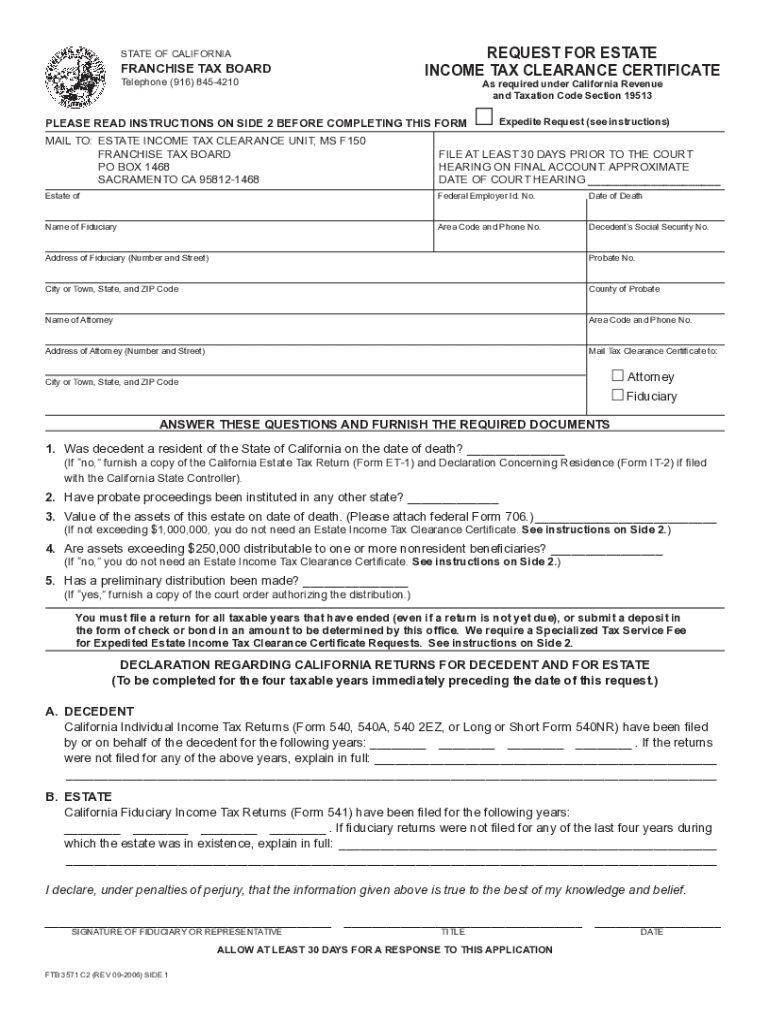
The FTB 3571 Request for Estate Income Tax Certificate is a formal document used to obtain an Estate Income Tax Clearance Certificate from the California Franchise Tax Board (FTB). This certificate is necessary for estates that need to demonstrate compliance with California state tax obligations before concluding probate proceedings. The form serves as a declaration regarding the decedent's residency, probate activities, asset valuations, and tax filings. It is critical for ensuring that all outstanding tax liabilities have been addressed before the distribution of the estate’s assets can proceed.
Key Functions
- Confirms the estate’s compliance with California tax laws.
- Facilitates the legal distribution of estate assets.
- Used to prevent future tax liabilities for inheritors and administrators.
How to Use the FTB 3571 Request for Estate Income Tax Certificate
Preliminary Steps
- Gather Essential Information: Collect all necessary details regarding the decedent’s residency, financial assets, tax filings, and probate status.
- Consult Legal or Financial Advisors: Engage with professionals well-versed in estate management and California tax laws to ensure accurate form completion.
Completing the Form
- Section-by-Section Guidance: Fill in respective sections detailing the estate’s income, tax history, and related documentation.
- Review and Confirm: Double-check all entered information for accuracy and completeness.
Submission
- Timing: Submit the form at least 30 days before any court hearings regarding the estate’s final account settlement.
- Method: Choose between submission via mail, online platforms if available, or in-person at designated offices.
Steps to Complete the FTB 3571 Request for Estate Income Tax Certificate
Detailed Process
- Personal Information: Enter details about the decedent and the estate executor or representative.
- Estate Details: Provide comprehensive information on estate assets, liabilities, and valuations.
- Tax Filings: Document past tax filings and any outstanding tax obligations.
- Statement of Compliance: Confirm that all required tax forms have been filed and any due taxes paid.
Practical Tips
- Use the latest financial records and tax returns to ensure the accuracy of reported figures.
- If unsure about any section, consult the instructions provided by the Franchise Tax Board or seek professional advice.
Who Typically Uses the FTB 3571 Request for Estate Income Tax Certificate

Primary Users
- Estate Executors and Administrators: Individuals tasked with managing the estate, ensuring legal and financial obligations are met before distribution.
- Probate Attorneys: Legal professionals aiding clients through the probate process.
- Accountants and Tax Consultants: Experts who assist in fulfilling tax obligations and ensuring compliance with state laws.
Required Documents for the FTB 3571 Request for Estate Income Tax Certificate
Essential Documentation
- Death Certificate of the Decedent: Vital for establishing legal grounds for clearances.
- Completed Past Tax Returns: Necessary for verifying tax compliance.
- Estate Inventories and Appraisals: Provide proof of assets and corresponding valuations.
- Probate Court Documents: Establish the judicial proceedings surrounding the estate.
Documentation Checklist
- Verify each document for relevance and completeness.
- Organize documents in accordance with application sections to streamline submission.
Filing Deadlines and Important Dates
Critical Timing
- Submission Deadline: Ensure to file the form no later than 30 days before any estate-related court hearings.
- Tax Year Deadlines: Align the submission with tax year dates relevant to the decedent's filings.
Legal Use and Implications of the FTB 3571 Request for Estate Income Tax Certificate
Compliance and Oversight
- Ensures that estates fulfill tax obligations, preventing legal repercussions for executors and beneficiaries.
- Acts as a preventive measure against future disputes over tax liabilities.
Legal Enforcement
- Fulfilling the requirements of the FTB 3571 helps to avoid potential fines or legal challenges stemming from unaddressed tax issues.
Key Elements of the FTB 3571 Request for Estate Income Tax Certificate
Core Components
- Estate Information: Covers detailed data on the decedent and the estate administrator.
- Financial Declarations: Involves disclosure of asset values and income sources.
- Tax Compliance Affirmation: Incorporates statements affirming adherence to state tax obligations.
Importance
- Each element contributes to the overall validation of the estate’s compliance with California tax laws, essential for obtaining clearance from the Franchise Tax Board.




