






Definition and Purpose of a Temporary Contract Template
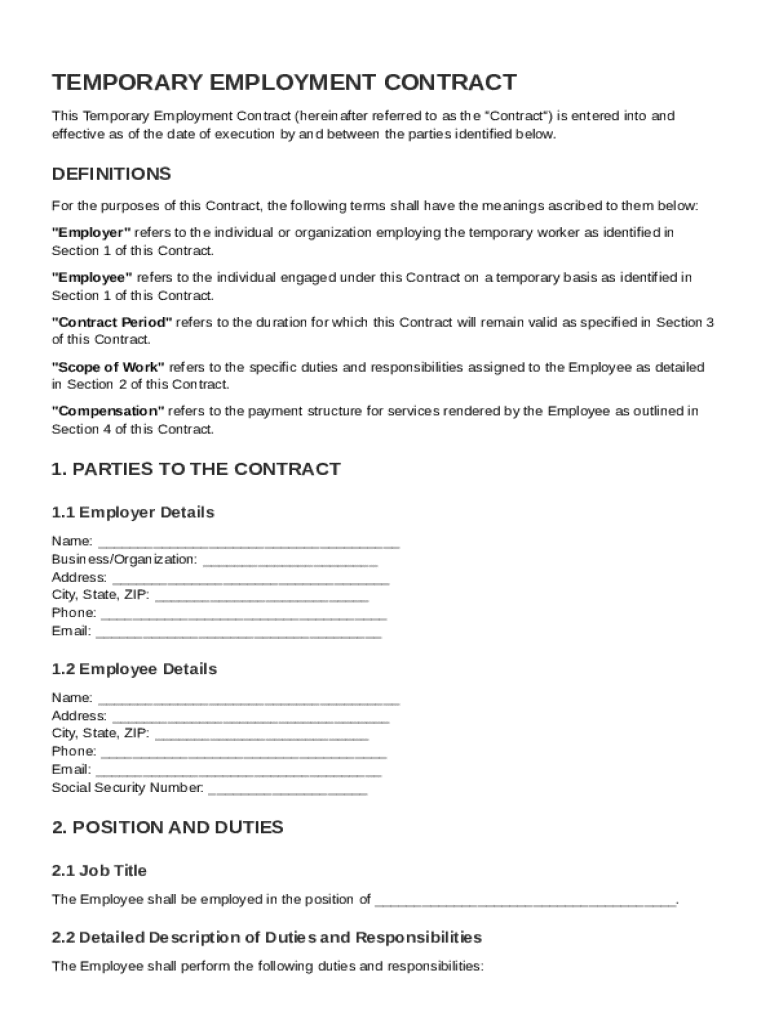
A Temporary Contract Template is a legal document outlining the terms of employment for a fixed period between an employer and an employee. Its primary purpose is to clearly define the obligations and expectations of both parties during the temporary employment period. This includes job duties, compensation, work schedule, confidentiality requirements, and conditions for terminating the contract. By utilizing a standardized template, employers can ensure consistency in the employment terms offered and reduce the possibility of legal disputes arising from misunderstandings or ambiguous language in the contract.
Key Elements Included in the Template
- Parties Involved: Clearly identifies the employer and employee involved in the agreement.
- Position and Duties: Specifies the job title and detailed responsibilities of the temporary employee.
- Duration: Defines the starting and ending dates of the employment period.
- Compensation Structure: Outlines salary, hourly wages, or other forms of compensation the employee will receive.
- Work Schedule: Provides details on expected working hours and days.
- Confidentiality Obligations: Includes clauses to protect sensitive business information during and after employment.
- Termination Clauses: Details conditions under which the contract can be terminated by either party.
- Governing Law: Specifies the jurisdiction whose laws will govern the contract.
How to Use the Temporary Contract Template
Using a Temporary Contract Template is a straightforward process designed to ensure all necessary details are covered.
- Select the Appropriate Template: Choose a template that fits the nature and duration of employment.
- Fill in the Basic Information: Enter details specific to the employer and employee, such as names and contact information.
- Customize Employment Terms: Modify sections to reflect specific job duties, compensation, and obligations.
- Review Legal Clauses: Ensure all governing law and termination clauses align with applicable regulations.
- Consult Legal Counsel: If necessary, review the contract with a legal advisor to confirm compliance with employment laws.
- Finalize and Sign: Both parties should carefully read and sign the contract to make it legally binding.
Real-World Scenario
An employer needs temporary technical support during a seasonal surge. By using the template, they can quickly create agreements that define the start and end dates, compensation per hour, and specific tasks employees need to perform.
Who Typically Uses the Temporary Contract Template
Businesses and organizations of various sizes frequently utilize Temporary Contract Templates to streamline the hiring process for short-term positions. The template is particularly beneficial for:
- Businesses with Seasonal Demands: Retailers during holiday seasons or agricultural businesses during harvest periods.
- Project-Based Companies: Firms that require specific expertise for a limited time, such as consulting or IT services.
- Organizations Needing Temporary Coverage: Companies needing workforce replacements for employees on leave or fulfilling roles in the interim before permanent hires.


Steps to Complete the Temporary Contract Template
Fulfilling the requirements of a Temporary Contract Template involves a systematic approach to ensure all employment conditions are clear and enforceable.
- Identify Contract Components: Review each element of the template to understand the information needed.
- Gather Required Information: Collect details such as job description, compensation rate, and duration.
- Enter Specific Details: Customize each section according to the agreed terms of employment.
- Initial and Date Each Page: Both parties should mark each page to confirm that no alterations will be made post-signature.
- Final Review and Validation: Carefully check for errors or omissions that could lead to misunderstandings.
- Execute the Agreement: Have both employer and employee sign and date the last page, securing consent.
Detailed Breakdown
Under the Compensation Structure section, outline hourly or salary payments, including any benefits like health insurance or travel allowances that might apply to this role. Clear specification prevents disputes over expected earnings or entitlements during employment.
Important Terms Related to the Temporary Contract Template
Understanding the terminology within a Temporary Contract Template is essential for both parties to grasp their rights and obligations.
- At-Will Employment: A type of arrangement wherein either party can terminate employment for any lawful reason without needing to specify cause.
- Non-Disclosure Agreement (NDA): A clause that prevents dissemination of confidential company information.
- Probation Period: An initial evaluation timeframe where the employer assesses the employee’s fit for the organization.
- Severance Terms: Conditions under which a terminated employee may receive additional compensation.
Legal Use of the Temporary Contract Template
Employers must adhere to legal standards when utilizing a Temporary Contract Template to protect both their interests and those of the employee.
Compliance with the ESIGN Act
When employing electronic signatures within the template, ensure they conform to the ESIGN Act to render the document legally binding. This act protects e-signatures as valid representations of signed agreements.
State-Specific Considerations
Different jurisdictions may impose unique employment laws affecting temporary contracts. It is recommended to:
- Verify State Requirements: Before finalizing, check applicable laws for your state related to employment duration, wage laws, and worker rights.
- Incorporate State-Specific Clauses: Alter the template to ensure compliance with any local regulations and protections.
State-Specific Rules for the Temporary Contract Template
Temporary employment contracts must reflect compliance with varying state regulations which can affect the agreed terms between parties.
Variations by State
Several states have specific considerations regarding employment contracts and obligations:
- California: Requires detailed wage transparency and anti-discrimination adherence.
- New York: Mandates prior written notice of pay rate and payday, ensuring clarity in wage expectations.
- Texas: Generally enforces at-will employment but has specific exceptions depending on the nature of the work.
Employers should adjust the template to include any state-mandated disclosures or comply with prohibitions on certain employment conditions.
Examples of Using the Temporary Contract Template
Businesses can effectively address temporary staffing needs and legal compliance by using examples derived from common scenarios.
Seasonal Employee Example
A landscaping company hires additional workers during spring and summer. The temporary contract delineates the start in March and the end in September, with provisions for early termination based on project completion.
Project-Specific Employment
A tech startup requires a graphic designer for a six-month rebranding project. The contract provides clear expectations for deliverables and outlines the available creative licenses during employment.