Definition & Meaning
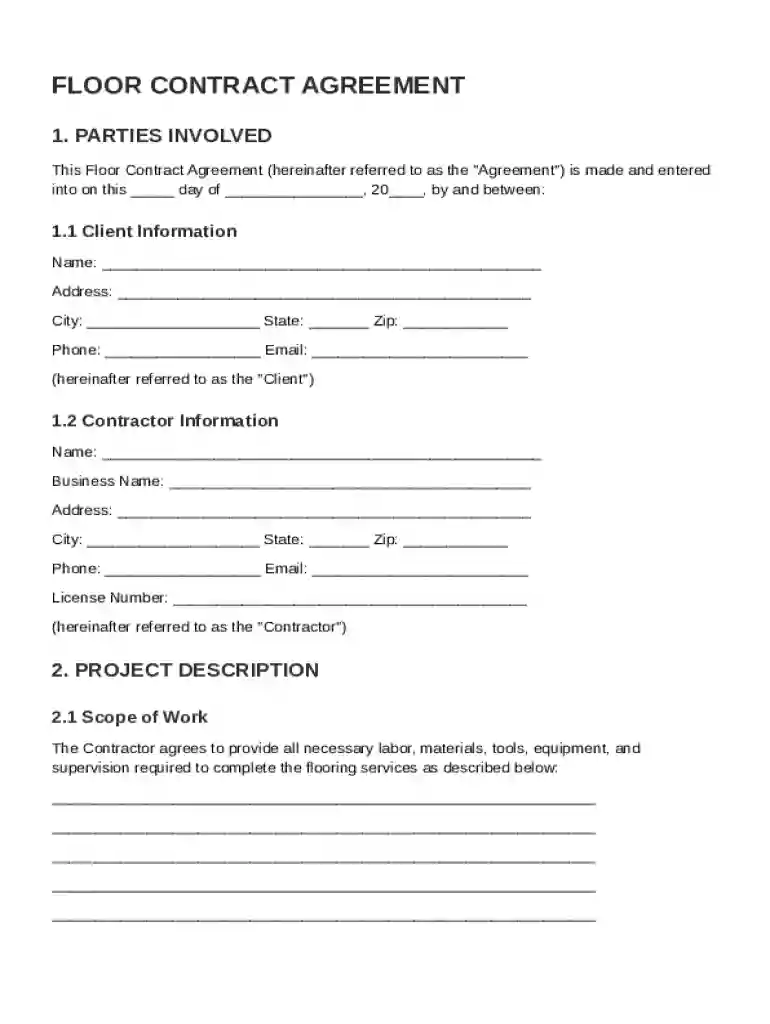
The Floor Contract Template is a formal agreement outlining the terms and conditions between a client and a contractor for delivering flooring services. It serves as a contractual foundation, ensuring clarity around the responsibilities, expectations, and duties of both parties involved in the flooring project. At its core, this template provides a structured layout that includes essential details such as project description, timelines, materials, labor, and payment conditions. This document plays a crucial role in preventing misunderstandings and legal disputes by clearly defining each party's roles, duties, and obligations.
Key Elements of the Floor Contract Template
A well-structured Floor Contract Template encompasses several key components to cover all critical aspects of a flooring project. These include:
- Identification of Parties: The contract should clearly state the names and addresses of both the client and the contractor.
- Project Description: Detailed information about the flooring services to be provided, including location, type of flooring, and any specific requirements.
- Materials and Labor: An outline of the materials to be used, the labor involved, and respective responsibilities for obtaining and paying for these resources.
- Payment Terms: Clear terms regarding the total cost, payment schedule, deposit requirements, and any penalties for late payments.
- Change Orders: Procedures for handling changes to the project, including how they will be documented and billed.
- Warranties: Details of any guarantees provided by the contractor regarding the quality and durability of the flooring work.
- Termination Conditions: Terms under which either party can terminate the agreement and any associated penalties or obligations.
- Dispute Resolution: Mechanisms in place for resolving conflicts, such as mediation or arbitration.
How to Use the Floor Contract Template
Using the Floor Contract Template involves a few strategic steps to ensure it meets the specific needs of a project:
- Review the Template: Begin by thoroughly reading the template to understand its structure and all included sections.
- Customize the Details: Tailor the contract by filling in project-specific information, like the names of the parties, project location, type of flooring, and any unique conditions or needs.
- Define Payment Structure: Clearly outline the agreed-upon payment regime, including deposit amounts and payment milestones tied to project phases.
- Specify Legal Clauses: Ensure all legal terms align with local laws and regulations, adjusting any legal clauses as necessary.
- Review and Agree: Both parties should review the completed contract together to ensure mutual agreement, making changes where necessary.
- Finalize and Sign: Once both parties agree on the terms, they should sign the document to make it legally binding. Copies of the signed contract should be distributed to all involved parties.
Steps to Complete the Floor Contract Template
Completing the Floor Contract Template involves a systematic approach to ensure every detail meets the project requirements:
- Gather Information: Collect all necessary details, including contact information for both parties and specific project information.
- Fill in Project Details: Enter the project description, such as the type of flooring, location, and any specific client requests or requirements.
- Include Payment Terms: Specify payment amounts, schedules, and terms for deposits and installments.
- Outline Change Orders: Define procedures for modifying the project scope, and include conditions under which changes are permitted.
- Insert Legal Terms: Adapt any standard legal clauses to comply with state-specific laws and ensure they protect both parties’ interests.
- Finalize with Signatures: Ensure both parties fully understand and agree to the contract terms, then sign the document to formalize the agreement.
Important Terms Related to Floor Contract Template
Understanding key terminology within the Floor Contract Template is essential for ensuring clarity and compliance. Some important terms include:
- Scope of Work: Describes the specific services and tasks that the contractor will execute.
- Milestones: Specific phases or benchmarks within the project timeline where progress is evaluated.
- Retainage: A portion of the contract payment withheld until the project is completed satisfactorily.
- Substantial Completion: The point at which the flooring project is complete enough to be used for its intended purpose, albeit with some minor outstanding work.
- Force Majeure: A clause that frees both parties from liability or obligation when an extraordinary event or circumstance beyond their control prevents fulfilling the contract.
Legal Use of the Floor Contract Template
In a legal context, the Floor Contract Template serves as a protective measure for both parties involved in a flooring project. It formalizes expectations and liabilities, reducing the risk of contractual disputes. This document must comply with local and state laws to be enforceable, which might require adjusting its terms based on the jurisdiction where the project takes place. The template should include clauses addressing liability, indemnification, and warranties to provide comprehensive legal protection.
State-Specific Rules for the Floor Contract Template
While the Floor Contract Template provides a universal framework, it's crucial to adapt it based on state-specific regulations and requirements. Laws concerning contractor licenses, building codes, and lien rights differ across states, which can affect contract-specific clauses.
- Licensing Requirements: Ensure that the contractor is licensed in the state where the work is performed, as some states have strict regulations and penalties.
- Building Codes Compliance: The contract should stipulate that all work complies with local building codes.
- Lien Waivers: Some states require inclusion of lien waivers upon payment completion to protect the property owner from future claims.
Examples of Using the Floor Contract Template
The Floor Contract Template can apply to various real-world scenarios, including:
- Residential Projects: Homeowners contracting services to install hardwood floors, ensuring terms for job completion time, costs, and materials are clearly defined.
- Commercial Ventures: Businesses undertaking flooring renovations in office spaces, using the template to specify terms related to working hours and minimizing disruption to operations.
- Renovations and Repairs: Utilizing the template for repair jobs where existing flooring requires renovations, ensuring clarity around materials, labor costs, and project timelines.
In each of these examples, the template provides a clear structure, ensuring that both parties are aligned in terms of expectations and deliverables.