
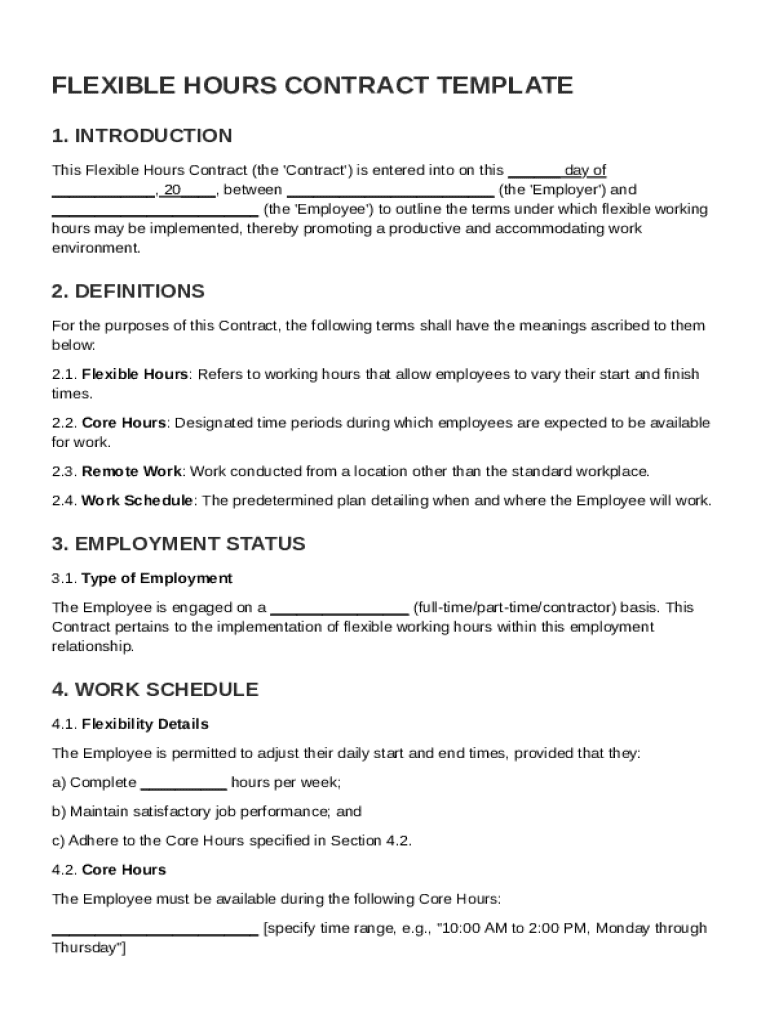







Definition and Meaning
A Flexible Hours Contract Template is a formal agreement that outlines the terms between an employer and employee regarding the implementation of flexible working schedules. These contracts serve to clearly detail the expectations and obligations of both parties in respect to work hours, ensuring a mutual understanding and agreement. The document specifies key aspects such as employment status, work duration, communication channels, compensation, and adherence to company policies. This template is particularly useful for maintaining structured yet flexible working conditions, aligning employee availability with business needs while preserving productivity and accountability.
Key Elements of the Flexible Hours Contract Template
To ensure thoroughness, the Flexible Hours Contract Template is composed of several critical elements that define the working relationship under flexible hours. These elements cover:
- Employment Status: Clearly defines whether the employment is full-time, part-time, or contractual.
- Work Schedules: Details the nature of flexible hours, including core working hours and any expected availability.
- Communication Protocols: Specifies channels for effective communication between the employer and employee.
- Compensation and Benefits: Outlines salaries, wages, and any associated benefits applicable to the flexible work arrangement.
- Termination and Amendments: Includes provisions for how and when the contract may be modified or terminated.
These components are designed to create a comprehensive framework, addressing all necessary aspects of flexible work arrangements.
How to Use the Flexible Hours Contract Template
To effectively utilize the Flexible Hours Contract Template, follow these guidelines:
- Customize the Template: Begin by filling out personalized details that pertain to your specific employment scenario. This includes company name, employee details, job title, and any specific terms.
- Review Key Sections: Ensure that all key sections, such as work schedules and compensation, are aligned with organizational policies and employee expectations.
- Seek Legal Review: If applicable, have the document reviewed by a legal professional to ensure compliance with local employment laws.
- Discuss with Employee: Engage in discussions with the involved employee to ensure mutual understanding and agreement on the terms laid out.
- Finalize and Sign: Once both parties agree on the terms, sign the document to make it legally binding.
Using this template helps streamline the creation and execution of tailored flexible work arrangements.
Legal Use of the Flexible Hours Contract Template
The Flexible Hours Contract Template serves as a legally binding document when executed properly. It is essential to ensure the content complies with federal and state employment laws to prevent legal complications. Key considerations include:
- Compliance with Labor Laws: Ensure that the flexible hours are compliant with laws governing work hours, overtime, and breaks.
- Incorporation of Equal Opportunity Policies: Maintain adherence to employment equality and non-discrimination mandates.
- Data Protection: Implement data privacy measures, especially with personal employee information being documented.
Adherence to these legal frameworks will support the enforceability of the contract in legal settings.
Who Typically Uses the Flexible Hours Contract Template
Various individuals and organizations can benefit from using the Flexible Hours Contract Template:
- Employers: Business owners or HR representatives utilize this contract to offer flexible working conditions that attract and retain talent while enhancing employee satisfaction.
- Employees: Workers seeking adaptable working hours to accommodate personal obligations or preferences can use this agreement to formalize arrangements with their employers.
- Small Businesses and Startups: Organizations in need of flexible staffing solutions often use these contracts to manage workforce flexibility without compromising operational needs.
These groups leverage the template to create balanced work environments that accommodate both business and employee needs.

Steps to Complete the Flexible Hours Contract Template
Completing the Flexible Hours Contract Template involves several steps to ensure accuracy and compliance:
- Gather Required Information: Collect all necessary data, including personal and employment details.
- Fill Out the Template: Enter the required information into the template, such as employment terms, work schedules, and contact details.
- Review and Verify: Cross-check the filled information for accuracy and completeness.
- Consult Legal Expertise: If necessary, consult with a legal advisor to verify compliance with current labor regulations.
- Review with Employee: Go over the terms with the employee to clarify any areas and ensure shared understanding.
- Finalize the Agreement: Once all parties agree, obtain the necessary signatures to finalize the agreement.
Following these steps will ensure the contract is thorough, enforceable, and reflective of the agreed terms.
Important Terms Related to Flexible Hours Contract Template
Several important terms are frequently associated with the Flexible Hours Contract Template:
- Core Hours: Designated period during which employees must be available to work, providing consistency amidst flexibility.
- Telecommuting: Working remotely, leveraging technology to perform job duties outside the office.
- Part-time Work: An employment status where an employee works fewer hours than a full-time schedule.
- Non-Exempt Employee: A worker eligible for overtime pay under federal law.
- Amendment Clause: A provision allowing for modifications to the contract terms under agreed circumstances.
Understanding these terms is essential for navigating and utilizing flexible work contracts efficiently.
Examples of Using the Flexible Hours Contract Template
Several scenarios illustrate how the Flexible Hours Contract Template could be applied:
- Remote Work Arrangement: An employee wishes to work some days from home. The template formalizes the agreed-upon days and communication expectations.
- Adapting to Seasonal Shifts: A business experiencing seasonal demand fluctuations may use the contract to adjust employee hours temporarily.
- Addressing Employee Health Needs: An employee with medical appointments might arrange flexible hours to accommodate health requirements while maintaining work obligations.
These examples highlight the versatility of the template in addressing varied workplace needs.




