
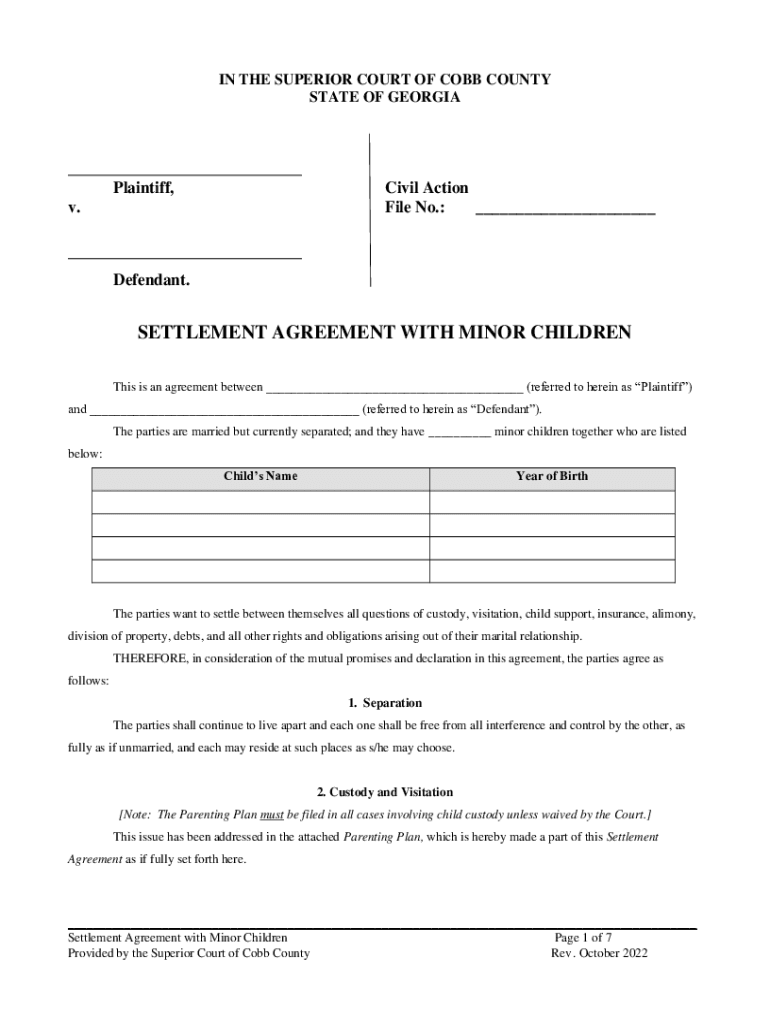







Definition and Meaning of "This is an Agreement Between (Referred to Herein as Plaintiff)"
"This is an agreement between (referred to herein as Plaintiff)" typically denotes a legal document outlining the rights and responsibilities of two or more parties involved in a dispute, usually in a civil context. The Plaintiff is the initiating party, seeking resolution through legal or formal channels. This agreement often functions as a Settlement Agreement, where both parties agree on specific terms to resolve the dispute, potentially including custody, support, or property division. The document is drafted to be enforceable in court and reflects a mutual understanding of the parties’ obligations and rights.
Key Elements of the Agreement
Understanding the components of such an agreement ensures clarity and compliance:
-
Parties Involved:
- The Plaintiff, who is initiating the agreement.
- The Defendant or Respondent, who is opposing or agreeing to the Plaintiff’s claims.
-
Purpose:
- Define the underlying dispute, such as child support or property division.
- Establish the terms both parties agree to for resolving the matter.
-
Terms and Conditions:
- Detailed conditions related to the resolution, payments, or actions required.
- Include provisions for amendment or termination of the agreement.
-
Signatures:
- Legal signatures of all involved parties.
- Often witnessed or notarized to enhance legal validity.
Legal Use and Compliance
Legal usage of this type of agreement ensures enforceability and protection of parties’ rights:
- It serves as a binding document that can be upheld in court.
- Enables streamlined resolution without extended litigation.
- Ensures compliance with state or federal laws regulating such agreements.
Important Legal Considerations
- Verify the agreement’s compatibility with local jurisdiction requirements.
- Obtain legal advice for drafting or interpreting terms to avoid potential disputes.
- Ensure all parties have willingly signed the document without coercion.
Steps to Complete the Agreement
Completing the agreement involves precise steps to ensure legal efficacy:
-
Drafting:
- Prepare the initial draft outlining all essential terms and conditions.
- Use clear and precise language to avoid ambiguity.
-
Review:
- All parties review the draft for accuracy and completeness.
- Involve legal counsel to ensure statutory compliance.
-
Modification:
- Amend or revise based on feedback from involved parties.
- Ensure all changes are documented and agreed upon.
-
Execution:
- Obtain signatures from all parties with required witnessing.
- Ensure notarization if required by law.
State-Specific Rules
State regulations can impact the contents and enforceability of agreements:
- Jurisdictional Variations: Each state may have unique requirements for what should be included.
- Custody and Support Norms: Vary significantly and should be adhered to, especially in family law contexts.
- Filing and Registration: Some states require the agreement to be filed with a court or registered with appropriate authorities.
Prospective Users and Scenarios
The agreement is widely used by individuals in legal or financial disputes, typically including:
- Divorcing or separated couples managing child custody or asset division.
- Businesses settling debt or partnership disputes.
- Individuals seeking civil dispute resolution outside of court.
Practical Examples
- A separated couple using the agreement to outline child support and property division.
- A contractor and client resolving disputes over service fulfillment through agreed terms.
Required Documentation
To support the agreement, specific documentation is often needed:
- Identification for all parties to the agreement.
- Financial records relevant to the terms, such as income statements in support cases.
- Any previous agreements or court orders relating to the dispute.
Submission Methods and Considerations
Methods for Submission
- Online: Submit through legal service platforms providing digital documentation tools.
- Mail: Send notarized copies to relevant parties and court systems, if applicable.
- In-Person: Deliver personally to enforce personal interaction and confirmation of receipt.
Penalties for Non-Compliance
Failing to adhere to the terms of the agreement can lead to legal repercussions:
- Contempt of Court: Non-compliance can result in fines or imprisonment if court-ordered.
- Legal Action: Either party may initiate further legal proceedings to enforce compliance.
- Damage Claims: In civil disputes, the non-compliant party may face claims for damages or losses incurred due to negligence or willful default.
By navigating these aspects carefully, parties can ensure smooth execution and enforceability of their legal agreement.




