




01. Edit your irs publication 501 online
Type text, add images, blackout confidential details, add comments, highlights and more.

Type text, add images, blackout confidential details, add comments, highlights and more.

Draw your signature, type it, upload its image, or use your mobile device as a signature pad.

Send publication 501 irs via email, link, or fax. You can also download it, export it or print it out.
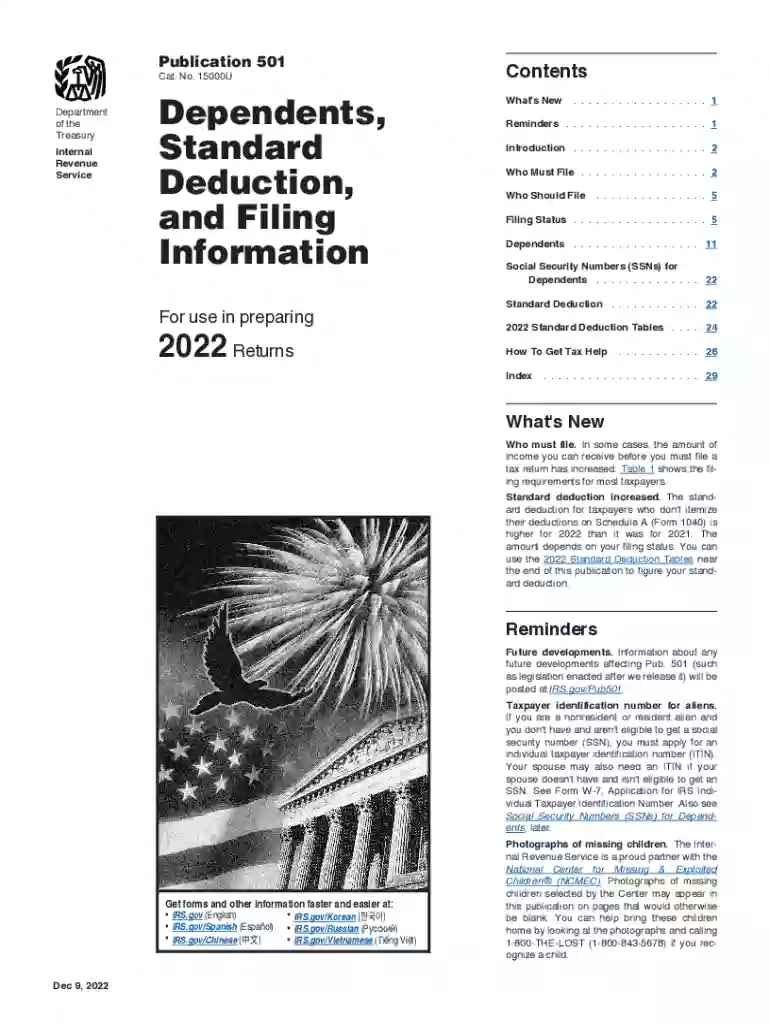
The 2022 Publication 501 provides crucial insights into the tax filing process for U.S. taxpayers. It highlights rules regarding dependents, standard deductions, and essential filing information. This document serves as a comprehensive guide to understanding who needs to file a tax return, based on factors like income levels, age, and filing status. It also offers valuable information about claiming dependents, which can significantly impact the tax benefits available to you.
Publication 501 outlines several critical aspects of tax filing. Key elements include:
To determine your eligibility for filing federal income taxes, consider the following:


The 2022 Publication 501 can be accessed via:
Publication 501 encourages careful adherence to IRS guidelines to ensure compliance and maximize potential tax benefits:
Consider the scenario of a taxpayer utilizing Publication 501:
Choosing these elements ensures that users gain a thorough understanding of the 2022 Publication 501, providing clarity and utility for tax preparation and compliance.
We've got more versions of the irs publication 501 form. Select the right irs publication 501 version from the list and start editing it straight away!
| Versions | Form popularity | Fillable & printable |
|---|---|---|
| 2024 | 4.6 Satisfied (27 Votes) | |
| 2023 | 4.4 Satisfied (50 Votes) | |
| 2022 | 4.6 Satisfied (22 Votes) | |
| 2021 | 4.9 Satisfied (31 Votes) | |
| 2020 | 4.4 Satisfied (197 Votes) | |
| 2019 | 4.4 Satisfied (71 Votes) | |
| 2018 | 4.3 Satisfied (197 Votes) | |
| 2017 | 4.4 Satisfied (163 Votes) | |
| 2016 | 4.4 Satisfied (1747 Votes) | |
| 2015 | 4 Satisfied (41 Votes) | |
| 2014 | 4 Satisfied (55 Votes) |
At DocHub, your data security is our priority. We follow HIPAA, SOC2, GDPR, and other standards, so you can work on your documents with confidence.


