






Definition & Meaning
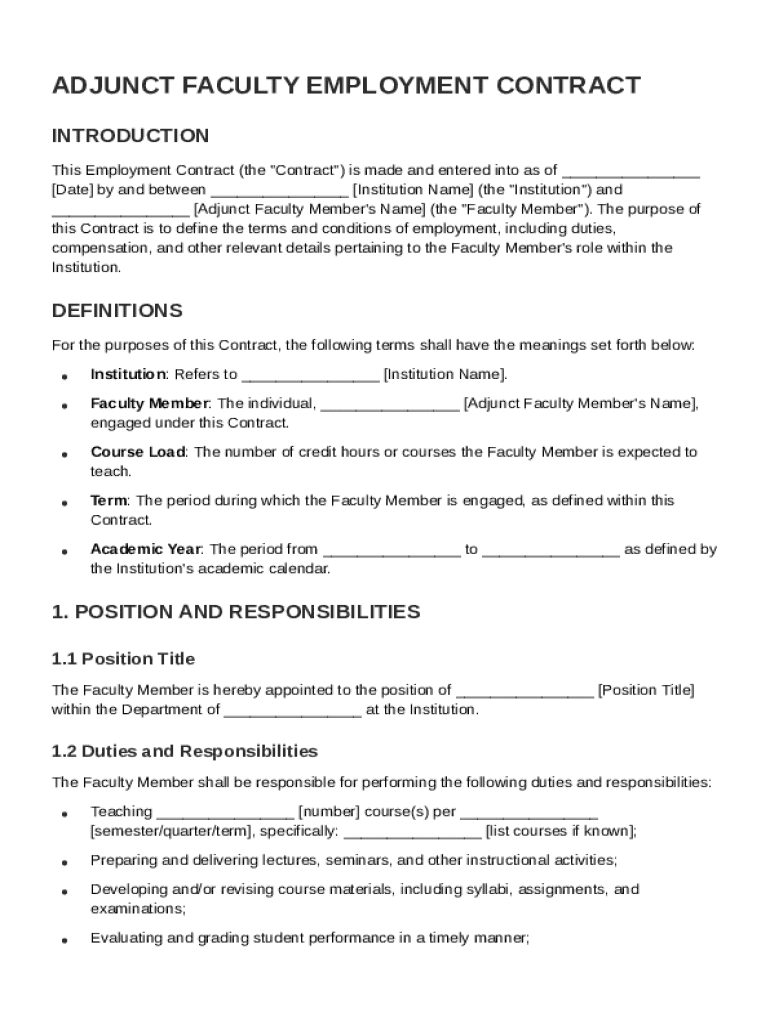
The Adjunct Faculty Contract Template serves as a foundational document outlining the terms of employment for adjunct faculty members within educational institutions. It defines job responsibilities, compensation structures, and compliance expectations. This contract ensures both parties—the institution and the faculty member—are aligned on the conditions of employment, professional conduct standards, and the rights and obligations associated with the role.
Key Elements of the Adjunct Faculty Contract Template
Position Responsibilities
- Teaching Duties: Defines the specific courses or subjects the adjunct faculty member is responsible for, including the number of classes and any associated preparation work.
- Course Material Preparation: Outlines expectations regarding the creation and upkeep of course materials, ensuring alignment with institutional standards.
- Office Hours: Specifies the required hours adjunct faculty must be accessible to students outside of class time for consultation and support.
Compensation Details
- Payment Structure: Details about salary or hourly wages, frequency of payments, and any available bonuses or incentives.
- Benefits Eligibility: Information on eligibility for health insurance, retirement plans, or other employee benefits, conditional on contractual terms or institutional policies.
Steps to Complete the Adjunct Faculty Contract Template
- Review Responsibilities: Thoroughly read the sections detailing teaching duties and other responsibilities to ensure understanding and feasibility.
- Verify Compensation Details: Confirm all payment terms, including hourly rates or salary, schedule of payments, and benefits.
- Discuss Terms: Engage in discussions with institutional representatives to negotiate terms or clarify any ambiguous sections.
- Signature and Submission: Once all terms are agreed upon, both the adjunct faculty member and an authorized institutional representative should sign the document, finalizing it as a binding agreement.
Legal Use of the Adjunct Faculty Contract Template
Adjunct Faculty Contracts must adhere to both federal and state employment laws. They serve as legal documents affirming mutual agreement on employment terms and are used to resolve disputes in the event of disagreements. Key areas include compliance with anti-discrimination laws, workplace safety standards, and intellectual property rights agreements, which govern the usage of any educational content created during employment.
Important Terms Related to Adjunct Faculty Contract Template
- Intellectual Property Rights: Defines the ownership of materials developed for teaching, understanding who has rights to course content.
- Termination Clauses: Conditions under which the contract can be prematurely ended by either party, usually including notice periods and justifiable reasons.
- Non-Disclosure Agreements: Any clauses ensuring confidentiality of sensitive institutional data or student records accessed during employment.
Examples of Using the Adjunct Faculty Contract Template
Educational institutions across the United States use this template to streamline the hiring process for part-time instructors. For example, a university may have seasonal courses requiring specialized knowledge—this contract offers a quick method to formalize relationships with industry professionals. Such templates are especially useful in technical or fast-evolving fields where experts are brought in based on current trends and courses' relevance.
Who Typically Uses the Adjunct Faculty Contract Template
Primarily used by higher education administrators and human resources departments, the template ensures streamlined hiring and clear communication of expectations. Adjunct faculties ranging from K-12 support educators to university lecturers benefit from these contracts, enabling clarity in role definitions, expectations, and legal protections.

State-Specific Rules for the Adjunct Faculty Contract Template
While the template provides a standard framework, some states may have specific regulations concerning employment contracts. For instance, differing eligibility criteria for educational benefits or the stipulation of minimum wage laws and working hour limitations underscore the need for institutions to adapt templates in line with local legislation. Educators and administrators must ensure compliance with such variations to avoid legal complications.