
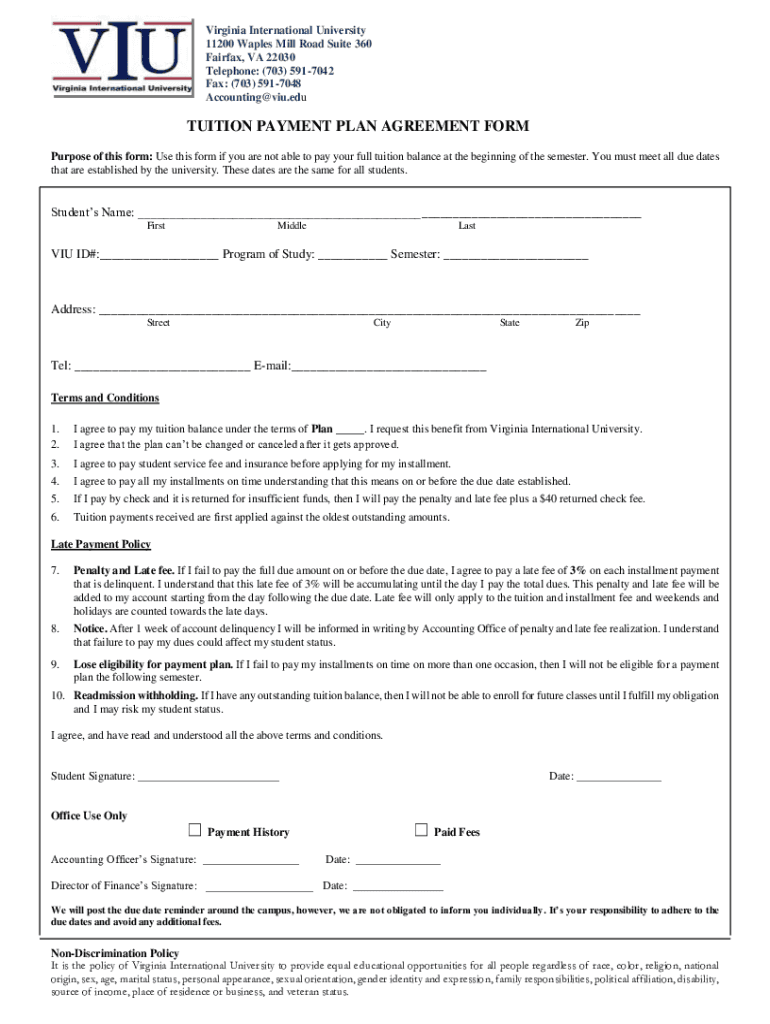







Definition & Meaning
A tuition payment agreement is a formal document that outlines the financial terms and conditions between an educational institution and a student or guarantor regarding tuition payments. This agreement typically covers the responsibilities for timely payments, outlines the penalties for any delays, and explains potential consequences if agreed-upon terms are not met. The document provides clarity on the payment process and serves as a legally binding contract ensuring mutual understanding and adherence among all parties involved.
How to Use the Tuition Payment Agreement
Utilizing a tuition payment agreement involves several steps to ensure adherence to the established terms. First, users should carefully review the agreement to understand obligations such as payment amounts, due dates, and payment methods. Next, individuals should calculate their financial commitments and plan their budgeting accordingly. Users might need to coordinate with financial advisors or family members if they require assistance fulfilling the agreement. Finally, participants should monitor their payment schedules and maintain records to avoid penalties or issues with compliance.
Steps to Complete the Tuition Payment Agreement
- Review the Document: Carefully read through the entire agreement to understand all terms and conditions.
- Finalize Personal Details: Complete all required fields, including names, student ID, and contact information.
- Outline Payment Schedule: Specify payment amounts and dates. Confirm these details align with your financial plan.
- Understand Penalties: Pay particular attention to sections outlining penalties for late or missed payments and ensure comprehension.
- Sign the Agreement: Ensure all signatures are obtained, either physically or electronically, as required by the institution.
- Submit for Approval: Return the completed agreement to the designated office or submit it through the institution’s online portal.
Important Terms Related to Tuition Payment Agreement
- Guarantor: An individual who pledges to cover payments if the primary party fails to do so.
- Installment Plan: A payment schedule that allows for tuition to be paid over a set period rather than a lump sum.
- Default: Failure to meet the payment terms specified within the agreement.
- Forbearance: A temporary postponement or reduction of payments due, typically seen in financial hardships.
- Penalty Clause: Section detailing the financial or academic penalties associated with non-compliance.
Key Elements of the Tuition Payment Agreement
- Payment Details: Clear specification of the total tuition amount and individual payment duties.
- Payment Methods: Accepted methods of payment, such as checks, bank transfers, or credit card payments.
- Timeframes: Designated periods for when payments are due, reflecting semester or academic year segments.
- Contingencies: Conditions under which the agreement may be altered or voided, such as significant changes in circumstances.
- Signatures and Dates: Spaces for parties to sign and date, solidifying the contract as legally binding.
Legal Use of the Tuition Payment Agreement
This agreement serves as a binding contract under U.S. contract law, providing legal protection for educational institutions while ensuring students adhere to financial obligations. Educational institutions can enforce the terms of the agreement through legal channels if breaches occur. The enforceability of the agreement underscores the importance of comprehending all clauses before signing, as failure to comply may result in academic or legal consequences.
State-Specific Rules for the Tuition Payment Agreement
While tuition payment agreements often follow a consistent template, state laws can influence specific terms such as interest rates on overdue payments or regulations concerning minors entering contracts. For example, states may enforce restrictions on maximum penalty fees or provide additional protections for students’ rights. Institutions must adjust the agreement language to comply with relevant state regulations, ensuring legal soundness and enforceability.
Who Typically Uses the Tuition Payment Agreement
This agreement is predominantly used by students and educational institutions. Students, along with their families or financial guarantors, engage with the document to manage tuition expenses effectively. Educational institutions utilize the agreement to standardize payment processes and mitigate financial risks associated with unpaid tuition. Additionally, financial advisors may use these agreements to assist clients in making informed decisions about financing their education.


Examples of Using the Tuition Payment Agreement
Consider a university student enrolled at a private college with a costly tuition structure. The student, unable to pay the full tuition upfront, negotiates a payment plan through the tuition payment agreement, outlining monthly installments to be paid throughout the semester. In another scenario, a continuing education program at a community college might offer a similar agreement for working professionals seeking to balance education expenses with employment obligations. These examples highlight the agreement's flexibility and application across diverse educational contexts.




