Key Elements of the Dance Choreography Contract Template
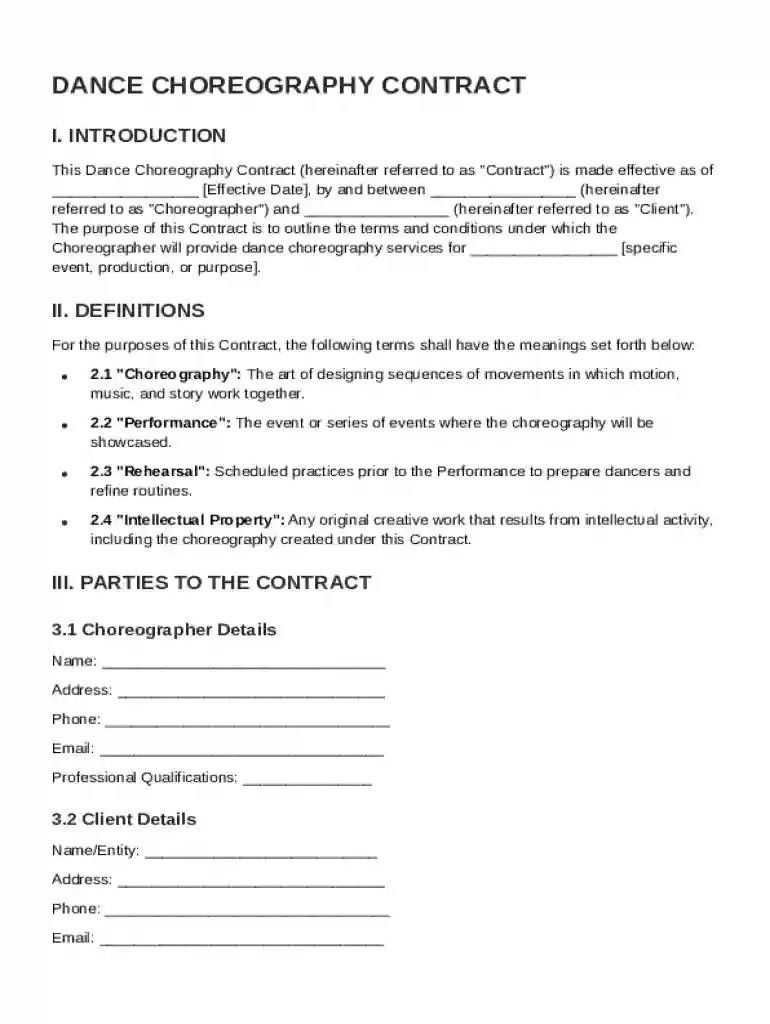
A Dance Choreography Contract Template is a crucial document structuring the relationship between a Choreographer and a Client. It is vital to detail specific elements to ensure clarity and mutual understanding.
- Scope of Work: Clearly defines the choreography services to be provided. This includes all aspects such as dance routines, number of performances, and rehearsal schedules.
- Compensation Structure: Outlines the agreed payment terms. This section should include the total fee, payment schedule, and any potential additional costs.
- Intellectual Property Rights: Specifies who owns the rights to the choreography created. Typically, choreographers retain rights unless an agreement states otherwise.
- Cancellation Terms: Details the conditions under which parties can terminate the contract. It should also cover any penalties or fees associated with cancellation.
- Liability Waivers: Protects the choreographer from claims or lawsuits that may arise during the provision of services.
- Dispute Resolution Processes: Establishes the agreed method for resolving conflicts, whether through mediation, arbitration, or legal proceedings.
Including these critical components not only ensures transparency but also helps avoid potential disputes.
How to Use the Dance Choreography Contract Template
Utilizing the Dance Choreography Contract Template involves several steps to ensure it is tailored to fit the specific event and requirements of both parties involved.
- Review the Template: Start by thoroughly understanding each section of the template. Ensure all terms and sections align with the specific requirements of your event.
- Customize the Details: Input names, addresses, and dates specific to the parties and the event.
- Define Specific Terms: Make explicit decisions on important areas such as cancellation policies, intellectual property rights, and compensation.
- Consult Legal Advice: It's prudent to have a legal expert review the contract to ensure compliance with legal standards.
- Finalize and Sign: Once both parties agree to the terms, signatures are added to make it legally binding.
This systematic approach ensures the contract is comprehensive and enforceable.
Legal Use of the Dance Choreography Contract Template
The Dance Choreography Contract Template must meet specific legal standards to be enforceable.
Legal Considerations
- Compliance with State Laws: The document should adhere to the jurisdictional laws where the services will be rendered.
- Virtue of Good Faith: All parties must act honestly and fairly to uphold the terms.
- Mutual Agreement: This core principle ensures all parties have a common understanding and acceptance of the contract terms.
Reviewing these considerations can prevent legal challenges and protect against breaches.
Steps to Complete the Dance Choreography Contract Template
Filling out a Dance Choreography Contract Template involves a detailed and step-by-step approach.
- Provide Party Details: Include names, addresses, and contact information of both the choreographer and the client.
- Outline Services: Detail all choreographic services offered, including performance timelines.
- Specify Payment Terms: Clearly state the agreed amount, payment schedule, and consequences of late payment.
- Include a Termination Clause: Set the terms for ending the contract, including the notice period and any fees.
- Insert Date and Signatures: The final step requires dating the document and obtaining signatures from all parties involved.
These steps offer a clear path to completing a comprehensive document.
Who Typically Uses the Dance Choreography Contract Template
Various individuals and organizations rely on Dance Choreography Contract Templates to structure their engagements.

Common Users
- Independent Choreographers: Often use this template to outline terms with clients such as schools, companies, or private individuals.
- Dance Schools: To formalize agreements with guest choreographers or routine contractors.
- Events Organizers: Particularly for weddings or corporate events requiring custom dance works.
These groups benefit from defined roles, responsibilities, and terms, ensuring smooth collaboration.

State-by-State Differences
Dance Choreography Contracts can differ based on state regulations.
- Employment Regulations: States have varying laws on employment versus contractor status, affecting how a choreography contract might be interpreted.
- Intellectual Property Laws: Some states have specific statutes pertaining to the ownership of creative works.
- Tax Obligations: Different states might have unique requirements for withholding taxes from payments made to service providers.
Understanding state-specific laws is crucial to tailoring contracts that are compliant and enforceable across different jurisdictions.
Important Terms Related to Dance Choreography Contract Template
Here are critical terms often found within a Dance Choreography Contract that require careful definition:
- Choreographer: The individual providing creative dance services.
- Client: The person or organization receiving the dance services.
- Rehearsals: Scheduled practice sessions prior to performance.
- Performance: The actual delivery or enactment of the dance routines.
- Remuneration: The agreed payment for services rendered.
Clearly defining these terms ensures all parties have the same understanding, minimizing confusion and disputes.
Examples of Using the Dance Choreography Contract Template
Real-world scenarios where the Dance Choreography Contract Template provides structure and clarity:
- Wedding Performances: Ensuring the bride and groom receive a customized dance experience with predefined rehearsal sessions.
- Corporate Events: Companies hosting events may engage a choreographer for brand-themed performances, requiring specialized planning and routine development.
- Dance Competitions: Schools or individual dancers engaging choreographers for competition preparation, dictating specific hours and rehearsal commitments.
Using these examples demonstrates the widespread applicability and need for well-structured choreography contracts.